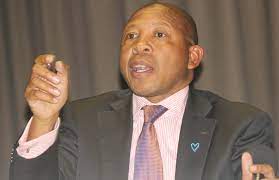


Advocate Bokang Moshoeshoe
If one were to trace Lesotho’s recurring political crises to a single source, political parties would sit squarely at the centre of the map. They are the institutions through which democracy is supposed to work: citizens organise, elections are contested, governments are formed, and accountability is exercised. Yet, paradoxically, they are also the most persistent drivers of instability, constitutional breakdown, and governance paralysis in the Kingdom.
From independence to the present coalition era, Lesotho’s political history reads like a cautionary tale about what happens when political parties exist without strong institutions, internal democracy, or a shared commitment to constitutional norms. Parties are indispensable to democracy – but in Lesotho, they have too often behaved as instruments of power rather than custodians of the constitutional order.
This contradiction lies at the heart of the country’s democratic struggle.
Political parties emerged in Lesotho during the late colonial period as symbols of liberation and self-determination. For many Basotho, parties such as the Basutoland African Congress (later the Basotho Congress Party) and the Basotho National Party embodied hope: hope for independence, modern governance, and political inclusion. Yet even at birth, these parties carried seeds of future instability. They were organised around powerful personalities, shaped by factional rivalries, and embedded in patronage networks involving chiefs, churches, and external actors.
Ideological differences existed, but they were fragile. Over time, personality eclipsed programme. Loyalty to leaders mattered more than loyalty to institutions.
That pattern hardened after independence in 1966. The narrow electoral victory of the BNP left the political environment polarised and volatile. When the BCP won the 1970 elections, the refusal by the BNP leadership to accept defeat marked Lesotho’s first major constitutional rupture. The annulment of election results and suspension of the Constitution signaled a dangerous precedent: political power would be defended at all costs, even at the expense of democracy itself.
That moment reshaped Lesotho’s political culture. Parties no longer viewed the Constitution as a binding framework for competition, but as an obstacle to be manipulated or discarded when inconvenient. What followed were years of authoritarian rule, militarisation, and violent conflict – much of it rooted in party rivalry and intolerance of opposition.
Even when the military intervened in 1986, ostensibly to end civilian authoritarianism, party politics did not disappear. It went underground, into exile, and into clandestine mobilisation. Parties survived, but they became even more personalised and organisationally weak. Leadership legitimacy flowed from individual histories rather than democratic internal structures.
The return to multiparty democracy in 1993 raised expectations of renewal. The BCP’s sweeping electoral victory was hailed as a fresh start. But once again, internal party conflict proved decisive. Factionalism within the ruling party soon exploded into a split, producing the Lesotho Congress for Democracy in 1997 and triggering another cycle of instability.
That episode exposed a core structural weakness: political parties in Lesotho are often held together not by institutions, ideology, or rules, but by leaders. When leaders fall out, parties fracture – and when parties fracture, governments fall.
The violent crisis following the 1998 elections reinforced this lesson. Despite winning decisively, the LCD faced mass opposition protests, unrest, and ultimately external military intervention. Once again, party competition escalated into a national emergency, revealing the fragility of democratic institutions when political actors lack mutual trust and constitutional restraint.
In response, Lesotho undertook a major reform: the adoption of the Mixed Member Proportional electoral system in 2002. The intention was noble. By making Parliament more representative and reducing the winner-takes-all logic of elections, the system aimed to dampen conflict and stabilise democracy.
In one respect, it worked. Smaller parties gained representation, exclusion declined, and electoral violence reduced. But reforms also produced unintended consequences. The ease of forming parties, combined with proportional representation, encouraged fragmentation. New parties proliferated – many created not to advance new ideas, but to resolve leadership disputes or reposition political elites.
Coalition government became inevitable.
Since 2012, coalition politics has defined Lesotho’s governance. Yet no coalition has completed a full parliamentary term. Governments have collapsed, alliances reshuffled, and elections called early with unsettling regularity. Coalition negotiations are frequently driven by calculations about cabinet positions rather than shared policy agendas. Trust among partners is thin. Defections are common. Governance suffers.
For ordinary Basotho, this instability has tangible consequences. Ministers rotate rapidly. Public servants face political interference. Development planning becomes uncertain. Confidence in democratic institutions erodes as politics appears disconnected from everyday needs.
The problem is not coalition government per se. In many democracies, coalitions produce stability and consensus. The problem in Lesotho is the weakness of the parties themselves. Parties lack internal democracy, clear ideological identity, and enforceable discipline. As a result, coalitions are built on sand.
The consequences extend beyond Parliament and Cabinet. Political parties have historically blurred the line between party and state. The politicisation of the civil service, security forces, and regulatory institutions has undermined professionalism and constitutional neutrality. When institutions are captured or contested along party lines, the rule of law weakens and governance becomes erratic.
This is why Lesotho’s constitutional challenges cannot be solved by legal reforms alone. Laws presuppose political actors who respect them. Constitutions assume parties capable of self-restraint, compromise, and long-term thinking. Where parties are fragmented, personalistic, and obsessed with power retention, even well-designed constitutional systems struggle to function.
Looking ahead, the patterns are unmistakable. The next general election is unlikely to produce a decisive winner. Another coalition government is almost certain. Without serious reform of party behaviour and organisation, instability is likely to continue – not as an accident, but as a predictable outcome of existing structures.
Yet this is not a story without hope.
Political parties remain essential to democracy. They can still be transformed into vehicles of stability rather than disruption. Strengthening internal party democracy, enforcing organisational discipline, clarifying coalition rules, and depoliticising state institutions would go a long way toward restoring public trust. Electoral reforms can be refined to reward cohesion rather than fragmentation. Civic education and media scrutiny can reinforce accountability.
Ultimately, the future of Lesotho’s constitutional democracy depends less on rewriting laws and more on reshaping political culture. Democracy is not sustained by elections alone, but by political actors who accept limits on power, respect institutions, and place national interest above factional advantage.
Until Lesotho’s political parties embrace that responsibility, they will remain what they have long been: the lifeline of democracy — and its deepest fault line.
Summary
- If one were to trace Lesotho’s recurring political crises to a single source, political parties would sit squarely at the centre of the map.
- From independence to the present coalition era, Lesotho’s political history reads like a cautionary tale about what happens when political parties exist without strong institutions, internal democracy, or a shared commitment to constitutional norms.
- Parties no longer viewed the Constitution as a binding framework for competition, but as an obstacle to be manipulated or discarded when inconvenient.

Welcome to Newsday Media – Your Trusted Source for News and Insights in Lesotho!
At Newsday Media, we are passionate about delivering accurate, timely, and engaging news and multimedia content to our diverse audience. Founded with the vision of revolutionizing the media landscape in Lesotho, we have grown into a leading hybrid media company that blends traditional journalism with innovative digital platforms.
Our mission is simple: to inform, inspire, and empower our readers by providing comprehensive coverage of local and global events, current affairs, and cultural happenings. Whether you’re looking for breaking news, in-depth analysis, or captivating storytelling, Newsday Media is your go-to destination for all things news-related.
With a dedicated team of journalists, editors, and multimedia experts, we are committed to upholding the highest standards of journalistic integrity and professionalism. We pride ourselves on delivering content that not only informs but also sparks conversation, fosters understanding, and drives positive change in our society.
From our flagship newspaper to our dynamic digital platforms, we offer a wide range of multimedia content to cater to the diverse interests and preferences of our audience. Whether you prefer to stay informed through print, online articles, videos, or podcasts, Newsday Media has something for everyone.
We believe in the power of storytelling to connect people, bridge divides, and inspire action. That’s why we’re dedicated to providing a platform for voices from all walks of life, championing diversity, inclusion, and authenticity in everything we do.
Thank you for visiting Newsday Media. We invite you to explore our website, engage with our content, and join us on our journey to inform, inspire, and empower our community. Together, let’s shape the future of media in Lesotho.