
Originally published on LinkedIn on 22 November 2024. It is republished amid renewed public debate following allegations that the National Manpower Development Secretariat (NMDS) is refusing to sponsor some students because their parents have outstanding loan obligations.
In the Post newspaper of Thursday, 21 November 2024, Finance Minister Dr. Retšelisitsoe Matlanyane announced that the government would soon engage private companies to collect debts owed to the National Manpower Development Secretariat (NMDS).
This decision follows her admission that the ministry has been struggling to recover these funds from the hundreds of thousands of Basotho who benefited from the NMDS funding programme.
While the minister’s intentions are undoubtedly rooted in addressing fiscal challenges, it is crucial to revisit her own insights from her tenure as Governor of the Central Bank of Lesotho (CBL).
In the November 2012 Economic Review, titled The Economic Impact of Youth Unemployment in Lesotho, the bank made some sobering observations that remain relevant today.
The review highlighted the alarming youth unemployment rate, estimated at 38 percent in 2010 by the International Labour Organisation (ILO). It further noted that of the 7,500 university and college graduates entering the labour market each year, half failed to secure employment. Even among those employed, many were relegated to subsistence agriculture or other low-paying jobs.
The CBL emphasised the profound implications of this youth unemployment for government finances.
It specifically pointed out that beneficiaries of NMDS study loans cannot reasonably be expected to repay these loans without sustainable employment.
The lack of repayments limits future funding for study loans and diverts government resources from development projects and other critical initiatives.
The review also underscored the broader economic and social consequences of youth unemployment, including reduced tax revenues, increased government borrowing, and slower economic development. Moreover, it warned of the social instability that accompanies high youth unemployment, linking it to rising crime and the potential for civil unrest.
Fourteen years later, the profound challenges identified by the CBL have not only persisted but, in many respects, have been exacerbated. While it is indisputable that not all NMDS beneficiaries are unemployed or subsisting on paltry wages, the unvarnished truth is that the overwhelming majority remain unable to fulfill their repayment obligations.
Some people may contend that the repayment requirement is unequivocal, binding beneficiaries to reimburse their loans irrespective of their employment status or income. This argument, rooted in a literalist interpretation of the NMDS agreements, starkly disregards the socioeconomic realities confronting many Basotho graduates.
It also underscores a troubling lack of empathy for those grappling with economic precarity in a country burdened by systemic unemployment.
Rather than perpetuating a system that has demonstrably failed to achieve its objectives, it is imperative for Lesotho to reimagine the NMDS and assess whether its current structure aligns with contemporary national priorities.
The time is ripe for a paradigm shift. The government must contemplate the audacious yet equitable proposition of instituting free education at all levels, including tertiary education. Under this reformed framework, the NMDS could recalibrate its focus and channel resources exclusively toward funding specialised studies abroad or addressing niche educational needs.
Skeptics may hastily question the fiscal viability of universal free tertiary education. Yet, the stark reality is that Lesotho is already de facto providing free education under the guise of an inefficient loan system.
As the CBL astutely observed in 2012, the government extends study loans to nearly all Basotho admitted to tertiary institutions locally and abroad, yet only a minuscule percentage of these loans are ever repaid. By formalising what is already an unofficial reality, the government can eliminate the counterproductive burden of debt on graduates, allowing them to channel their energy toward meaningful contributions to the national economy.
Moreover, the funds required to finance this transformative initiative are not beyond reach. They merely require strategic reprioritisation and a commitment to fiscal discipline. For instance, the Lesotho Tribune recently revealed that billions of maloti are hemorrhaged annually in the mining sector due to non-compliance with regulatory frameworks.
Addressing these systemic inefficiencies could unlock substantial revenues, which could be redirected to underwrite free education. Dr. Matlanyane, as Minister of Finance, possesses both the expertise and the mandate to spearhead such reforms to ensure that the nation’s resources are harnessed for equitable and impactful development.
The NMDS, in its present incarnation, is an anachronism—a vestige of an era that presumed the availability of robust employment opportunities for graduates. Today, that presumption rings hollow. Persisting with an antiquated and dysfunctional model will only entrench cycles of indebtedness and socioeconomic stagnation.
Instead, Lesotho must confront these systemic failings with bold, innovative solutions. By addressing inefficiencies, instituting free education, and fostering a climate of opportunity, the nation can emancipate its youth from the shackles of debt and empower them to become architects of sustainable economic growth.
This is a discourse that demands our collective attention. It transcends legalistic adherence to contractual minutiae and beckons us to embrace a higher ethos – one rooted in equity, compassion, and an unwavering commitment to the future of our nation. Let this be the moment when we, as Basotho, rise to meet the challenges of our time with vision, resolve, and a shared aspiration for progress.
Summary
- While it is indisputable that not all NMDS beneficiaries are unemployed or subsisting on paltry wages, the unvarnished truth is that the overwhelming majority remain unable to fulfill their repayment obligations.
- As the CBL astutely observed in 2012, the government extends study loans to nearly all Basotho admitted to tertiary institutions locally and abroad, yet only a minuscule percentage of these loans are ever repaid.
- By formalising what is already an unofficial reality, the government can eliminate the counterproductive burden of debt on graduates, allowing them to channel their energy toward meaningful contributions to the national economy.
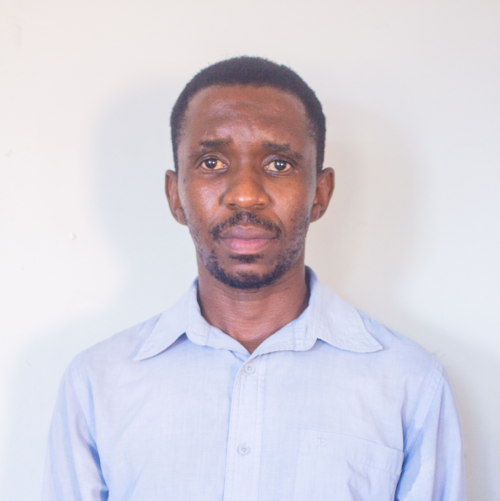
Lesotho activist and journalist who is the Chairperson of the Media Institute of Southern Africa (MISA) Lesotho. He is an International Visitor Leadership Program (IVLP) alumnus.
Boloetse is driven by the need to protect and promote the rights of others, especially the marginalized segment of society. He rose to prominence as an activist in 2018 when he wrote to Lesotho communications Authority (LCA) asking it to order Econet Telecom Lesotho (ETL) and Vodacom Lesotho (VCL) to stop charging expensive out-of-bundle rates for data when customers’ data bundles get depleted.