
Theko Tlebere
Informal discussions can often illuminate critical policy deficiencies. Recently, a colleague of mine from Sierra Leone shared his forthcoming role in a government office tasked with overseeing Non-Governmental Organisations (NGOs). The way he told me his story was both interesting and relevant to my own country. Lately, that’s how I think these days, anything new that I learn, I think about the status of my country in relation to that new phenomenon. The office he called NGO’s Directorate, according to him, was to ensure that NGOs function not merely as donor-driven entities but as development partners aligned with national priorities. For me, that raised very critical questions for my country, Lesotho. Who is responsible for ensuring that NGOs operating in health, social development, and other essential sectors are accountable not only to donors but also to the Government of Lesotho?
This concern is far from hypothetical. In Lesotho, NGOs and international partners play a vital role across various domains, including social protection, HIV programming, maternal and child health, orphan care, and community development. Organisations such as Mothers2Mothers and the Baylor Foundation Lesotho are deeply integrated into service delivery. Baylor, for instance, has publicly affirmed its partnership with the Government of Lesotho since 2005, asserting that the fundamental operations of its clinical sites are funded by the government via the Ministry of Health. Similarly, Mothers2Mothers has established itself as a longstanding health actor in Lesotho. However, many of these organisations depend heavily on substantial external funding from sources such as the European Union (EU), PEPFAR, USAID, Africa CDC, private foundations, and multilateral agencies.
This dual accountability is not inherently problematic; indeed, donor support is often, if not always, essential. The core issue lies within the institutional framework: when an NGO operates in Lesotho, who determines the reporting structures, enforces compliance with national plans, and ensures that project delivery aligns with the country’s long-term priorities rather than merely the donor’s objectives?
Sierra Leone is a West African nation situated along the Atlantic coast, bordered by Guinea and Liberia, with Freetown serving as its capital. Like Lesotho, Sierra Leone is a developing country that has confronted numerous challenges, including limited state capacity, dependence on donor assistance, and the imperative to strengthen public institutions in the aftermath of periods of national instability. Over the years, Sierra Leone has relied significantly on development partners and non-governmental organisations (NGOs) in critical sectors such as health, education, and social welfare. This reliance prompts critical inquiries regarding the state’s coordination and oversight of NGO activities. In this regard, Sierra Leone’s NGO Directorate presents a pertinent case study for Lesotho to investigate further.
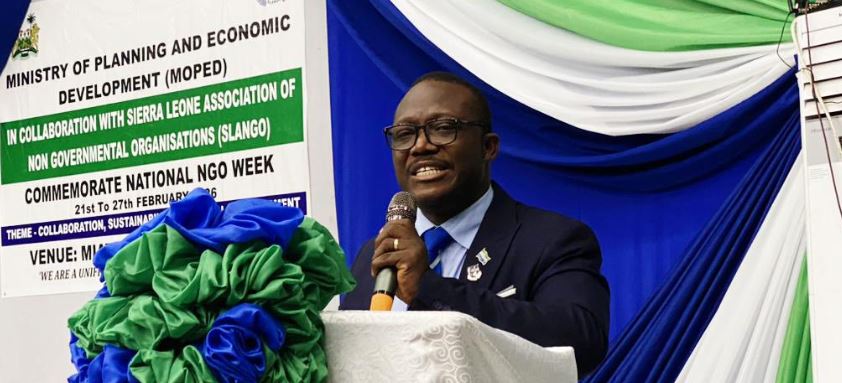
Sierra Leone offers a practical model worthy of examination and best practice replication. What I found is that the government of Sierra Leone’s Ministry of Planning and Economic Development has established an NGO Directorate responsible for registering NGOs, processing renewals, compiling annual reports, collecting monthly data on NGO activities by sector, and conducting site visits. This office serves not merely as a registration entity but as a coordination and oversight mechanism.
The rationale behind this structure is noteworthy. According to Sierra Leone’s National NGO Policy Framework for 2023–2028, the Ministry of Planning and Economic Development is assigned the responsibility of maintaining a database of NGO registrations, monitoring relationships among government, donors, NGOs, and beneficiary communities, and sharing this database with local councils. It also stipulates that new NGO registrations are valid for two calendar years, after which renewal is required. NGOs that fail to renew may face suspension of their activities.
This framework establishes a clear chain of accountability. In Sierra Leone, NGOs must satisfy both donors and the state. They are included in a national registry, their activities can be tracked by sector, and there exists a cohesive environment linking planning, registration, renewal, and site verification. The key lesson is that effective oversight is not antagonistic to civil society; rather, it integrates external resources into national development planning.
In contrast, Lesotho appears to possess a more fragmented system. Legally, associations and similar entities are registered under the Societies Act, with oversight from the Registrar and further affiliation to what we call the Lesotho Council of Non-Governmental Organisations (LCN). In terms of service delivery, oversight appears to occur through line ministries, memoranda of understanding, partnerships, and project-specific arrangements. The National Health Policy indicates that the Ministry of Health collaborates through formal public-private partnerships, including agreements with the Christian Health Association of Lesotho (CHAL) and the Lesotho Red Cross Society, for delivering the Essential Health Package. PEPFAR’s planning documents also demonstrate coordination with the Ministry of Health and District Health Management Teams.
Having made that contextual narration, to whom does Sesotho Media, World Vision, Solider-med, Elizabeth Glaser Pediatric AIDS Foundation (EGPAF), Care For Basotho, Lesotho Inter-Religious AIDS Consortium, Send a Cow, Baylor and mothers2mothers report to? In practice, they likely report to multiple entities. They must comply with donor requirements regarding finance, results, and safeguards. However, as they deliver services within Lesotho’s public health system, they also bear functional accountability to the Ministry of Health, district structures, and the policy frameworks governing service delivery. The current setup, which is built from experience, suggests a hybrid accountability structure rather than one solely driven by donor interests.
The challenge for Lesotho lies in the absence of a centralised directorate akin to Sierra Leone’s NGO Directorate, which would unify these various elements across sectors. Although registration, partnerships, and donor reporting mechanisms exist, national coordination remains weak and overly reliant on individual ministries or specific projects. Even in the ministries, there are still no clear lifeline accountability measures, and that’s why NGOs are setting the agenda, which ideally should be set by someone else. Benchmarking against Sierra Leone provides valuable insights. Lesotho need not replicate Sierra Leone’s model verbatim, but it can adopt several functional principles.
First, Lesotho could establish a central NGO coordination and compliance unit within a ministry focused on planning rather than a purely ceremonial registry. This unit would maintain an active national database of NGOs, detailing their sectors, districts of operation, donors, budgets, and implementation partners. Second, registration should initiate ongoing government oversight, requiring NGOs to submit annual organisational reports and shorter periodic updates by sector and district. Sierra Leone’s system of annual status reports and monthly sectoral updates serves as a useful reference.
Third, ministries such as Health and Social Development should hold formal authority to certify whether NGO activities align with sector strategies before projects are renewed or expanded. This would ensure that NGOs demonstrate alignment with the relevant ministry’s plans, data systems, and service protocols. Fourth, district-level accountability must be enhanced. Sierra Leone’s framework suggests sharing the NGO database with local councils, which Lesotho could adopt through District Administrators(DAs), District Council Secretaries(DCSs) and local health and social development offices, ensuring that national oversight extends beyond Maseru.
Ultimately, the issue is not whether NGOs should cater to donors or the government; responsible organisations must satisfy both. The real question is whether the Government of Lesotho possesses a coherent mechanism to define national priorities, receive regular reports, verify operations, and address misalignment. Sierra Leone’s example demonstrates that it is possible to achieve this through a dedicated directorate, a registry linked to planning, routine reporting, and site verification. For NGOs to remain genuine development partners, their success in Lesotho must be assessed not only by donor accolades but also by how well their work aligns with the country’s laws, plans, systems, and public accountability. The Future is NOW!
Summary
- Like Lesotho, Sierra Leone is a developing country that has confronted numerous challenges, including limited state capacity, dependence on donor assistance, and the imperative to strengthen public institutions in the aftermath of periods of national instability.
- What I found is that the government of Sierra Leone’s Ministry of Planning and Economic Development has established an NGO Directorate responsible for registering NGOs, processing renewals, compiling annual reports, collecting monthly data on NGO activities by sector, and conducting site visits.
- According to Sierra Leone’s National NGO Policy Framework for 2023–2028, the Ministry of Planning and Economic Development is assigned the responsibility of maintaining a database of NGO registrations, monitoring relationships among government, donors, NGOs, and beneficiary communities, and sharing this database with local councils.

Your Trusted Source for News and Insights in Lesotho!
At Newsday Media, we are passionate about delivering accurate, timely, and engaging news and multimedia content to our diverse audience. Founded with the vision of revolutionizing the media landscape in Lesotho, we have grown into a leading hybrid media company that blends traditional journalism with innovative digital platforms.