
… Auditor General finds it flouted its own financial laws
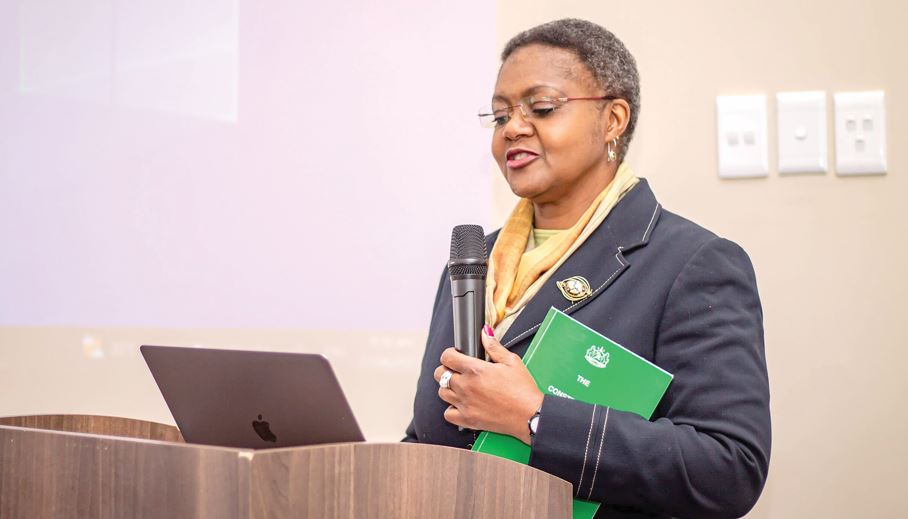
The government has been flagged by Auditor General ‘Mathabo Makete for operating mobile money accounts outside the country’s legal financial framework, raising serious concerns about public finance management, transparency and accountability.
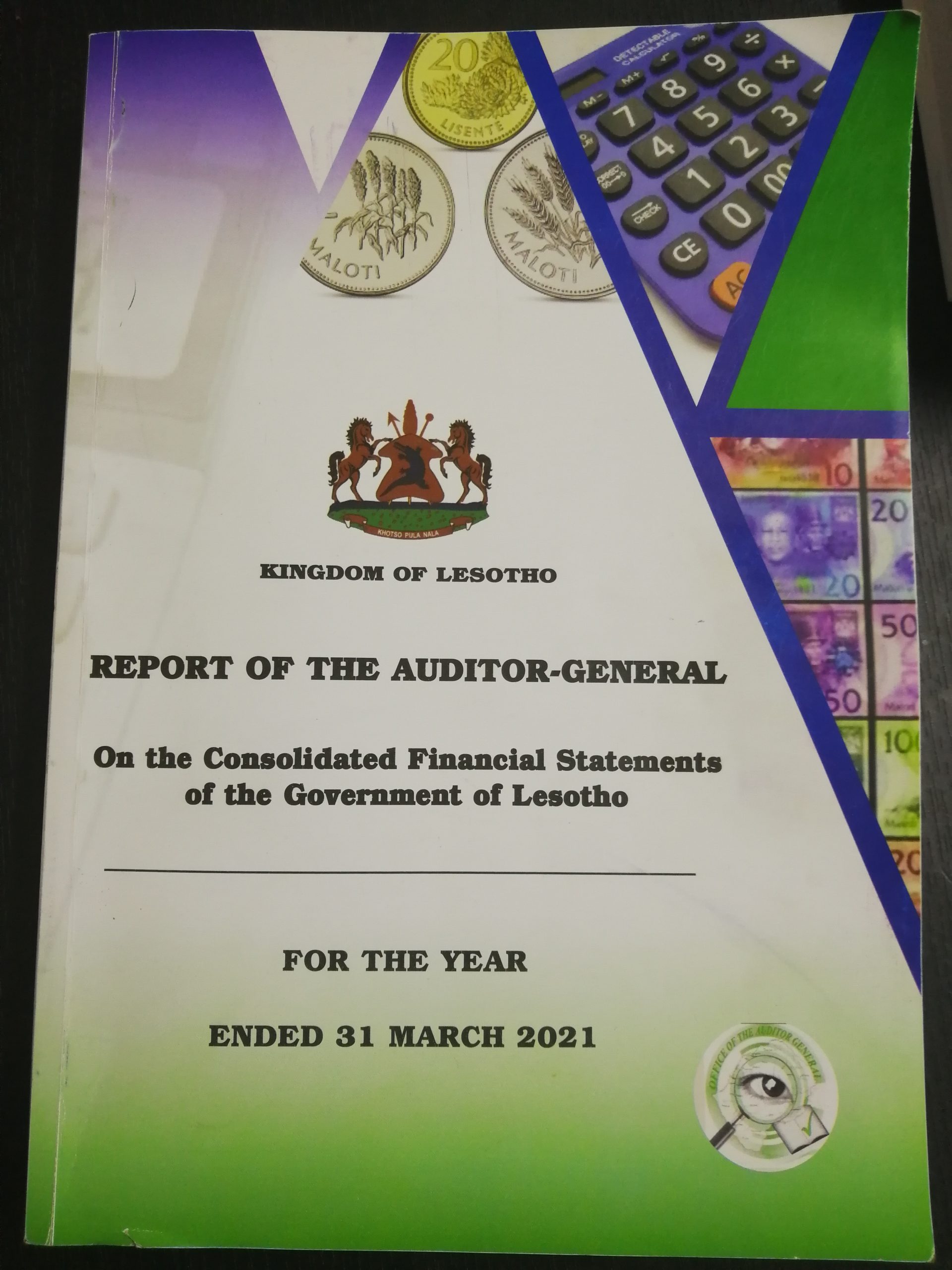
In her recently published audit report on the consolidated financial statements of the government of Lesotho for the year ended 31 March 2023, Makete revealed that over M11 million was held in mobile money platforms despite existing laws prohibiting such arrangements for government transactions.
The government is widely known to use mobile money platforms to pay old age pensioners, vulnerable populations and youth apprenticeship programme beneficiaries, among others, reflecting a growing reliance on digital financial services to reach citizens more efficiently and conveniently.
The audit established that the government held 13 mobile accounts with Vodacom Lesotho’s M-Pesa platform, eight accounts with Econet Telecom Lesotho’s EcoCash, and two accounts with Chaperone’s C-Pay as at March 31, 2023.
However, the report did not provide a breakdown of how much was held in each of the 23 accounts.
“Under Note 15 on the consolidated financial statements on the analysis of bank accounts, the Accountant-General has included a total amount of M11.7 million held by three mobile network operators,” Makete said in the report.
“The audit concern is that there is currently no legal provision for the operation of mobile accounts under Mobile Network Operators, as Treasury Regulations, 2014, Section 74 (1)(a), only provides for the use of official bank accounts,” Makete said.
The Auditor General’s findings point to a direct violation of the Treasury Regulations, 2014, which restrict government financial transactions to officially designated bank accounts.
By using mobile money accounts, the government is effectively operating outside established controls meant to safeguard public funds.
Financial experts have warned that such practices weaken transparency and expose public resources to potential abuse. Mobile money platforms, although efficient and widely used, are not fully integrated into government oversight systems, creating gaps in audit trails, increasing the risk of misappropriation and complicating reconciliation processes.
This also raises broader concerns about compliance with public financial management laws, which require that all government revenues and expenditures be properly recorded and monitored.
Transactions conducted outside formally recognised banking structures risk being underreported or inconsistently captured in official accounts.
The development comes against the backdrop of a rapidly expanding mobile money ecosystem that has transformed Lesotho’s financial landscape over the past decade.
According to the Lesotho FinScope Consumer Survey 2021, mobile money has become a critical driver of financial inclusion, with 87 percent of adults now accessing formal financial services.
Mobile money platforms provide the closest and most accessible financial service for many Basotho, particularly in rural areas, effectively bridging the gap left by limited banking infrastructure.
Since its introduction in 2012, mobile money usage has grown significantly. Econet Telecom Lesotho launched EcoCash in October 2012, followed by Vodacom Lesotho’s M-Pesa in July 2013, while C-Pay and other non-telecom-based platforms entered the market at a later stage.
The FinScope report said these platforms have evolved from simple money transfer services into broader financial ecosystems supporting payments for goods and services, remittances and even small business transactions.
It highlighted that mobile money has become the primary financial tool for the underbanked, reducing geographical barriers and enabling a shift towards a more cashless economy. It is increasingly used by Micro, Small and Medium Enterprises (MSMEs), which form the backbone of Lesotho’s economy.
The 2023 MSME survey estimated over 107,000 small business owners in the country, many of whom rely on digital payments to sustain operations and improve financial resilience.
The government itself has been moving towards digitising public services, including the disbursement of social grants through mobile money platforms. This has improved efficiency, reduced queues and lowered the cost of distributing funds, particularly in remote areas.
However, the Auditor General’s report underscores a critical mismatch between policy and practice. While mobile money is clearly embedded in everyday economic activity and increasingly within government service delivery, the legal and regulatory framework has not kept pace with these developments.
At the same time, the Auditor General acknowledged the practical advantages of mobile money, particularly in improving access to services and speeding up transactions, especially in rural and underserved areas.
To address the anomaly, the Auditor General recommended that the Accountant-General move swiftly to formalise the use of mobile network operators in government financial transactions. This would involve amending existing regulations to accommodate digital financial services within a controlled and accountable framework.
“The Accountant-General should formalise the approval for the use of mobile network operators for financial transactions of the Government. Use of MNOs provides easier speed and access to financial transactions for the public,” Makete advised.
Summary
- In her recently published audit report on the consolidated financial statements of the government of Lesotho for the year ended 31 March 2023, Makete revealed that over M11 million was held in mobile money platforms despite existing laws prohibiting such arrangements for government transactions.
- The government is widely known to use mobile money platforms to pay old age pensioners, vulnerable populations and youth apprenticeship programme beneficiaries, among others, reflecting a growing reliance on digital financial services to reach citizens more efficiently and conveniently.
- “The audit concern is that there is currently no legal provision for the operation of mobile accounts under Mobile Network Operators, as Treasury Regulations, 2014, Section 74 (1)(a), only provides for the use of official bank accounts,” Makete said.