
“If I had the information I have now, I would never have fallen pregnant unplanned or at that age,” said 20-year-old Nthabeleng (not her real name), gazing at her eighteen-month-old son as she reflects on the cost of growing up in one of Lesotho’s most remote districts.
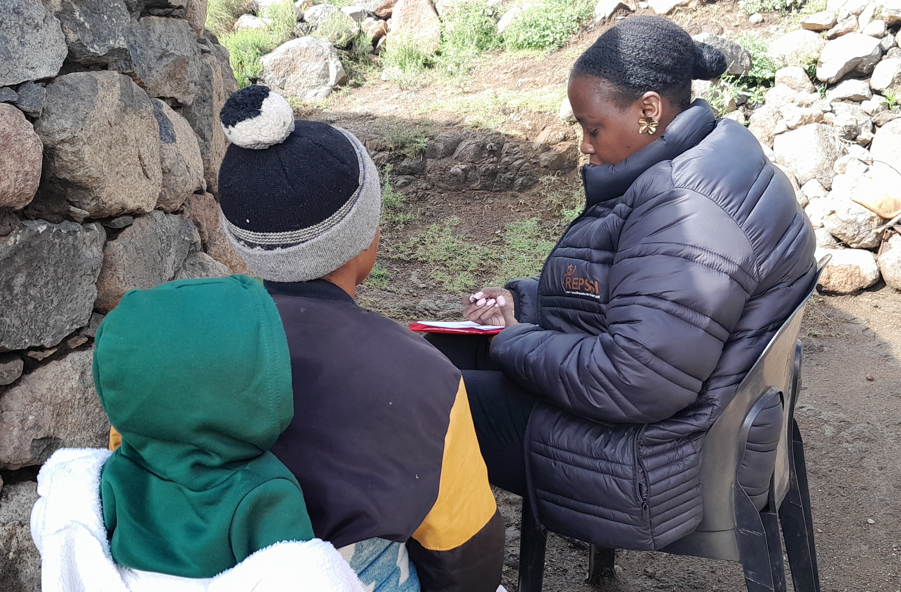
Nthabeleng shared her painful reflection with Newsday during a Monitoring and Evaluation visit to Ha Matšumunyane conducted by the Regional Psychosocial Support Initiative Lesotho (REPSSI Lesotho).
The visit assessed the impact of community support groups for young mothers, fathers, and adolescents under the project “Achieving Better Sexual and Reproductive Health Rights Outcomes for Young People.”
For Nthabeleng, these sessions have become a lifeline. She admitted she eagerly anticipates every meeting and refuses to miss a single one.
The turning point was a session on family planning.
“The session that made me realise most of us make mistakes due to a lack of information was our discussion on contraceptives,” she reflected. “I always thought contraceptives were only for married people. I realise now that if I had known how to avoid early and unintended pregnancy, I would not be in this position, especially since I am not married.”
Nthabeleng considers herself one of the lucky ones. Unlike many girls in her village forced into early marriages after falling pregnant, her mother provided unwavering support, walking with her through a pregnancy that required exhausting four-hour round trips to Bobete Health Center for antenatal care.
The numbers tell a devastating story
The statistics at Bobete Health Center are staggering. 66 percent of pregnant women seen at the facility are adolescents, primarily aged 15–19. The clinic serves 77 villages, with some residents walking up to six hours to reach care.
These local figures mirror a national crisis. According to the Lesotho Demographic and Health Survey (LDHS), approximately one in four adolescent girls aged 15-19 have begun childbearing, with rates significantly higher in rural areas and among girls with lower education levels.
‘They think I am teaching their children to have sex’
Despite the success of REPSSI’s interventions, significant barriers remain. ‘Maliteboho Nyai, a Peer Educator serving five villages, covers vital topics including HIV prevention, mental health, and livelihoods. However, she faces two persistent challenges: male absence and parental suspicion.
“Most men do not attend. It could be because the sessions are led by a woman, or perhaps they simply lack interest in Sexual and Reproductive Health and Rights,” Nyai explained.
Social stigma runs deep. Some parents pull their daughters out of the program, fearing that discussing sexuality encourages promiscuity.
“They think I am teaching their children to have sex,” Nyai said. “What they do not see is that their children are already sexually active and desperately need information on self-esteem so they can negotiate condom use with their partners.”
The health system itself compounds the problem. Bobete Health Center lacks a dedicated youth corner, and this forces adolescents to seek SRHR services in the same spaces as their parents and neighbours.
In a culture where youth sexuality remains taboo, this lack of privacy creates a barrier of fear that keeps young people away until it is too late.
Poverty: The silent driver
Tšoeute Ramone, speaking on behalf of the Chief, did not mince words about the root cause.
“Many people still think it is impossible to discuss sexuality issues with their children,” Ramone said. “But the main cause of the challenges is linked to poverty. Due to poverty, our young girls engage in sexual activities not only with their peers but also older men with whom they cannot negotiate safe sex because they are looking to get some benefits out of it. Unfortunately, they fall pregnant at a young age, and that is where their problems start.”
A roadmap for survival
REPSSI Lesotho Project Officer Lefulesele Tjellane explained that their intervention, built on partnership with the Ministries of Health and Youth Development, aims to break this cycle.
The peer support groups provide Psychosocial Support for adolescent girls and young mothers suffering trauma induced by early and unplanned motherhood. REPSSI has trained a network of facilitators and nurses to serve as a frontline support system, focusing on holistic development including self-awareness, mental health, and livelihood opportunities.
Nurses receive specialised training in psychosocial support and mental health disorder screening to ensure that when a facilitator refers a young person to a clinic, they meet youth-friendly services rather than judgment.
The community groups are open to anyone under 24 who is married or has a child.
“We teach them how to care for their families and how to raise their children effectively,” Tjellane said. “But most importantly, we focus on self-awareness. We want them to understand that even if they have a child at a young age or are married, their lives are not over. There is still a future for them.”
The four-hour divide
For girls in Thaba-Tseka, the difference between an unplanned pregnancy and a finished education often comes down to a four-hour walk and the courage to break a cultural silence.
Nthabeleng’s voice, soft but steady, captures the tragedy of information poverty in Lesotho’s highlands: “If I had known.”
REPSSI focuses on mental health and psychosocial support integration targeting social service sectors and programs focused on livelihoods improvement, youth empowerment, and poverty reduction in Southern Africa.
Summary
- “If I had the information I have now, I would never have fallen pregnant unplanned or at that age,” said 20-year-old Nthabeleng (not her real name), gazing at her eighteen-month-old son as she reflects on the cost of growing up in one of Lesotho’s most remote districts.
- I realise now that if I had known how to avoid early and unintended pregnancy, I would not be in this position, especially since I am not married.
- It could be because the sessions are led by a woman, or perhaps they simply lack interest in Sexual and Reproductive Health and Rights,” Nyai explained.
Ntsoaki Motaung is an award-winning health journalist from Lesotho, specializing in community health stories with a focus on sexual and reproductive health and rights, as well as HIV. She has contributed to platforms like “Be in the KNOW,” highlighting issues such as the exclusion of people with disabilities from HIV prevention efforts in Lesotho.
In addition to her journalism, Ntsoaki serves as the Country Coordinator for the Regional Media Action Plan Support Network (REMAPSEN). She is also a 2023 CPHIA Journalism Fellow.