

… The government exists for the people
In the shadow of renewed conflict in the Middle East, global oil markets have once again convulsed and sent fuel prices spiralling across southern Africa. Here in Lesotho, where every litre of petrol is imported and every price hike bites into the cost of bread, transport, and medicine, the government has announced palliative measures, subsidies. Predictably, the language that accompanies these interventions frames them as acts of benevolence: the state “coming to the rescue,” “extending a helping hand,” “cushioning the vulnerable.” This rhetoric is not merely imprecise; it is corrosive. It inverts the proper relationship between a democratic government and its citizens. The government does not do the people favours by mitigating shocks it cannot prevent. It discharges the very purpose for which it exists.
We elect governments. We pay taxes. We surrender certain individual freedoms so that a collective authority might provide the public goods and protections that no single citizen can secure alone. That is the social contract in its simplest, most enduring form, from Locke to the Lesotho Constitution of 1993. The state is not a paternal benefactor dispensing largesse from its own pocket. It is the instrument we have created, funded, and periodically renew through the ballot. When fuel prices surge and threaten to destabilise households already stretched by unemployment, inflation, and the structural constraints of a small, landlocked economy, government intervention is not generosity. It is the repayment of a debt incurred the moment we consented to be governed.
To pretend otherwise is to flirt with a dangerous fiction. If we truly believed in the libertarian idyll of “every man for himself,” we would dissolve the state tomorrow. There would be no Ministry of Finance collecting VAT from market vendors in Maseru, no Revenue Services Lesotho auditing diamond revenues, no army or police funded by our taxes. We maintain these institutions precisely because we reject that atomised vision. We accept, indeed, we demand, that the state pool resources to smooth the rough edges of life: building roads, running schools, maintaining clinics, and, yes, shielding citizens from external shocks that no teacher or factory worker in Maputsoe caused. To call such shielding a “favour” is to suggest that the citizen is the supplicant and the state the patron. That is the language of monarchy, not of a constitutional democracy where sovereignty resides with the people.
Nowhere is this inversion more unjust than in Lesotho, where poverty is too often misdiagnosed as a character flaw rather than a circumstantial inheritance. Many of our fellow citizens were born into conditions not of their making: a mountainous terrain that limits arable land, an economy historically tethered to migrant labour in South Africa, and, crucially, decades of governance failures, corruption scandals, policy inconsistency, and institutional fragility, that have compounded rather than alleviated disadvantage. These are not abstract statistics. They are the lived reality of families in Leribe or Quthing who work diligently yet remain trapped by forces larger than personal effort. Had they drawn their first breath in Gaborone or Windhoek or even parts of South Africa, their life chances would, on average, be markedly different, not because they are more intelligent or industrious, but because the institutional and policy environment around them would have been less hostile.
This is the uncomfortable truth governments prefer to evade. Some poverty is iatrogenic. It is caused or worsened by the very state that later claims moral credit for alleviating it. When public resources are squandered, when tender processes are opaque, when economic diversification stalls while neighbouring countries advance, the state does not merely fail to create opportunity; it actively narrows the corridor through which citizens must pass. In such circumstances, to decry welfare programmes as “breeding dependency” is not fiscal prudence, it is moral sleight of hand. It blames the victim for the wound while ignoring the scalpel.
The social contract does not require citizens to be superhuman. It requires the state to be competent. When external events, wars, pandemics, commodity shocks, expose vulnerabilities that bad governance has left unaddressed, the state’s response is not optional philanthropy. It is the minimum expected of an entity that has monopolised the legitimate use of force and taxation. To portray relief as charity is to erode the legitimacy of both taxation and representation. Citizens begin to ask, rightly: why pay taxes if the return is presented as a gift? Why vote if the elected are cast as benevolent overlords rather than accountable servants?
This is not a call for unlimited entitlement or fiscal recklessness. Prudent governance demands targeting, transparency, and sunset clauses on emergency measures. It also demands, more urgently, that Lesotho’s leaders address the structural frailties that make every global tremor feel like an earthquake on our soil. Fuel subsidies today must be paired with serious investment in regional logistics, and skills development tomorrow. But these long-term imperatives do not negate the immediate duty. A government that creates or fails to mitigate hardship cannot then treat mitigation as an act of grace. That is not leadership; it is gaslighting.
The people of Lesotho do not want “everything from government.” They want what they were promised when they queued at polling stations and when they pay their taxes: competent administration, basic security, and a fair chance to build lives of dignity. When crises strike, government intervention is not the state stooping to help its subjects. It is the state doing the job the subjects hired it to do. Anything less is a breach of contract. Anything more rhetorical, any talk of “favours” or “rescues,” is an attempt to rewrite that contract in the state’s favour. Basotho deserve better. They deserve the truth: their government exists for them, not the other way around.
Summary
- It is the repayment of a debt incurred the moment we consented to be governed.
- To call such shielding a “favour” is to suggest that the citizen is the supplicant and the state the patron.
- Had they drawn their first breath in Gaborone or Windhoek or even parts of South Africa, their life chances would, on average, be markedly different, not because they are more intelligent or industrious, but because the institutional and policy environment around them would have been less hostile.
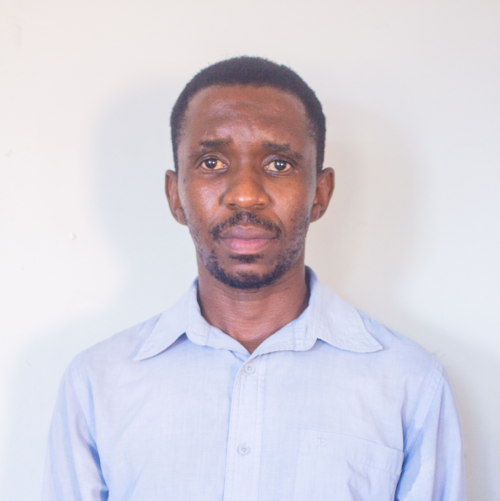
Lesotho activist and journalist who is the Chairperson of the Media Institute of Southern Africa (MISA) Lesotho. He is an International Visitor Leadership Program (IVLP) alumnus.
Boloetse is driven by the need to protect and promote the rights of others, especially the marginalized segment of society. He rose to prominence as an activist in 2018 when he wrote to Lesotho communications Authority (LCA) asking it to order Econet Telecom Lesotho (ETL) and Vodacom Lesotho (VCL) to stop charging expensive out-of-bundle rates for data when customers’ data bundles get depleted.