

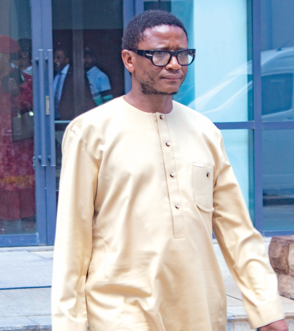
Tšeliso Moroke
Development projects in Lesotho have consistently failed to achieve their stated objectives, not least because they are premised on a construction of the country that bears little resemblance to lived realities. As James Ferguson and Akhil Gupta observed decades ago, such projects may fail economically and socially. Yet, they succeed remarkably in expanding bureaucratic state power into the everyday lives of citizens.
Development, in this sense, becomes less about transformation and more about administration, managing poverty rather than eliminating it.
This is not an outdated academic critique. It remains painfully accurate today.
What is most disturbing is not the failure itself, but the normalisation of failure. In Lesotho, development failure has become routine, expected, and politically convenient. We continue to recycle development models that misunderstand the society they claim to uplift, while congratulating ourselves for delivering infrastructure detached from production, employment, and structural change.
Success is measured in kilometres of roads, numbers of buildings, and ribbon-cutting ceremonies, rather than in jobs created, industries established, or incomes sustained.
Governments repeatedly insist on “owning” infrastructure projects, imagining them as neutral, apolitical assets that can outlive political administrations and ideological shifts. Yet infrastructure without institutions, without industrial policy, without capable administration, and without accountability is little more than concrete symbolism. Roads do not industrialise an economy on their own. Buildings do not generate productivity. Industrial estates without industries are monuments to failed imagination.
The uncomfortable truth is that Lesotho already has enough resources to begin moving forward. Our taxes, combined with competent institutional governance, policy coherence, strategic planning, and disciplined administration, would be sufficient to set this country on a different trajectory. What is missing is not money, donor support, or technical expertise. It is political seriousness and intellectual courage.
This failure is not accidental. It is historical.
There is extensive literature demonstrating how development institutions in Lesotho were deliberately politicised during the Basotho National Party era. Structures such as Village Development Committees were not neutral vehicles of grassroots participation. They were political instruments, channels through which the ruling party extended control into rural areas under the language of development and participation. Development became a mechanism for loyalty, surveillance, and political consolidation.
That legacy has never been dismantled. It has merely changed form.
Today, development institutions still function less as engines of transformation and more as extensions of state power, elite control, and patronage networks. The language has improved—“governance”, “inclusion”, “sustainability”—but the underlying logic remains unchanged.
President Thabo Mbeki, in his lecture on King Moshoeshoe II, correctly reminded us that development must confront poverty, unemployment, and inequality simultaneously. This is not a moral aspiration; it is a structural necessity. Any development strategy that does not fundamentally alter how people earn a living, how wealth is produced, and how opportunity is distributed is not development. It is public relations.
And the historical record is unforgiving. The history of development projects in Lesotho is one of persistent, unremitting failure to achieve stated objectives. Decades of interventions have left the economy’s productive base weak, narrow, and externally dependent. The state remains overextended administratively and underpowered economically.
Despite years of “reforms”, Lesotho remains largely untouched by modern economic development in any transformative sense.
Yes, economic infrastructure now exists. We have roads, border facilities, telecommunications networks, industrial shells, and logistics platforms. But industries themselves are virtually non-existent. Infrastructure has not translated into industrialisation. Connectivity has not translated into competitiveness. Growth figures, where they exist, have not translated into employment or dignity.
At its core, Lesotho remains trapped in a structural contradiction. Since the era of Leabua Jonathan—and disturbingly, even under the current Matekane administration—the economy still exhibits the characteristics of a traditional subsistence peasant society, supplemented by external rents: remittances, SACU revenues, donor funding, and short-term projects. These sources sustain consumption rather than production. They delay collapse but do not enable transformation.
This is not an insult to Basotho society; it is an analytical diagnosis.
And diagnoses demand treatment, not denial.
What we are witnessing today is a governing elite content with managing stagnation rather than confronting it. Policy documents multiply, strategies are launched, commissions are formed, but the political economy remains untouched. No serious attempt is made to restructure land use, align infrastructure with industrial policy, discipline the state bureaucracy, or confront the rent-seeking incentives embedded in the system.
Development has been reduced to administrative activity rather than economic change.
We cannot continue mistaking motion for movement, activity for progress, or policy rhetoric for results. The country does not need more consultants, more workshops, or more pilot projects that never scale. It needs a break with inherited thinking. A willingness to challenge the assumptions that have governed development practice for decades.
We have to change things—fundamentally.
That change will not come from technocratic tinkering alone. It requires political leadership willing to confront entrenched interests, rethink the role of the state, and place production—not patronage—at the centre of governance. It also requires intellectual honesty from those who claim to be thinkers, experts, and advisors.
Which raises an uncomfortable question:
What happened to being revolutionary intellectuals?
What happened to the courage to interrogate power, to challenge development orthodoxies, to connect infrastructure to industrial strategy, politics to production, and governance to lived outcomes?
Where are those willing to say that managing decline is not leadership, and that administering poverty is not development?
A country does not move by inertia.
It moves because people decide—intellectually and politically—to push it forward.
That decision has been postponed for too long.
Summary
- Development projects in Lesotho have consistently failed to achieve their stated objectives, not least because they are premised on a construction of the country that bears little resemblance to lived realities.
- Success is measured in kilometres of roads, numbers of buildings, and ribbon-cutting ceremonies, rather than in jobs created, industries established, or incomes sustained.
- Any development strategy that does not fundamentally alter how people earn a living, how wealth is produced, and how opportunity is distributed is not development.

Welcome to Newsday Media – Your Trusted Source for News and Insights in Lesotho!
At Newsday Media, we are passionate about delivering accurate, timely, and engaging news and multimedia content to our diverse audience. Founded with the vision of revolutionizing the media landscape in Lesotho, we have grown into a leading hybrid media company that blends traditional journalism with innovative digital platforms.
Our mission is simple: to inform, inspire, and empower our readers by providing comprehensive coverage of local and global events, current affairs, and cultural happenings. Whether you’re looking for breaking news, in-depth analysis, or captivating storytelling, Newsday Media is your go-to destination for all things news-related.
With a dedicated team of journalists, editors, and multimedia experts, we are committed to upholding the highest standards of journalistic integrity and professionalism. We pride ourselves on delivering content that not only informs but also sparks conversation, fosters understanding, and drives positive change in our society.
From our flagship newspaper to our dynamic digital platforms, we offer a wide range of multimedia content to cater to the diverse interests and preferences of our audience. Whether you prefer to stay informed through print, online articles, videos, or podcasts, Newsday Media has something for everyone.
We believe in the power of storytelling to connect people, bridge divides, and inspire action. That’s why we’re dedicated to providing a platform for voices from all walks of life, championing diversity, inclusion, and authenticity in everything we do.
Thank you for visiting Newsday Media. We invite you to explore our website, engage with our content, and join us on our journey to inform, inspire, and empower our community. Together, let’s shape the future of media in Lesotho.