
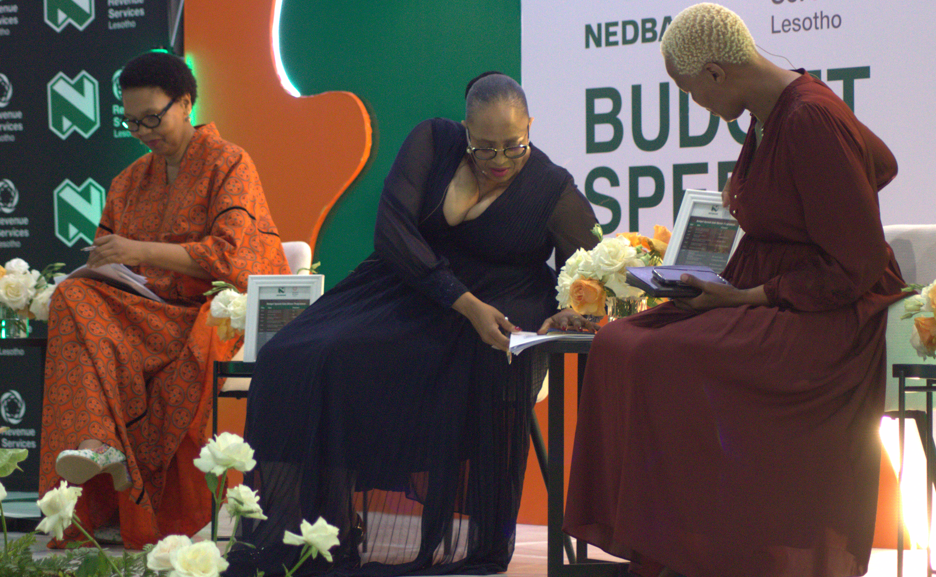
The comparison between Lesotho’s 2016 and 2026 budget speeches reveals a nation that has grown in scale and ambition but remains stubbornly trapped in the same structural vulnerabilities it sought to escape a decade ago.
Dr. ‘Mamphono Khaketla’s 2016 address, delivered amid drought-induced crisis and titled “Seeking Self-sufficiency,” promised pragmatic reforms to diversify revenue, tame the bloated wage bill, and reduce dependence on volatile external sources like Southern African Customs Union (SACU) receipts.
Ten years on, Dr. Retšelisitsoe Matlanyane’s 2026 presentation, “Accelerating Economic Transformation; Building Resilience,” echoes many of the same concerns, now amplified by a larger fiscal apparatus and new external threats.
The most glaring continuity is Lesotho’s persistent over-reliance on SACU transfers, which stubbornly accounted for 34 percent of revenue in both periods.
While nominal SACU inflows have more than doubled, the structural exposure has intensified: a renegotiation by South Africa could devastate public finances.
Water royalties from the Lesotho Highlands Water Project represent a genuine achievement, rising to around 17 percent of revenue and providing a strategic asset.
Yet even this stream remains volatile, project-dependent, and now shadowed by compensation claims from affected communities.
Domestic tax revenue’s shrinking share, from 47% in 2016 to 38% in 2026, signals a deeper failure: the private sector has not expanded sufficiently to broaden the tax base or generate sustainable employment. The textile industry, once a hope for manufacturing-led growth, now grapples with AGOA uncertainties.
The agreement’s lapse in 2025 triggered tariffs, initially steep, later moderated, reduced factory capacity, and job losses, shifting the crisis from episodic weather shocks to systemic trade vulnerabilities.
Government spending has ballooned, from M15.5 billion to M29.4 billion, driven by higher capital investments in infrastructure, renewable energy, and LHWP Phase II.
This reflects progress in ambition and execution in some areas.
However, recurrent expenditure, dominated by salaries, has risen almost in lockstep (from M11.5 billion to M21.9 billion), crowding out growth-oriented investments and perpetuating the “bloated wage bill” warned about in both eras.
The recent fiscal surplus, around 8.4 percent of GDP in 2024, offers only illusory comfort. It stemmed from one-off windfalls in SACU and water royalties, not structural discipline.
Capital budget under-execution persists, echoing 2016’s unspent development funds, while growth projections languish near 1-2 percent, barely outpacing population increase.
Lesotho has built a bigger ship: a more sophisticated policy framework, fiscal rules, debt anchors, and larger resource inflows. Yet it sails the same storm, external dependence, weak domestic engines, and youth unemployment now deemed a national disaster.
True transformation demands breaking the cycle: aggressive private-sector reforms, tax base expansion, export diversification beyond textiles and water, and disciplined wage management.
Without these, the 2036 budget risks reciting the same lament. The quest for self-sufficiency, declared urgent in 2016, remains unfinished, and increasingly urgent, in 2026.
Summary
- The comparison between Lesotho’s 2016 and 2026 budget speeches reveals a nation that has grown in scale and ambition but remains stubbornly trapped in the same structural vulnerabilities it sought to escape a decade ago.
- Water royalties from the Lesotho Highlands Water Project represent a genuine achievement, rising to around 17 percent of revenue and providing a strategic asset.
- Domestic tax revenue’s shrinking share, from 47% in 2016 to 38% in 2026, signals a deeper failure.

Authored by our expert team of writers and editors, with thorough research.