… High Court rules he must work until cases are finalised
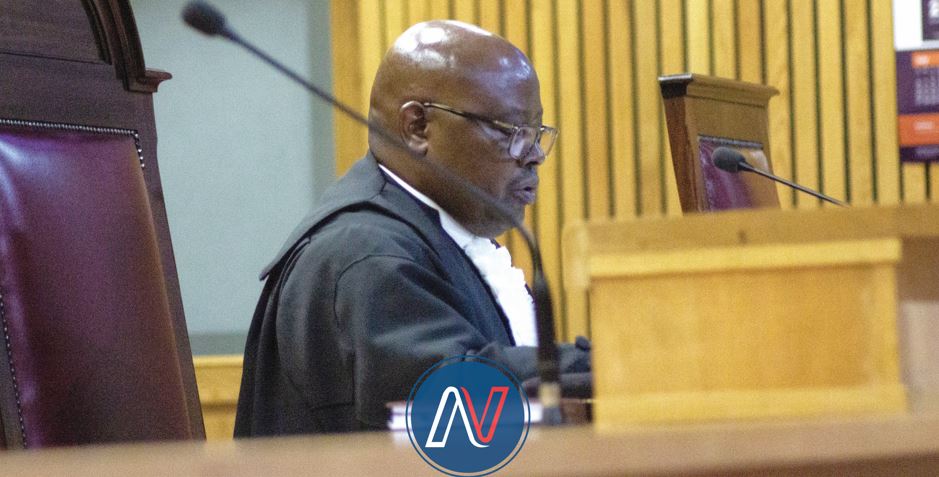
Retired High Court judge, Justice Tšeliso Monaphathi, who left behind 128 undelivered judgments and 11 part-heard cases, some dating back to 1995, is not entitled to his pension until he completes the outstanding work, the High Court has ruled.
In a judgment delivered on Tuesday this week, a full bench of the High Court dismissed most of the claims brought by Justice Monaphathi, who sought to compel the release of his retirement benefits and challenged Chief Justice Sakoane Sakoane’s decision to withhold them pending the finalisation of his judicial backlog.
‘A serious dereliction of constitutional duty’
The court heard that Justice Monaphathi reached the mandatory retirement age of 75 on 4 August 2024. At that time, he had 128 reserved judgments and 11 part-heard matters outstanding. A table submitted to the court revealed that some judgments had been pending since 1995, the year he was appointed to the bench.
In a letter dated 26 July 2024, Chief Justice Sakoane directed the applicant to provide a written timetable of not more than four months to deliver the reserved judgments and six months to complete the part-heard matters. The letter also stated:
“I have taken the decision that the processing of your retirement benefits will depend on completion of all outstanding judicial work.”
Justice Monaphathi challenged this decision, arguing that the Chief Justice had no power to withhold his benefits and that the directive interfered with his judicial independence.
‘May’ does not mean discretion, court holds
Central to the dispute was the interpretation of Section 121(2) of the Constitution of Lesotho, which provides:
“Notwithstanding that he has attained the age prescribed for the purposes of subsection (1), a person holding the office of Chief Justice or other Judge of the High Court may continue in office for so long after attaining that age as may be necessary to enable him to deliver judgement or to do any other thing in relation to proceedings that were commenced before he attained that age.”
Justice Monaphathi argued that the word “may” gave him discretion to choose whether to continue working after retirement. The court rejected this interpretation.
In a unanimous judgment delivered by Mainga AJ, with whom Mkandawire AJ and Mangota AJ agreed, the court held:
“The use of the word ‘may’ does not denote that a judge who has attained the age prescribed has a discretion to continue or not, as the applicant alleges. He or she has no discretion. To interpret the section 121 (1) and (2) of the Constitution and section 4 (1) and (2) of the High Court Act as the applicant alleges leads to absurdity and renders these provisions worthless. A judge may accumulate pending cases like in this case, and choose not to continue. That could never have been the intention of the Legislature.”
The court further endorsed the earlier interpretation of the Chief Justice in Rex v Sebolai and Another, stating:
“The Constitution categorically requires a Judge whose period of appointment expires or is revoked to continue to deliver judgment or to do any other thing in relation to proceedings that were commenced before him previously thereto.”
‘No evidence of interference’
Justice Monaphathi had also alleged that Chief Justice Sakoane’s actions violated Section 118(2) of the Constitution, which guarantees judicial independence, and Section 9, which prohibits forced labour.
The court found no merit in these claims:
“With greatest respect to the applicant, his narrative rings hollow as a naked attack on the first respondent and is meritless. There is no evidence that the first respondent interfered with the applicant’s decision-making or judicial independence, nor is there evidence that the first respondent is imposing forced labour on him. Applicant himself accepts that the pending cases are his constitutional obligation to finalise.”
On the forced labour claim, the court noted that Section 9(3)(e) of the Constitution expressly excludes from the definition of forced labour:
“Any labour reasonably required by law as part of reasonable and normal community or other civic obligations.”
Entitled to benefits, but only if he works
While the court ruled against the judge on most of his prayers, it did grant partial relief on one issue: the question of whether a judge who continues after retirement to finalise pending matters is entitled to the benefits of office.
The court held that although the applicant cannot access his pension until the work is done, he should be paid a salary for the period he spends finalising the cases:
“Had the Legislature intended otherwise, it would have said so in no uncertain terms. He or she is entitled to a salary, especially as no pension is payable during the period in which the outstanding judgments and part-heard matters are being finalised.”
The court rejected the Chief Justice’s submission that paying a judge under these circumstances would “reward incompetence,” stating:
“That might be the case, but practice cannot substitute for the law. In this case, it would have been virtually impossible for the applicant to continue without a salary or access to his pension.”
‘His claim of having served honourably is brazen’
The judgment was sharply critical of Justice Monaphathi’s conduct. The court noted that he had accumulated judgments dating back nearly three decades, and that in 2023 the Court of Appeal had drawn attention to a case in which he had failed to deliver judgment for ten years.
“This is a regrettable case, as litigants have waited for decades to obtain justice. The noble and laudable efforts of the first respondent to turn around that ugly face in the High Court of the Kingdom should be supported and met with much appreciation.”
The court added:
“His claim of having served honourably is brazen, particularly in light of the number of outstanding cases he accumulated during his tenure as a judge.”
On the issue of costs, the court declined to award them to either party, stating:
“Applicant succeeds on prayer 5 only; the rest would be dismissed, but we cannot award him costs, much of the blame is attributed to him.”
The final order
The court ordered: “In the event that the applicant complies with section 121 (2), he should be given the benefits of a Puisne Judge for the period he will be finalising the pending cases.”
The rest of the prayers are dismissed. There was no order as to costs.
Summary
- In a judgment delivered on Tuesday this week, a full bench of the High Court dismissed most of the claims brought by Justice Monaphathi, who sought to compel the release of his retirement benefits and challenged Chief Justice Sakoane Sakoane’s decision to withhold them pending the finalisation of his judicial backlog.
- “Notwithstanding that he has attained the age prescribed for the purposes of subsection (1), a person holding the office of Chief Justice or other Judge of the High Court may continue in office for so long after attaining that age as may be necessary to enable him to deliver judgement or to do any other thing in relation to proceedings that were commenced before he attained that age.
- To interpret the section 121 (1) and (2) of the Constitution and section 4 (1) and (2) of the High Court Act as the applicant alleges leads to absurdity and renders these provisions worthless.
Thoboloko Ntšonyane is a dedicated journalist who has contributed to various publications. He reports on accountability, human rights, exposes corruption and wrong doing by those in power. He reports have exposed corruption, abuse of power, fraud, misconduct and negligence. He subscribes to evidence-based reporting. He reports on governance, parliament, courts, climate change, human rights, sexual and reproductive health rights (SRHR), health, business and agriculture. He gives a voice to the marginalised while also demanding accountability. His work inspires change, triggers dialogue and also promote transparency in a society.