The Persons with Disability Advisory Council (PWDAC) has sharply criticised the Counter Domestic Violence Act (CDVA) of 2022, arguing that the law discriminates against persons with disabilities (PWDs) and fails to accommodate their needs.
In its newly released Disability Mainstreaming Assessment Report for 2025/2026, the Council called for an urgent review of the Act to align it with international human rights standards.
The report, which assesses disability inclusion within the Ministry of Gender, Youth and Social Development (MGYSD), highlights major gaps in the country’s legal protection framework for survivors of domestic violence living with disabilities.
According to the findings, Section 2 of the Counter Domestic Violence Act relies on outdated stereotypes that undermine the autonomy and rights of persons with disabilities.
The report states that the Act limits their right to marry and denies them related conjugal rights by removing their sexual agency.
In its definition of sexual abuse in marriage, relationships or other settings, the law refers broadly to victims affected by physical, mental, sensory or intellectual disabilities. PWDAC argues that this medically driven wording treats persons with disabilities as passive individuals lacking legal capacity, instead of recognising them as rights holders.
The Council said this directly contradicts the United Nations Convention on the Rights of Persons with Disabilities (CRPD), which Lesotho ratified in 2008.
Beyond the wording of the law, the report also points to the lack of reasonable accommodation for survivors with disabilities.
According to the Council, this means survivors who are Deaf, blind or living with other disabilities face major barriers when trying to report abuse or access support services.
The report further notes that national Gender-Based Violence (GBV) studies and intervention tools fail to account for the additional costs required to support survivors with disabilities.
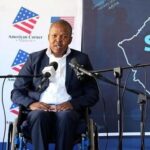
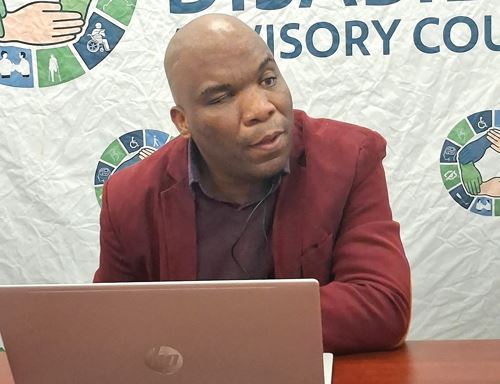
“This cost would ordinarily involve expenses related to engaging a sign language interpreter where the victim is Deaf or using large print or braille to cater for visual impairment,” Director General Nkhasi Sefuthi stated, adding that without these mandated accommodations, the system is directly locked against them.
Sefuthi also said exclusion remains visible in digital interventions meant to support survivors of GBV.
He cited the Nokaneng App, developed in 2019 to provide women with GBV information and emergency support, saying persons with disabilities were not consulted during its development.
“Because it lacks inclusive design features and targeted public awareness campaigns, the majority of women with disabilities do not even know it exists,” he said.
To address these shortcomings, PWDAC has proposed amendments to both the Persons with Disability Equity Act (PDEA) and the Counter Domestic Violence Act.
Among the proposed changes are the removal of discriminatory language, the inclusion of reasonable accommodation measures, and the integration of the disability sector into the national GBV Coordination Forum.
“Repealing all non-compliant and discriminatory language that restricts the legal capacity of PWDs to marry or exercise their fundamental rights.Mandating reasonable accommodation within the text of the law to guarantee that survivors have physical and communication access to medical, legal, and police support.Integrating the disability sector directly into the highly celebrated national GBV Coordination Forum, which has historically sidelined disability inclusion from its Terms of Reference,” Sefuthi said.
He stressed that meaningful social justice cannot be achieved while laws meant to protect vulnerable citizens continue to exclude persons with disabilities.
PWDAC has since urged Cabinet and Parliament to fast-track the proposed amendments to ensure equal protection, dignity and access to justice for all Basotho, regardless of disability.
Summary
- According to the findings, Section 2 of the Counter Domestic Violence Act relies on outdated stereotypes that undermine the autonomy and rights of persons with disabilities.
- “This cost would ordinarily involve expenses related to engaging a sign language interpreter where the victim is Deaf or using large print or braille to cater for visual impairment,” Director General Nkhasi Sefuthi stated, adding that without these mandated accommodations, the system is directly locked against them.
- Among the proposed changes are the removal of discriminatory language, the inclusion of reasonable accommodation measures, and the integration of the disability sector into the national GBV Coordination Forum.
Ntsoaki Motaung is an award-winning health journalist from Lesotho, specializing in community health stories with a focus on sexual and reproductive health and rights, as well as HIV. She has contributed to platforms like “Be in the KNOW,” highlighting issues such as the exclusion of people with disabilities from HIV prevention efforts in Lesotho.
In addition to her journalism, Ntsoaki serves as the Country Coordinator for the Regional Media Action Plan Support Network (REMAPSEN). She is also a 2023 CPHIA Journalism Fellow.