Lesotho must back SEZ agenda with laws and funding
**The Private Sector Foundation of Lesotho (PSFL) has urged the government to fast-track Special Economic Zones (SEZ) legislation and invest in industrial infrastructure, warning that legal reforms and adequate funding are essential to attract investors, diversify the economy and strengthen Lesotho's industrial competitiveness.|
Senior journalist and communications professional with extensive experience in general news reporting, specializing in business and sports journalism. Skilled in public speaking, media relations, and strategic communication, with a proven ability to deliver accurate, engaging, and impactful stories.
A strong team player who thrives in collaborative environments and adapts effectively to diverse working conditions. Passionate about continuous learning, professional growth, and enhancing communication practices to meet evolving industry demands.
The government must fast-track the enactment of dedicated Special Economic Zones (SEZ) legislation and commit adequate financial resources towards infrastructure development if Lesotho is to realise its industrialisation ambitions.
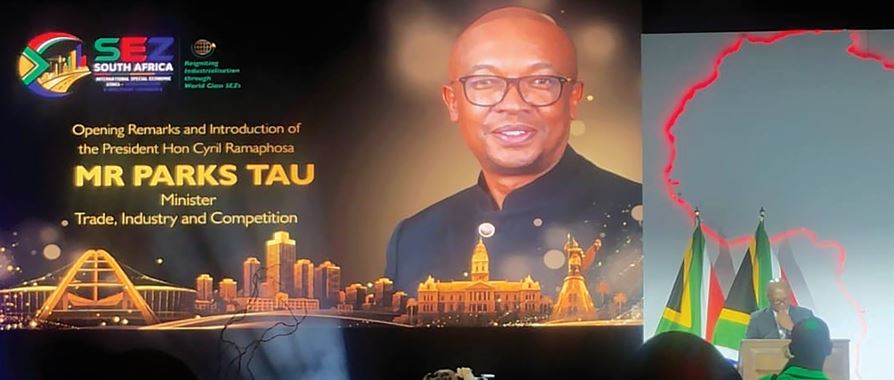
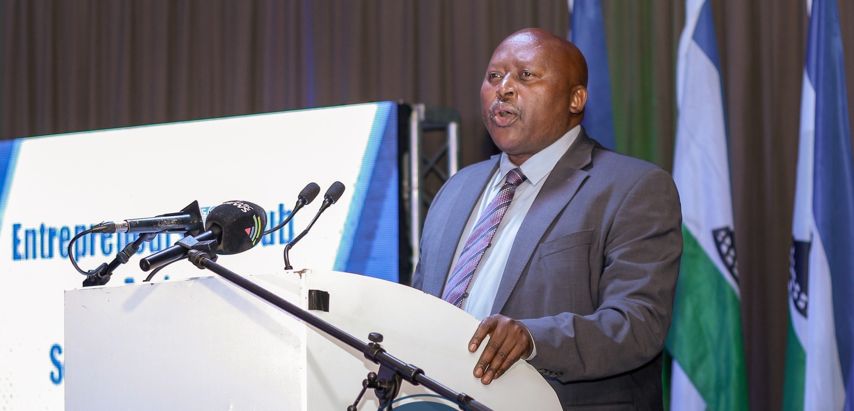
The call was made by Private Sector Foundation of Lesotho (PSFL) Chief Executive Thabo Qhesi following his participation at the Special Economic Zones Conference held in Durban, South Africa, from July 16 to 17, 2026.
The conference, which brought together policymakers, investment promotion agencies, zone operators and private sector representatives, explored strategies for building globally competitive industrial zones and strengthening cross-border economic cooperation within Southern Africa.
Drawing lessons from South Africa’s experience and benchmarking 13 successful SEZ jurisdictions globally, Qhesi believes Lesotho must move with urgency to create an enabling environment that provides investors with long-term certainty while positioning the country as a competitive investment destination.
Central to PSFL’s recommendations is the enactment of a dedicated SEZ or Free Zones Act that would provide statutory guarantees on investment incentives, land use, customs treatment and dispute resolution.
According to the foundation, legislation offers investors greater certainty than administrative incentive packages because it remains in force regardless of changes in government administrations and policy priorities.
In her budget speech earlier this year, Finance Minister Dr Retšelisitsoe Matlanyane indicated that government would finalise the development of the SEZ Bill during the 2026/27 financial year. However, no commitments were made regarding the funding required for the development of supporting industrial infrastructure.
Meanwhile, South Africa, one of the countries highlighted during the conference, has operated under dedicated SEZ legislation since 2014, a move that has strengthened investor confidence by providing clarity on zone governance and investment incentives.
Qhesi’s recommendations come at a time when Lesotho’s manufacturing sector is facing mounting external pressures. While the country’s industrial estates model has helped establish a manufacturing base that supports an estimated 30,000 to 40,000 jobs, principally in the textiles and garments sector, it remains vulnerable to developments in international trade policy, including tariff-related pressures and uncertainties surrounding preferential market access arrangements.
He noted that Lesotho’s industrialisation model still lacks several features that distinguish high-performing SEZs globally, including a dedicated legal framework, a single empowered zone authority, secure land tenure arrangements for investors, sectoral diversification and performance-based incentives.
Beyond legislative reforms, PSFL has stressed the need for government to allocate sufficient financial resources towards the development of SEZ infrastructure, arguing that investment promotion efforts cannot succeed in the absence of serviced industrial sites.
“Commit predictable public capital to the serviced land, utilities and site infrastructure that zone designation alone cannot deliver, recognising that legal reform without infrastructure investment will not attract anchor investors,” the report states.
The foundation warned that while policy reforms are necessary, they must be matched by investments in roads, utilities and industrial infrastructure capable of supporting both local and foreign investors.
PSFL has further recommended the establishment of a single, empowered SEZ authority governed by an independent board to consolidate investor registration, incentive administration and investment facilitation functions currently spread across various government institutions.
Such an arrangement, according to the foundation, would provide investors with “one front door rather than several ministries and agencies”, significantly reducing bureaucratic delays and improving the ease of doing business.
The organisation has also proposed reforms to the country’s land tenure framework through the introduction of secure, long-term and renewable lease arrangements tailored specifically for SEZ investors. The recommendation seeks to address challenges associated with the current citizen-only leasehold regime while drawing lessons from successful models implemented in countries such as Turkey and the United Arab Emirates.
To ensure that public resources deliver measurable economic returns, PSFL is advocating for incentives linked to verified performance indicators, including exports, employment creation and local value addition, rather than being granted automatically upon investment approval.
The foundation believes such an approach would minimise the risk of incentive abuse while strengthening accountability and ensuring that investment promotion measures contribute meaningfully to national development objectives.
Recognising the opportunities presented by regional integration, PSFL has also called for the pursuit of cross-border SEZ partnerships through the Southern African Development Community (SADC). Particular emphasis has been placed on the Maluti-a-Phofung Special Economic Zone in South Africa’s Free State province, which borders Lesotho.
The organisation says the neighbouring zone presents a practical opportunity for joint industrial projects, supply chain integration and investment partnerships between businesses operating on both sides of the border.
PSFL is proposing that the SADC Secretariat develop an SEZ annex under the SADC Trade Protocol to facilitate greater harmonisation of investment incentives and cross-border industrial cooperation among member states.
For the private sector, the foundation has recommended securing institutionalised representation on the board of any future Lesotho SEZ Authority while leading efforts to diversify the country’s manufacturing base beyond textiles into sectors such as agro-processing, logistics and services.
Employers have also been encouraged to partner with government and training institutions to align workforce development programmes with the needs of prospective investors and to support investments in housing and essential services required to retain skilled workers and managers.
Ultimately, PSFL argues that Special Economic Zones should be viewed as strategic instruments for industrial transformation rather than merely investment incentive schemes.
Its message to policymakers is unequivocal: without urgent legal reforms and predictable public investment in industrial infrastructure, Lesotho risks missing a critical opportunity to build a more diversified, resilient and competitive economy.
Summary
Central to PSFL’s recommendations is the enactment of a dedicated SEZ or Free Zones Act that would provide statutory guarantees on investment incentives, land use, customs treatment and dispute resolution.
While the country’s industrial estates model has helped establish a manufacturing base that supports an estimated 30,000 to 40,000 jobs, principally in the textiles and garments sector, it remains vulnerable to developments in international trade policy, including tariff-related pressures and uncertainties surrounding preferential market access arrangements.
Beyond legislative reforms, PSFL has stressed the need for government to allocate sufficient financial resources towards the development of SEZ infrastructure, arguing that investment promotion efforts cannot succeed in the absence of serviced industrial sites.
Senior journalist and communications professional with extensive experience in general news reporting, specializing in business and sports journalism. Skilled in public speaking, media relations, and strategic communication, with a proven ability to deliver accurate, engaging, and impactful stories.
A strong team player who thrives in collaborative environments and adapts effectively to diverse working conditions. Passionate about continuous learning, professional growth, and enhancing communication practices to meet evolving industry demands.
To ensure optimal experiences, we utilize technologies such as cookies to store and/or access information from your device. Granting consent to these technologies enables us to process data, including browsing habits or unique identifiers on this website. Conversely, not consenting or revoking consent may negatively impact specific features and functionalities.
Functional
Always active
The technical storage or access is strictly necessary for the legitimate purpose of enabling the use of a specific service explicitly requested by the subscriber or user, or for the sole purpose of carrying out the transmission of a communication over an electronic communications network.
Preferences
The technical storage or access is necessary for the legitimate purpose of storing preferences that are not requested by the subscriber or user.
Statistics
The technical storage or access that is used exclusively for statistical purposes.The technical storage or access that is used exclusively for anonymous statistical purposes. Without a subpoena, voluntary compliance on the part of your Internet Service Provider, or additional records from a third party, information stored or retrieved for this purpose alone cannot usually be used to identify you.
Marketing
The technical storage or access is required to create user profiles to send advertising, or to track the user on a website or across several websites for similar marketing purposes.