
The Central Bank of Lesotho (CBL) has raised the repo rate by 25 basis points to 7.00 percent per annum, citing the need to maintain the country’s exchange-rate peg, safeguard international reserves and preserve macroeconomic stability.
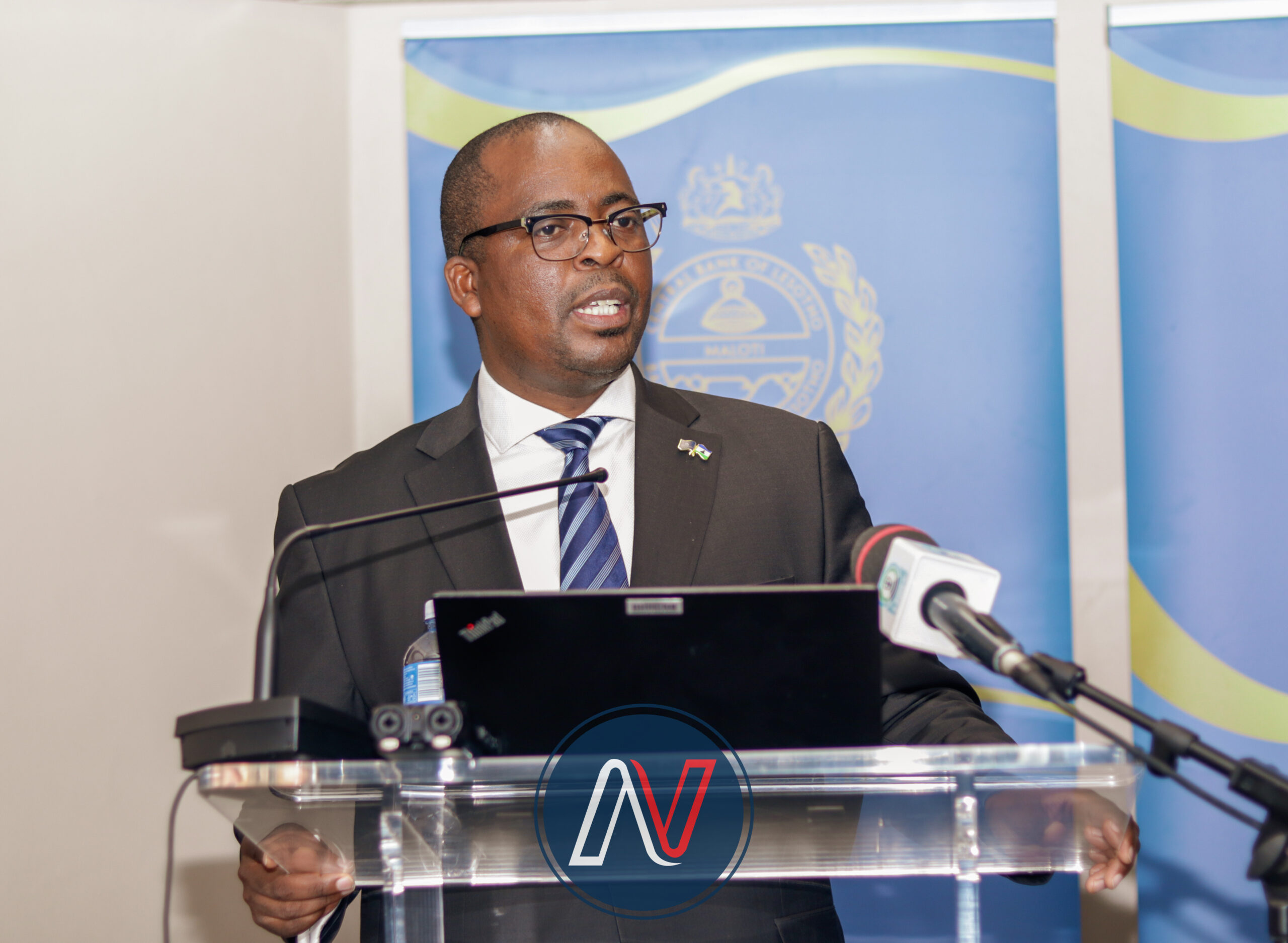
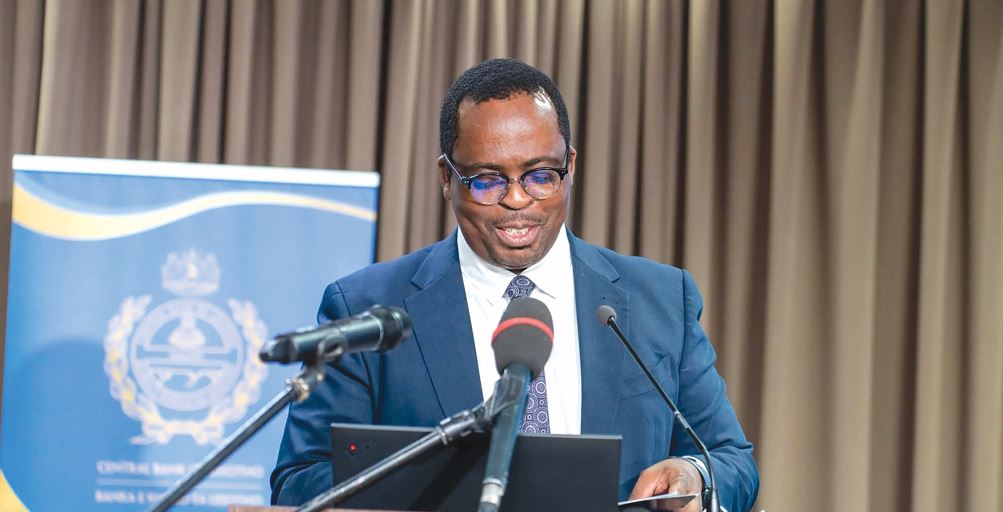
The decision was announced by CBL Governor DrMalukeLetete on Thursday, following the Monetary Policy Committee (MPC) meeting held on September 24, 2026. The CBL’s September MPC meeting is also listed on its official calendar.
The increase comes a day after the South African Reserve Bank (SARB) raised its policy rate by 25 basis points to 7.25 percent, creating a 25-basis-point differential between the two rates. SARB said the increase was driven by heightened inflation risks amid a difficult global environment.
According to Letete, the MPC considers the 7.00 percent rate appropriate because the modest differential with South Africa is sufficient to support the loti-rand exchange-rate peg while allowing room to support domestic economic activity.
“The Committee considers this level appropriate as a modest interest rate differential of 25 basis points relative to the SARB repo rate of 7.25 per cent per annum. It is deemed enough to sustain the exchange rate peg and support domestic economic activity,” Letete said.
He said the MPC would continue monitoring global, regional and domestic economic developments and remained prepared to act decisively to defend the exchange-rate peg, safeguard reserves and preserve macroeconomic stability.
Although inflation has eased, the CBL warned that the outlook has become more challenging.
Domestic inflation declined to 2.6 percent in August 2026, from 2.9 percent in July, mainly due to lower food prices and slower increases in clothing and restaurant-service prices.
However, inflation is projected to rise to 4.4 percent in 2027, largely because of higher food prices.
Letete said weather-related disruptions to food supplies, higher oil prices and fuel levies, as well as the possibility of higher operating costs being passed on to consumers, represented upside risks to inflation.
“The Committee therefore deemed it necessary to maintain a cautious and data-dependent policy stance,” he said.
The Governor said private-sector credit increased by 1.5 percent in July 2026, with business lending growing faster than household credit.
Despite the increase in credit, the credit-to-deposit ratio declined to 52.7 percent, which the CBL said pointed to adequate liquidity within the banking sector and manageable credit conditions.
“These developments indicate adequate banking-sector liquidity, manageable credit conditions and limited evidence of broad-based demand pressures,” Letete said.
The developments come against a backdrop of weak domestic demand, with the central bank indicating that economic growth is expected to remain modest.
Domestic economic activity rebounded in July after contracting in the preceding month.
The recovery was mainly supported by construction, manufacturing and transport, according to the CBL.
However, Letete cautioned that the economy continues to face structural and external challenges, including labour-market weakness, subdued domestic demand, difficulties in the mining sector and uncertainty in the global economy.
Real GDP growth is expected to remain modest in 2026 before gradually picking up in the medium term.
The country’s external position remains adequate to support the exchange-rate peg, according to the MPC.
Net international reserves (NIR) stood at US$1.209 billion as of September 18, 2026, providing a US$139 million buffer above the CBL’s target floor of US$1.070 billion.
Import cover stood at 5.6 months during the second quarter of 2026.
The CBL projects that NIR will remain above its target floor throughout the forecast period, reaching approximately US$1.217 billion by March 2027.
However, Letete warned that the reserve outlook remains exposed to risks including elevated global energy prices, rand volatility, geopolitical and trade uncertainty, commercial-bank flows and increased government spending.
Developments in South Africa remain particularly important for Lesotho because of the countries’ close economic and monetary relationship.
The South African economy contracted modestly in the second quarter of 2026, although a recovery is expected during the second half of the year. Growth is projected at 1.2 percent in 2026, with medium-term growth estimated at around 2.0 percent.
South Africa’s headline inflation increased to 4.4 percent in August, from 4.3 percent previously.
Against this backdrop, the SARB raised its policy rate to 7.25 percent. The SARB confirmed that its September MPC decision was driven by upside inflation risks and a more difficult global environment.
The CBL also expressed concern over worsening global economic conditions.
According to Letete, major central banks have adopted more restrictive monetary policy settings, while global financial conditions have tightened as bond yields increased and portfolio flows into South Africa remained volatile.
Global growth is projected to slow to 3.0 percent in 2026 before recovering to 3.4 percent in 2027.
The outlook faces risks from escalating conflict, trade fragmentation and adverse weather conditions, while global headline inflation is projected to rise to 4.7 percent in 2026, from 4.1 percent in 2025, largely because of higher energy, fertiliser and transport costs.
The Governor said the renewed escalation of conflict in the Middle East and attacks on energy infrastructure in Russia had pushed crude oil prices above US$100 per barrel, while disruptions to shipping through the Strait of Hormuz had added further pressure to the global supply environment.
With these risks weighing on the domestic and external outlook, the MPC said future monetary-policy decisions would remain data-dependent, with the protection of the exchange-rate peg and macroeconomic stability remaining central to its policy stance.
Summary
- He said the MPC would continue monitoring global, regional and domestic economic developments and remained prepared to act decisively to defend the exchange-rate peg, safeguard reserves and preserve macroeconomic stability.
- Letete cautioned that the economy continues to face structural and external challenges, including labour-market weakness, subdued domestic demand, difficulties in the mining sector and uncertainty in the global economy.
- The South African economy contracted modestly in the second quarter of 2026, although a recovery is expected during the second half of the year.

Senior journalist and communications professional with extensive experience in general news reporting, specializing in business and sports journalism. Skilled in public speaking, media relations, and strategic communication, with a proven ability to deliver accurate, engaging, and impactful stories.
A strong team player who thrives in collaborative environments and adapts effectively to diverse working conditions. Passionate about continuous learning, professional growth, and enhancing communication practices to meet evolving industry demands.