
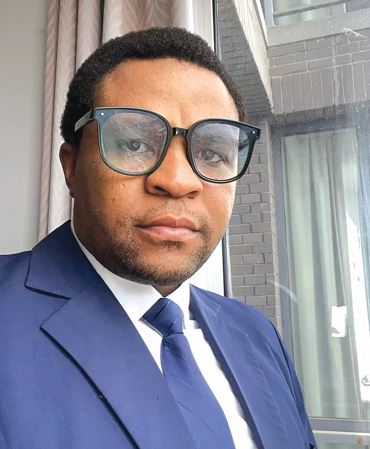

Dr Theko Tlebere
Back in 2019, while I was serving in Lusaka, Zambia, under the African Union Youth Volunteer Corps, Mme Lerato Matheka, the Managing Editor of Newsday, reached out to me with a simple but powerful request: “Can you contribute to Newsday?” At the time, I was still finding my voice as a young Mosotho in a space where nobody knew that I could write, the thought of writing from outside the borders of Lesotho, watching our country from a distance, thinking deeply about governance, youth development, African integration, and the stubborn question of national progress was so humbling yet challenging at the same time. But I had to soldier on. I accepted her invitation with humility. I did not know then that those weekly articles would become more than just opinion pieces. They became a discipline. They became a classroom. They became a platform through which I could speak to Basotho, reason with Basotho, challenge Basotho, and most importantly, challenge myself.
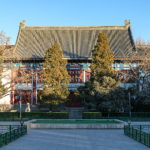
Today, I write this article with a new title before my name. I write now as Dr Theko Tlebere, having completed my Doctor of Economics degree in National Development at Peking University. I know very well what this means. It means there will now be pressure from the editors, from readers, from critics, from friends, and even from strangers. Some will expect every sentence I write to carry the weight of a doctoral thesis. Others will expect every argument to be sharper, every opinion more refined, every conclusion more mature. That pressure is fair. Growth must come with responsibility. But before we speak of titles, pressure, and expectations, allow me to say this clearly: this article is not about celebrating a title. It is about encouraging a young Mosotho somewhere in Ha Khohlopo who is tired, discouraged, broke, rejected, delayed, misunderstood, or quietly fighting a battle that nobody sees. My message is simple: soldier on.
There are moments in life when your dream will look impossible. There are seasons when your progress will be so slow that you begin to doubt whether you are moving at all. There are days when you will look at your age, your background, your bank balance, your family responsibilities, your failed applications, your rejected proposals, your delayed scholarships, your unanswered emails, and you will ask yourself: “Is this still worth it?” I am here to tell you that it is. The road to a PhD is not romantic. People often see the graduation gown, the photographs, the certificate, the title, and the congratulations. They do not see the lonely nights, the rejected drafts, the painful corrections, the silent pressure, the intellectual confusion, the financial anxiety, the homesickness, the cultural adjustment, the pressure to represent your family and your country well, and the constant fear that perhaps you are not good enough.
People do not see the moment when you read the same paragraph ten times and still do not understand it. They do not see the supervisor’s comments that force you to rewrite what you thought was already perfect. They do not see the emotional cost of being far from home while life continues without you. They do not see the birthdays missed, the funerals missed, the family events missed, the relationships strained, and the personal sacrifices made in silence. But this is the truth about meaningful achievement: it demands a version of you that comfort will never produce.
Many young Basotho want to succeed, but sometimes we underestimate the patience required for success. We want quick results in a world that rewards appearances. We want recognition before refinement. We want titles before discipline. We want positions before preparation. Yet the real work of becoming is slow. It happens in the hidden corners of life. It happens when nobody is clapping. It happens when you continue even after disappointment. It happens when you choose consistency over excitement.
When I started writing for Newsday, I was not writing as someone who had arrived. I was writing as someone who was becoming. Each article taught me how to think more clearly. Each deadline taught me discipline. Each public reaction taught me courage. Each criticism taught me humility. That is why young people must learn to respect small beginnings. The platform you have today may not look big, but it may be preparing you for the responsibility you will carry tomorrow. Do not despise the beginning. Do not despise the internship. Do not despise the volunteer role. Do not despise the small office. Do not despise the short contract. Do not despise the local opportunity. Do not despise the article with no payment, the meeting where nobody knows your name, or the first job that does not match your dreams. Sometimes God, life, and history train us through humble doors.
To young Basotho, especially those who come from ordinary families like myself, I want you to understand something very important: your background is not a prison sentence. It may shape your starting point, but it does not have to define your destination. Yes, some people will start ahead of you. Some will have networks you do not have. Some will have money you do not have. Some will have confidence because the world has always opened doors for them. But do not waste your life measuring your journey against theirs. Run your race. There is dignity in moving slowly when you are moving forward. There is dignity in trying again after rejection. There is dignity in studying under difficult conditions. There is dignity in applying again after being ignored. There is dignity in being the first in your family to attempt something unfamiliar. There is dignity in refusing to give up.
Lesotho needs young people who are not easily defeated. We need young people who can dream beyond unemployment statistics. We need young people who understand that education is not merely a personal escape route, but a national resource. We need young people who study not only to get jobs, but to solve problems. We need economists who understand villages, lawyers who understand justice, doctors who understand public health, teachers who understand nation-building, journalists who understand truth, engineers who understand infrastructure, and politicians who understand service. A degree alone will not save Lesotho. Titles alone will not save Lesotho. But disciplined, ethical, skilled, patriotic, and resilient Basotho can change the direction of this country.
Completing a PhD has taught me that knowledge must remain humble. The more you learn, the more you realize how much you do not know. That is why I do not write today as someone who has all the answers. I appear as someone who has been sharpened by study, humbled by struggle, and strengthened by perseverance. I return with a deeper responsibility to contribute to national conversations with seriousness, fairness, and courage. And yes, now that the title “Dr” is attached to my name, I know some readers will hold me to a higher standard. They should. Editors will expect better arguments. They should. Young people may expect inspiration. They should. Our country may expect more thoughtful contributions. It should. But my first message as I step into this new chapter is not complicated. It is this: do not quit too early.
Some dreams die not because they were impossible, but because people gave up in the most difficult chapter. Some people stop just before the door opens. Some abandon the application before the scholarship comes. Some drop the research before the breakthrough. Some surrender to shame because they think delay means failure. But delay is not always denial. Sometimes delay is preparation. Sometimes delay is protection. Sometimes delay is the workshop where your character is being built. Therefore, ngoaneso oa Mosotho, keep going.
If you are studying, keep studying. If you are applying, keep applying. If you are writing, keep writing. If you are building a business, keep building. If you are unemployed, keep improving yourself. If you are rejected, learn and try again. If you are tired, rest, but do not surrender. If you are far from home, remember why you started. If nobody believes in you yet, become disciplined enough to believe through your actions.
One day, the same people who saw you struggling may see you standing. One day, the same story that brought you tears may become testimony. One day, the same journey that looked impossible may inspire someone else to begin. In 2019, I wrote as a young Mosotho in Lusaka responding to a call from Lerato to contribute weekly to Newsday.
In 2026, I write as Dr Theko Tlebere, grateful for the journey, aware of the responsibility, and still committed to the same belief: Basotho youth are capable of great things when given opportunity, discipline, courage, and a reason to keep going. So, to every young Mosotho reading this: your mountain may be high, your resources may be few, your road may be lonely, and your progress may be slow. But continue. Soldier on. The future is NOW!
Summary
- Back in 2019, while I was serving in Lusaka, Zambia, under the African Union Youth Volunteer Corps, Mme Lerato Matheka, the Managing Editor of Newsday, reached out to me with a simple but powerful request.
- ” At the time, I was still finding my voice as a young Mosotho in a space where nobody knew that I could write, the thought of writing from outside the borders of Lesotho, watching our country from a distance, thinking deeply about governance, youth development, African integration, and the stubborn question of national progress was so humbling yet challenging at the same time.
- They do not see the lonely nights, the rejected drafts, the painful corrections, the silent pressure, the intellectual confusion, the financial anxiety, the homesickness, the cultural adjustment, the pressure to represent your family and your country well, and the constant fear that perhaps you are not good enough.
Welcome to Newsday Media – Your Trusted Source for News and Insights in Lesotho!
At Newsday Media, we are passionate about delivering accurate, timely, and engaging news and multimedia content to our diverse audience. Founded with the vision of revolutionizing the media landscape in Lesotho, we have grown into a leading hybrid media company that blends traditional journalism with innovative digital platforms.
Our mission is simple: to inform, inspire, and empower our readers by providing comprehensive coverage of local and global events, current affairs, and cultural happenings. Whether you’re looking for breaking news, in-depth analysis, or captivating storytelling, Newsday Media is your go-to destination for all things news-related.
With a dedicated team of journalists, editors, and multimedia experts, we are committed to upholding the highest standards of journalistic integrity and professionalism. We pride ourselves on delivering content that not only informs but also sparks conversation, fosters understanding, and drives positive change in our society.
From our flagship newspaper to our dynamic digital platforms, we offer a wide range of multimedia content to cater to the diverse interests and preferences of our audience. Whether you prefer to stay informed through print, online articles, videos, or podcasts, Newsday Media has something for everyone.
We believe in the power of storytelling to connect people, bridge divides, and inspire action. That’s why we’re dedicated to providing a platform for voices from all walks of life, championing diversity, inclusion, and authenticity in everything we do.
Thank you for visiting Newsday Media. We invite you to explore our website, engage with our content, and join us on our journey to inform, inspire, and empower our community. Together, let’s shape the future of media in Lesotho.