

Matekane’s new model faces its first credibility test
Prime Minister Sam Matekane has introduced something Lesotho has never seen before.
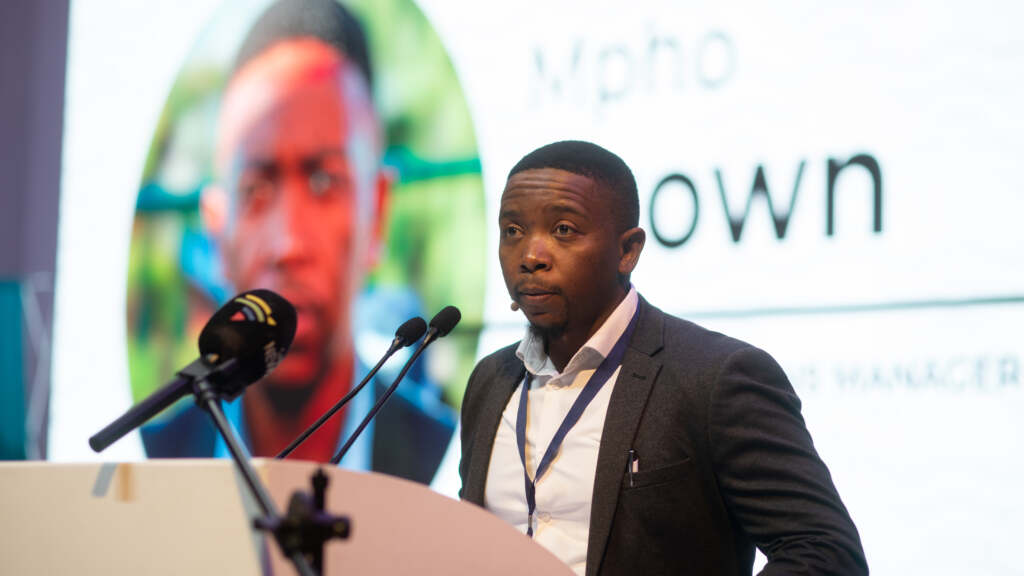
For three days last week, the heads of the Executive, Legislature and Judiciary stood before the public to explain what they have done, what has gone wrong and what they intend to do next. Borrowed from Rwanda and branded the Leadership Forum and Accountability Summit, the initiative was presented as a new era of open government.
“Our ultimate goal is to hear the voice of the society and bring up solutions where possible,” Prime Minister Ntsokoane Matekane declared at the opening.
Former Deputy Prime Minister Lesao Lehohla praised the initiative as a demonstration of democracy and good governance.
On the surface, it was refreshing.
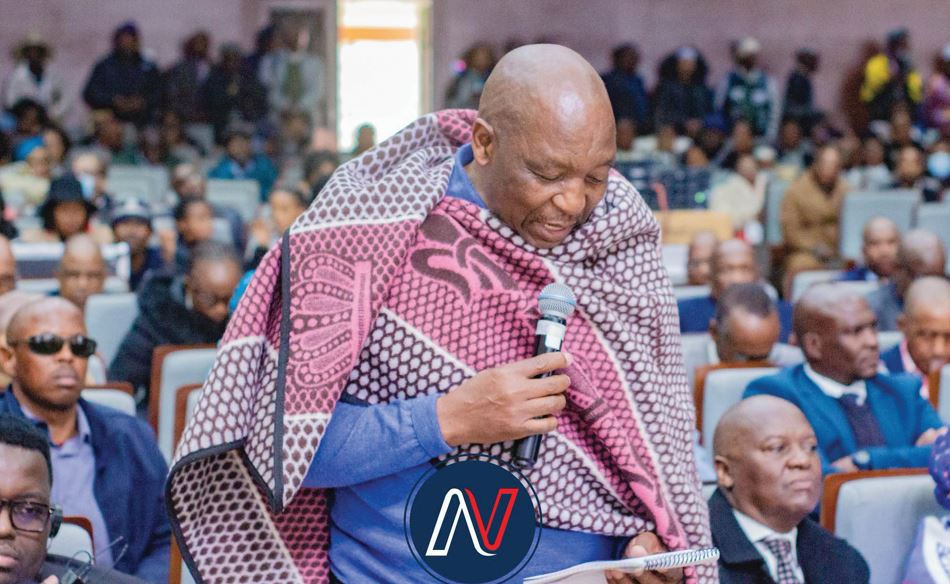
Citizens questioned leaders directly. Ministers answered uncomfortable questions. The Chief Justice, Sakoane Sakoane, spoke about judicial reforms. Parliament explained its oversight role. Government promised that the summit would become an annual exercise.
But once the applause faded, a more fundamental question emerged.
Can accountability be achieved through an annual public forum, or is accountability measured by compliance with the Constitution and the law?
That question goes to the heart of governance in Lesotho.
Section 1 of the Constitution declares Lesotho a sovereign democratic kingdom. Although democracy is not expressly defined, constitutional democracy rests on principles of accountability, transparency, openness and responsiveness. Those principles are reinforced by constitutional supremacy, judicial review, parliamentary oversight and financial accountability.
Parliament translated those constitutional ideals into law through the Public Financial Management and Accountability Act of 2011.
The Act does not encourage accountability, it requires it.
Section 34 requires spending units to prepare quarterly and annual reports detailing programme results and financial statements in accordance with international public sector accounting standards. Chief accounting officers must certify these reports and submit them to the Finance Minister within three months of the financial year’s end.
Failure attracts a surcharge of M500.
Section 35 demands consolidated financial statements within five months, Section 37 requires their presentation to Parliament within eight months. Section 43 compels public enterprises to submit audited annual reports within three months.
However, the evidence of systemic failure is overwhelming.
A 2024 PEFA assessment found that many state-owned enterprises simply fail to submit their financial statements within the stipulated time.
Many state institutions rarely publish consolidated reports. Local councils submit their financial statements to the Ministry of Local Government to be audited as part of the ministry’s accounts, with no independent consolidated report on their financial performance published annually.
The United Nations Convention against Corruption review noted that procuring entities had not been submitting annual procurement plans or adhering to other prescribed measures. Perhaps most damningly, Lesotho has been receiving adverse audit opinions on its Consolidated Financial Statements from the Office of the Auditor General for at least the past five years.
Against that background, the Accountability Summit represents a significant political innovation—but it is not a substitute for legal accountability.
There is an important distinction. A summit allows leaders to explain themselves. The law requires them to prove their performance.
That distinction became apparent throughout the three-day forum.
Passports: A promise that cannot be stamped
Prime Minister Matekane announced that the passport backlog would be cleared within three months and that new passports would thereafter be issued within four days.
But this is far from the first such assurance. Matekane has previously told citizens passports were available while people continued to be turned away from passport offices around the country. Some lost jobs in South Africa because the government could not provide documents in time. Others were forced to cross swollen rivers illegally to reach work.
The Ombudsman’s recent investigation, damningly titled: “Stateless in Lesotho,” revealed systemic failures including corruption involving bribes ranging from M300 to M600 in at least four offices, shortages of passport materials, outdated systems, and production capacity dropping to as low as 50 passports per day.
The report established that 65 percent of respondents were never given reasons for delays.
Minister of Home Affairs Voeswa Tsheka, speaking at the summit, urged patience while sitting on a portfolio the Ombudsman has declared to have subjected citizens to “prolonged and profound injustices.” The irony would be laughable if the consequences were not so devastating.
Matekane also promised the long-delayed Royal Palace would finally be completed within 18 months and the Royal Family would move in during that period.
He generated applause and hope. But the project’s history offers little cause for optimism.
Construction began in August 2011, scheduled for completion by May 2013 at a cost of M136.7 million. Work was suspended in April 2013, resumed after redesigns, and stalled repeatedly.
Costs have ballooned past M500 million, with the Auditor-General’s report revealing shocking overpayments of up to 3,000 percent on some contracts .
Public Works Minister Matjato Moteane, who inherited the project, has called for former Principal Secretaries to be held accountable. Moteane noted that none of the officials responsible for the mess, most still alive, have faced scrutiny. In a system of genuine accountability, this would be unthinkable.
The palace project, alongside the Setsoto Stadium upgrade, the failed Lesotho National Broadcasting Services (LNBS) complex, represents not just mismanagement but the systematic failure of public finance oversight.
FIFA condemned Setsoto Stadium in 2021, forcing Lesotho’s national team, Likuena, to play home matches abroad at considerable cost. Despite promises, the upgrade has dragged on for nearly five years.
Government also committed to making the summit an annual event.
This announcement generated optimism. But optimism alone is not accountability.
The Prime Minister has made major commitments before.
In 2022 he promised performance contracts for ministers, yet those contracts have never been published. Without them, Basotho have no objective benchmark against which to assess ministerial performance.
He declared youth unemployment a national disaster in 2025 and announced ambitious employment targets, but the summit provided little measurable assessment of those commitments.
These examples reveal the difference between announcing projects and delivering results.
Rwanda’s model, Lesotho’s reality
One of the summit’s most valuable moments came not from Lesotho’s own leaders but from Rwanda’s Minister of State for the National Treasury, Godfrey Kabera.
His message was simple.
Governments generally know what needs to be done.
Their failure lies in implementation.
He argued that leaders must support implementing officers, move faster on agreed priorities and engage citizens continuously rather than speaking only to themselves.
Kabera challenged the idea that external support is required for basic duties. He questioned whether donors truly need to instruct people to do work that is already understood to be essential. “The first accountability is accountability to oneself,” he said.
But Rwanda’s model cannot simply be imported. Rwanda built structures enabling interaction with people at the grassroots level. Lesotho’s summit, as the Transformation Resource Centre (TRC) noted, was organised within such a short timeframe that participants were still awaiting key documents when it began.
The Judiciary perhaps offered the clearest example of measurable accountability.
Chief Justice Sakoane reported concrete reforms, including opening a High Court division in Mohale’s Hoek, digitising parts of the court system, expanding access to justice through pro deo representation and introducing deadlines requiring High Court judgments within 90 days and subordinate court judgments within 45 days.
These are commitments that can be independently verified.
That is what accountability looks like.
Deputy Prime Minister, Ntomeng Majara, reported successes: 141 classrooms made available, 59 villages connected to electricity, 29,000 households electrified, tourism growing from 541,000 to 960,000.
But these achievements exist alongside a pattern of promises that never materialise. The Youth Bill, budgeted for last year, has not appeared. The bilateral labour migration agreements with Qatar, Seychelles, and Mauritius remain unfinalised two years after the ministry was allocated M71.6 million to support them.
Factory workers who were promised insurance and nearby housing in 2022 have heard nothing as factories close due to AGOA uncertainty. Deported Basotho from South Africa received buses for repatriation but no plans for reintegration, financial assistance, or jobs.
The credibility deficit
Matekane’s summit represents a genuine innovation in Lesotho’s governance. Bringing the three arms of state to account before citizens is unprecedented and should be commended. His commitment to make it an annual affair suggests the government recognises the need for more than rhetorical accountability.
But accountability is not a one-off event. It is a daily discipline of compliance, transparency, and consequence. The PFMA Act exists precisely because Lesotho’s Constitution demands nothing less. Its systematic violation is not merely administrative negligence, it is a constitutional betrayal.
The summit’s true value will not be measured by applause lines or even by the clearing of passport backlogs. It will be measured by whether the government finally complies with its own laws, whether ministries submit their financial statements on time; whether the Auditor-General’s reports lead to consequences, not just more reports, whether the accountability demonstrated over three days becomes the standard for every day.
Until then, the summit remains what critics of similar exercises in Rwanda have long noted: a performance of accountability that risks becoming a substitute for the real thing.
Summary
- Local councils submit their financial statements to the Ministry of Local Government to be audited as part of the ministry’s accounts, with no independent consolidated report on their financial performance published annually.
- Perhaps most damningly, Lesotho has been receiving adverse audit opinions on its Consolidated Financial Statements from the Office of the Auditor General for at least the past five years.
- Against that background, the Accountability Summit represents a significant political innovation—but it is not a substitute for legal accountability.
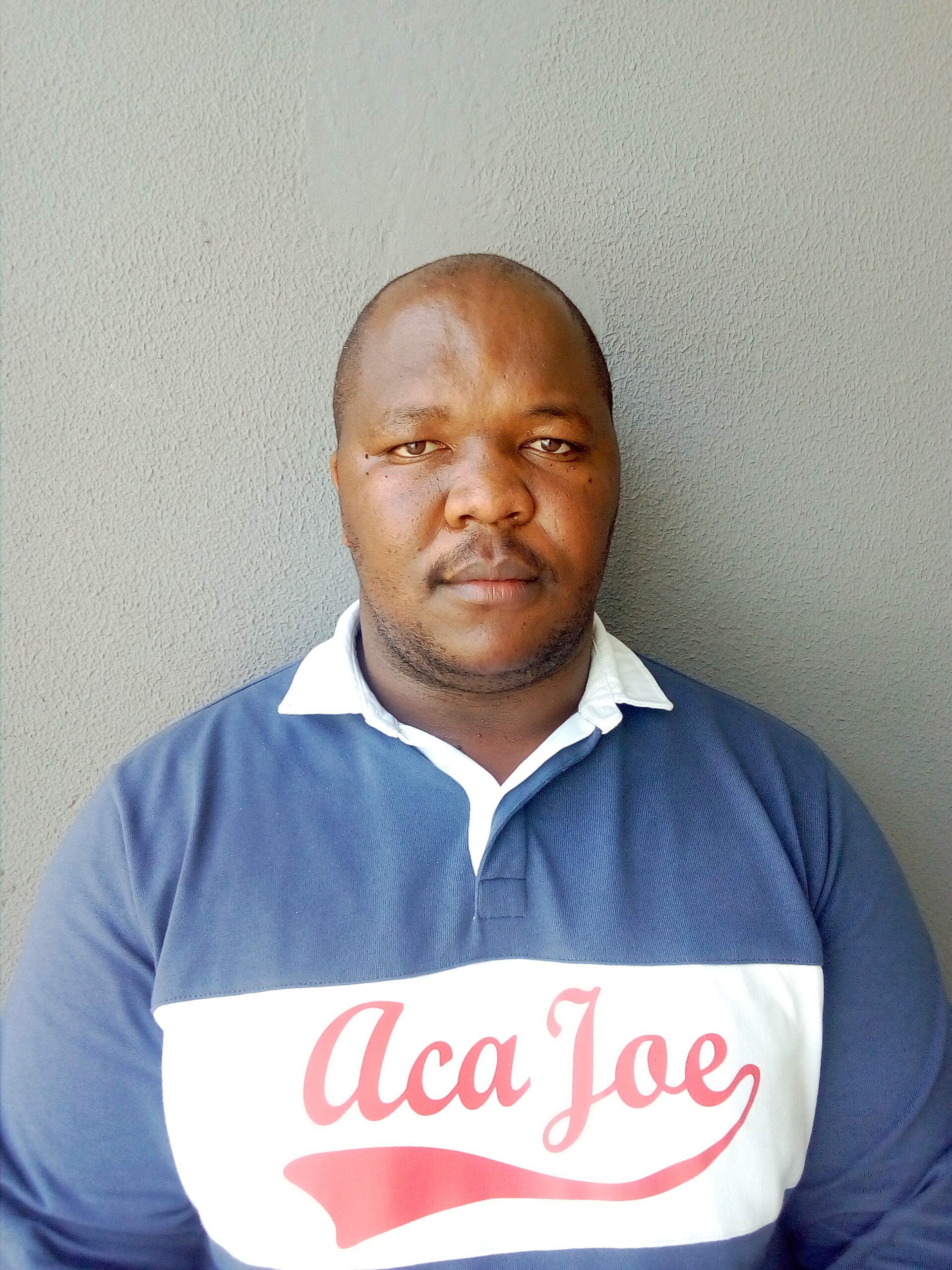
Thoboloko Ntšonyane is a dedicated journalist who has contributed to various publications. He reports on accountability, human rights, exposes corruption and wrong doing by those in power. He reports have exposed corruption, abuse of power, fraud, misconduct and negligence. He subscribes to evidence-based reporting. He reports on governance, parliament, courts, climate change, human rights, sexual and reproductive health rights (SRHR), health, business and agriculture. He gives a voice to the marginalised while also demanding accountability. His work inspires change, triggers dialogue and also promote transparency in a society.