

… Lesotho still fails its poorest learners
In 2000, Lesotho did something few of its neighbours had managed. It promised every child, regardless of what their parents earned, a place in a primary school classroom. Twenty-six years later, that promise looks less like the foundation of an equal society and more like the first rung of a ladder that keeps breaking under the feet of the poor.
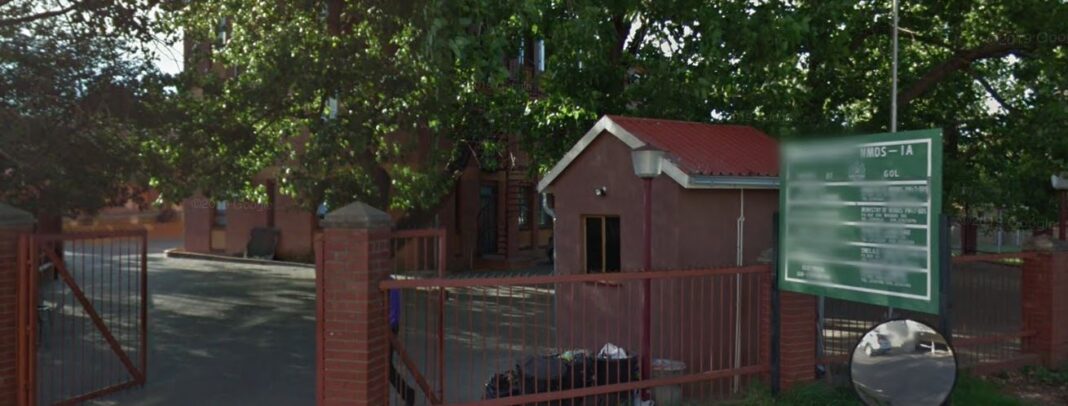
The latest evidence of that breakage is not in a village school but in a loan office. The National Manpower Development Secretariat (NMDS), the body that finances most Basotho students through university, is now enforcing a clause that can deny a student a loan because of a debt run up by a parent or guardian, sometimes years before the student was born.
Human rights organisation Advocates for the Supremacy of the Constitution (SECTION 2) calls it unconstitutional. A closer look at the numbers suggests it is also something else. It is the newest, sharpest expression of a system that was built to be universal and has, in practice, become elitist.
Free Primary Education (FPE) was rolled out grade by grade from 2000, reaching all seven primary grades by 2006, and was only written into law as compulsory a decade later through the Education Act of 2010. The policy did what it was designed to do at the primary level. Net enrolment climbed to roughly 82 percent, up from a system in which, by some estimates, a third of school-age children had been shut out entirely.
When the 2010 Act was signed, UNICEF’s then Lesotho representative, Dr Ahmed Magan, framed it as unfinished business rather than a finish line. The next phase of implementation, he said at the time, would be the decisive stage in making the right to free, compulsory education a reality rather than a slogan. Sixteen years on, that decisive stage has arrived at secondary and tertiary level, where school fees were never abolished and where the state’s commitment thins out considerably.
The leak in the pipeline
The numbers tell an uncomfortable story about what happens to children after primary school. UNESCO Institute of Statistics data cited by the International Institute for Capacity Building in Africa put Lesotho’s lower secondary completion rate at just 39 percent for boys and 56 percent for girls as of 2019. Gross enrolment in tertiary education that year sat at roughly 8 percent for men and 12 percent for women, meaning that for every ten young Basotho who should, by age, be in university or college, eight or nine simply are not there.
A World Bank-commissioned study into the long-term effects of FPE found that although the transition rate from primary to secondary school is relatively high, at around 81 percent, a high Junior Certificate failure rate, fluctuating between roughly a quarter and a third of candidates in the years studied, combined with a 16 percent secondary dropout rate to thin the pipeline sharply. The study’s own conclusion was blunt. It said that those who ultimately reach university tend to be a narrow slice of especially motivated, high-achieving students, disproportionately from better-off households, precisely the outcome free primary education was meant to prevent.
This is the context in which the NMDS dispute has to be read. A loan clause that can freeze a student’s funding over a parent’s unpaid debt is not an isolated administrative rule but it is one more filter in a system that has been filtering out poor children at every stage since the day they leave primary.
“The child did not cause the debt”
NMDS itself insists it is simply protecting a revolving fund. Its Director of the Loan Bursary Fund, Thabo Ntoi, has been explicit that the assistance is not charity. “The Fund therefore does not provide grants or free financial assistance,” he said in an August 7 statement, arguing that repayment is what keeps the scheme alive for the next generation of students. According to Ntoi, under the Fund’s rules, a loan is treated as household-based, potentially binding a borrower’s parents, spouse and children, and it is that last category that has drawn SECTION 2’s fire.
The organisation does not dispute that NMDS is a loan scheme, or that government has a right to recover public money. Its objection is narrower and, it argues, constitutional. “A child born into a household years after a parent took out a loan was never a party to that contract and cannot lawfully be bound by it.” As SECTION 2 puts it: “The child did not cause the debt, did not agree to it and could not have prevented the default.”
SECTION 2 has grounded that argument in the Constitution itself, Section 18’s protection against discrimination on grounds of birth or status, Section 19’s guarantee of equality before the law, Section 26’s commitment to equality of opportunity for disadvantaged groups, and Section 28’s pledge that Lesotho shall endeavour to make education available to all. It had given NMDS until August 14, 2026 to withdraw the clause or face a court challenge seeking to have it declared null and void. The deadline was extended after NMDS agreed to meet the organisation on Friday, August 21. NMDS later asked to postpone the meeting.
Building an elite, not a nation
Strip away the legal language and the pattern becomes familiar. Free primary education was sold as the great equaliser, a child’s start in life would no longer depend on a parent’s payslip. But every stage after Standard 7 reintroduces exactly that dependency, school fees at secondary level, tuition and accommodation costs at tertiary level, and now, a parent’s credit history. A system that filters this aggressively by household income at every gate is not producing universal education. It is producing a small, self-selecting elite who make it through, while the rest are quietly returned to the villages they came from.
That matters well beyond any one family’s court case, because more than half of Basotho, over 75 percent of the population is poor or economically vulnerable, according to a 2019 World Bank and Bureau of Statistics poverty assessment, cannot simply absorb a lost loan and try again next year. For a household living close to the poverty line, a delayed or denied allocation is not an inconvenience. It is the difference between a child entering a lecture hall and a child staying home for good.
A country that cannot afford to lose its talent
The irony is that Lesotho can least afford to be narrowing its pipeline of skilled graduates. The country has, by multiple measures, one of the most severe shortages of specialist health workers in the world. Roughly 0.9 doctors for every 10,000 people, according to Ministry of Health and World Bank-linked data, in a country that still has no medical school of its own and trains its doctors abroad. District-level figures compiled for a 2017 review of public health spending found Maseru with 2.3 doctors per capita against a low of 0.26 in Mafeteng, a gap that tracks, closely, the same rural-urban divide that shapes access to secondary and tertiary education.
The shortage is not confined to medicine. At the National University of Lesotho (NUL), the country’s oldest and largest institution, researchers examining the university’s own restructuring noted that the Council on Higher Education (CHE) requires only PhD holders to supervise postgraduate students, yet senior, doctorally qualified staff remain scarce in several departments, with one senior NUL figure quoted in the Lesotho Times attributing the churn to qualified academics leaving for better-paid work elsewhere. A nation trying to grow specialist doctors, engineers and PhD-holding researchers cannot do so while narrowing, rather than widening, the number of poor and working-class students who reach a lecture theatre in the first place.
The next test
NMDS has indicated it will not respond to SECTION 2’s challenge outside a legal process, and both sides agree, at least, that the Fund needs to remain solvent for future students. The disagreement is over who should carry the cost of keeping it that way. SECTION 2’s position is that punishing a student for a parent’s default does not recover a single loti of the outstanding deb. it simply creates, in the organisation’s words, a second victim of it.
26 years ago, Lesotho decided that a child’s education should not be hostage to their family’s finances. Whether that principle survives its collision with a controversial clause of the NMDS policy may now be decided in court. But the deeper question the case exposes will remain long after any judgment. A country that already loses its brightest students to fees, distance and now debt cannot simultaneously complain that it lacks the doctors, engineers and doctorate-holders it needs to grow. The two problems are, in the end, one and the same.
Summary
- The National Manpower Development Secretariat (NMDS), the body that finances most Basotho students through university, is now enforcing a clause that can deny a student a loan because of a debt run up by a parent or guardian, sometimes years before the student was born.
- A World Bank-commissioned study into the long-term effects of FPE found that although the transition rate from primary to secondary school is relatively high, at around 81 percent, a high Junior Certificate failure rate, fluctuating between roughly a quarter and a third of candidates in the years studied, combined with a 16 percent secondary dropout rate to thin the pipeline sharply.
- A loan clause that can freeze a student’s funding over a parent’s unpaid debt is not an isolated administrative rule but it is one more filter in a system that has been filtering out poor children at every stage since the day they leave primary.

Seabata Mahao is a general news reporter with special focus on Business and Sports. Started working at Newsday in 2021. Working in a team with a shared goal is what I enjoy most and that gives me the motivation to work under any environment leading to growth.