

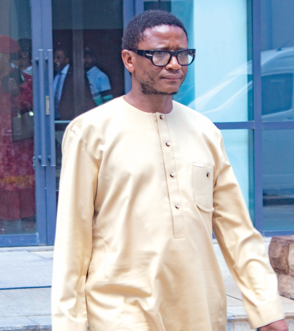
Dr. Tšeliso Moroke
By now, we have a clear blueprint of what development is supposed to achieve. Development is not an abstract aspiration; it is measurable, tangible, and lived. It must create employment, eradicate poverty, and diffuse inequality. Anything less is an administrative motion without societal progress.
The question, therefore, is unavoidable: is our national budget an instrument of development, or has it degenerated into a ritual? An annual performance dressed in numbers, detached from the lived realities of the people?
Year after year, budgets are presented with technical precision and political confidence. Allocations are made, sectors are named, and projections are tabled. But beneath this procedural correctness lies a deeper concern: does the budget meaningfully confront unemployment, or does it merely acknowledge it? Does it structurally reduce poverty, or does it manage it? Does it actively narrow inequality, or does it quietly reproduce it?
A budget that is serious about development must be intentional. It must disrupt existing patterns of exclusion, not reinforce them. It must prioritise productive sectors, those that create jobs at scale, over administrative expenditure that sustains the state but does not grow the economy. When a government spends more on maintaining itself than on empowering its people, it signals a misplaced set of priorities. It reflects a state that is inward-looking rather than people-centred, procedural rather than transformational.
Equally critical is whether the budget is geospatially aware. Development does not occur in a vacuum; it is shaped by geography. Where people live, how they move, and what infrastructure connects them to opportunity all determine economic outcomes. A budget that ignores spatial inequality entrenches it. Rural communities remain isolated, urban areas become overburdened, and economic participation remains uneven. Spatial planning must not be an afterthought; it must be central to how resources are allocated. Infrastructure investment must be deliberate, linking production zones to markets and communities to services. Otherwise, we are merely financing isolation.
Beyond geography, there is geopolitics. We operate in an interconnected world where global events shape domestic realities. The ongoing tensions involving Israel, the United States, and Iran are not distant conflicts with no bearing on us. They have direct implications for global oil prices, food supply chains, and inflationary pressures.
The critical question is whether our budget anticipates these shocks or merely reacts to them after the damage is done.
When fuel prices rise, transport costs increase. When transport costs increase, food prices follow. When food prices rise, the poor are pushed deeper into vulnerability. This chain reaction is predictable. It is not a surprise, it is a pattern. A responsive budget must therefore include buffers: strategic reserves, targeted subsidies, and investment in local production to reduce dependency on imports.
If we know that global instability will affect fuel and food prices, why are we not building resilience into our economic framework? Why are we not aggressively investing in agriculture to secure food sovereignty? Why are we not diversifying energy sources to reduce exposure to global oil volatility? Why are we not strengthening local industries so that external shocks do not immediately translate into domestic crises?
A budget that is blind to these realities is not neutral. It is negligent.
What we are witnessing is a deeper structural issue: the state behaves as though budgeting is an exercise in compliance rather than a tool for transformation. It satisfies legal and procedural requirements, but it does not fundamentally alter economic conditions. It becomes predictable, safe, and ultimately ineffective. It reassures markets and political actors, but it does not reassure the unemployed graduate, the struggling household, or the informal trader navigating daily uncertainty.
Development requires courage. It requires breaking from the comfort of incrementalism and confronting entrenched inefficiencies. It requires aligning expenditure with outcomes, not just intentions. It requires accountability that goes beyond reporting and enters the realm of measurable impact.
If employment is the goal, then every major allocation must be interrogated: how many jobs will this create? If poverty eradication is the goal, then spending must be assessed on its ability to lift people out of dependency into productivity. If inequality is to be reduced, then the distributional impact of the budget must be explicit, not assumed.
Ultimately, the budget must answer a simple but uncomfortable question: who does it serve?
The danger we face is normalising a budget that moves numbers but does not move the country. A document that satisfies Parliament but fails the people is not a success; it is a systemic failure dressed in compliance.
The moment demands more than technical competence; it demands political will. A budget must be a living document, responsive to both domestic realities and global shocks. It must anticipate, adapt, and protect. It must be bold enough to shift resources where they matter most, and disciplined enough to measure whether those shifts are working.
Otherwise, it becomes what it increasingly appears to be: a ritual of governance that maintains the illusion of progress while the underlying conditions remain unchanged.
This is how the country moves – or fails to move at all.
Summary
- is our national budget an instrument of development, or has it degenerated into a ritual.
- When a government spends more on maintaining itself than on empowering its people, it signals a misplaced set of priorities.
- It is not a surprise, it is a pattern.

Your Trusted Source for News and Insights in Lesotho!
At Newsday Media, we are passionate about delivering accurate, timely, and engaging news and multimedia content to our diverse audience. Founded with the vision of revolutionizing the media landscape in Lesotho, we have grown into a leading hybrid media company that blends traditional journalism with innovative digital platforms.