Tšeliso Moroke
Isn’t politics sometimes indistinguishable from a cult?
It is an uncomfortable question, but one worth asking.
In many political systems, particularly in fragile democracies, political loyalty often goes far beyond policy agreement or ideological alignment. Instead, it becomes personal devotion to a leader. Once politics reaches that stage, debate fades, scrutiny becomes betrayal, and loyalty becomes the ultimate currency.
One of the classic characteristics of cults is the creation of a defensive circle around a central figure. The leader is not merely supported; they are protected, praised, and shielded from criticism by loyal followers. The movement begins to revolve around the personality of the leader rather than the ideas or institutions that should guide public life.
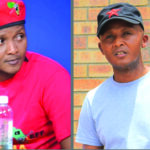
We have seen examples of this in politics across the region. At one point, while serving as Youth League leader in the African National Congress Youth League, Julius Malema publicly declared that he was prepared to “kill for” and “die for” Jacob Zuma, then President of South Africa and leader of the African National Congress. The statement was dramatic, but it revealed something deeper about the nature of political loyalty: the transformation of political allegiance into personal devotion.
Such language is rarely about governance. It is about identity, belonging, and power.
Cults often demand unquestioning loyalty, and political movements sometimes slide into the same pattern. When supporters feel compelled to defend a leader regardless of performance, accountability disappears. A leader may fail to deliver on promises, preside over poor governance, or tolerate corruption, yet the defence machinery remains intact. Every criticism is dismissed as sabotage, jealousy, or opposition propaganda.
At that moment, politics stops being about public service.
It becomes about protecting the leader.
A healthy political culture should be built around institutions, policies, and accountability. Leaders should be temporary custodians of power, not objects of devotion. Citizens should support ideas and programmes, not personalities. When political loyalty becomes blind loyalty, democracy weakens because criticism, which is the lifeblood of accountability, is treated as disloyalty.
This is where the line between politics and cult behaviour begins to blur.
In cults, members often believe the leader embodies the movement itself. To criticise the leader is therefore seen as attacking the entire organisation. The same logic frequently emerges in politics: once the leader is equated with the party, and the party equated with the nation, dissent becomes unacceptable.
But politics should never operate on that logic.
No political leader is the state. No political party is the nation.
The danger of cult-like politics is that it encourages emotional loyalty instead of rational judgment. Supporters begin to measure commitment not by the strength of ideas but by the intensity of their defence of the leader. The louder the defence, the greater the loyalty.
Yet governance requires the opposite.
A functioning democracy requires citizens who question leaders, supporters who demand delivery, and party members who are willing to challenge their own leadership when it fails.
Without that, political organisations risk becoming echo chambers where leaders only hear praise while the country suffers the consequences of poor decisions.
Another feature of cult-like politics is the creation of a moral hierarchy within the movement. Those closest to the leader are treated as guardians of the faith. Their role is not necessarily to contribute ideas or improve governance, but to defend the leader against critics both inside and outside the organisation.
Once this dynamic takes hold, internal democracy disappears.
Members who raise legitimate concerns about governance, corruption, or poor leadership are quickly labelled enemies of the movement. Instead of debating the substance of the criticism, the response becomes personal: questioning the motives, loyalty, or patriotism of the person raising the issue.
This is precisely how cults maintain control, by turning criticism into betrayal.
Political parties are supposed to be spaces where ideas compete, policies are debated, and leadership is held accountable. But when the leader becomes untouchable, those mechanisms collapse. Party conferences, internal elections, and policy debates become ceremonial exercises whose real purpose is to reaffirm loyalty rather than shape direction.
The leader becomes the centre of gravity around which everything else rotates.
In such an environment, performance becomes secondary to loyalty. What matters is not whether a leader is delivering on economic growth, public services, or institutional reform. What matters is whether they continue to command devotion from their supporters.
This is where politics becomes dangerous.
When loyalty replaces performance as the standard by which leaders are judged, poor governance can survive indefinitely. Supporters will rationalise failure, reinterpret reality, or blame external forces rather than confront the possibility that their leader may simply be ineffective.
This phenomenon is not unique to any one country or political party. It appears in many political systems where institutions are weak and personalities dominate the political landscape.
In smaller states especially, politics can easily become personal rather than institutional. Leaders become larger than the organisations they lead, and parties begin to resemble personal vehicles for power rather than democratic institutions.
The long-term consequences are severe.
First, it discourages capable individuals from entering politics. Many professionals, intellectuals, and technocrats avoid political life precisely because they see that success often depends more on loyalty to individuals than competence or ideas.
Second, it weakens state institutions. When loyalty to a leader becomes the primary qualification for positions of power, institutions stop functioning independently. Decisions are made not on the basis of national interest, but on the basis of protecting political authority.
Third, it creates political instability. Once politics revolves around personalities, the fall of a leader can destabilise the entire system because institutions are too weak to provide continuity.
This is why mature democracies work hard to separate leaders from institutions. Leaders come and go, but the system must remain stable and accountable.
Politics should never require anyone to “die for” a leader. That language belongs on battlefields, not in democratic politics.
In a democracy, leaders are not objects of sacrifice. They are public servants whose legitimacy depends entirely on performance and accountability.
The moment politics begins to demand devotion instead of scrutiny, we should pause and ask ourselves a serious question:
Are we strengthening democracy, or quietly building political cults?
Summary
- One of the classic characteristics of cults is the creation of a defensive circle around a central figure.
- The movement begins to revolve around the personality of the leader rather than the ideas or institutions that should guide public life.
- Supporters begin to measure commitment not by the strength of ideas but by the intensity of their defence of the leader.

Your Trusted Source for News and Insights in Lesotho!
At Newsday Media, we are passionate about delivering accurate, timely, and engaging news and multimedia content to our diverse audience. Founded with the vision of revolutionizing the media landscape in Lesotho, we have grown into a leading hybrid media company that blends traditional journalism with innovative digital platforms.