Labour dispute threatens integrity of social protection data
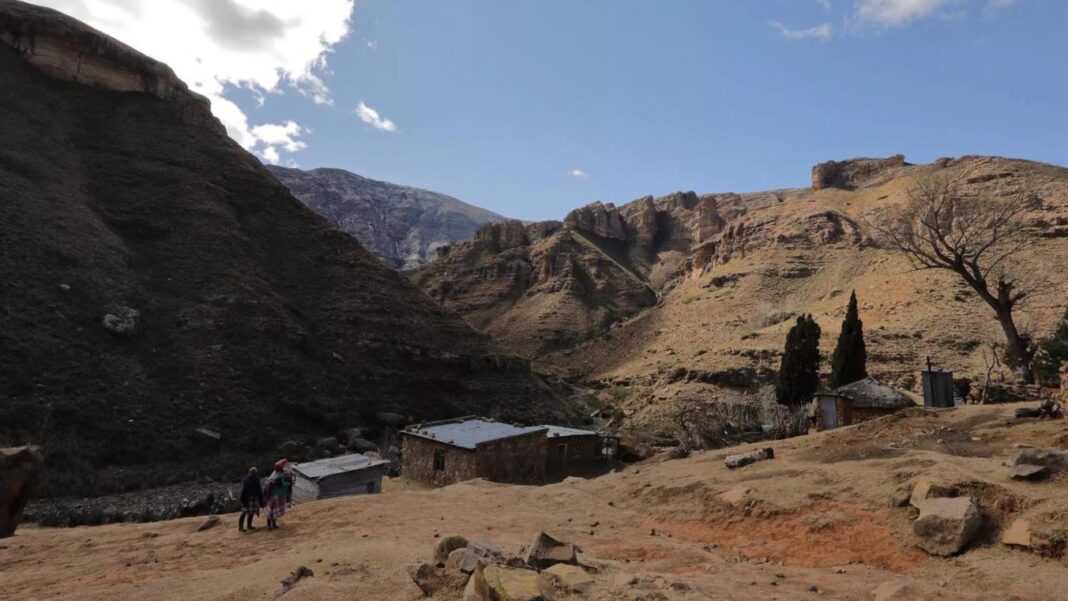
Photo: UNICEF-Lesotho-Data-in-Focus-NISSA-2022-photo.webp (Article title
The Lesotho National Information System for Social Assistance | UNICEF Lesotho
URL
https://www.unicef.org/lesotho/stories/lesotho-national-information-system-social-assistance
Date accessed
March 16, 2026)
Authored by our expert team of writers and editors, with thorough research.
An ongoing National Information System for Social Assistance (NISSA) data collection exercise in eight districts is facing significant concerns over the credibility of the information being gathered after a labour dispute led to the dismissal of 26 field workers.
The conflict, involving the project consultant Transatlantic Development Limited (TDL) and its enumerators working in Thaba-Tseka district, has raised alarm over the reliability of the data that will ultimately inform social protection policies under the Ministry of Gender, Youth and Social Development.
The NISSA system is designed to help the government identify vulnerable households and allocate social assistance such as child grants and other welfare programmes. Any compromise to the integrity of this data could therefore affect the targeting of some of the country’s poorest households.
In a protest over the pay dispute, workers temporarily withheld project equipment including tablets and vehicles used for field data collection in their possession, although these were later returned to the company.
The incident has sparked doubts about the security and reliability of the information stored in the devices during the standoff.
Studies have shown that any breakdown in relations between workers and project management can compromise data accuracy, whether through incomplete interviews, rushed surveys or deliberate alterations, in which case its usability would questionable.
This publication has established that the dispute began when TDL allegedly failed to pay salaries for field workers operating in Thaba-Tseka district by the end of February 2026, despite the workers being engaged under a three-month contract that actually began on 29 December 2025.
The workers also claimed that their contracts were due for extension but that no written communication confirming the extension was issued; one of the sticking issues they raised with their employer during the standoff.
According to the employees, the delay in salary payments triggered frustration and uncertainty among staff as they were already working in remote areas collecting household information. The workers maintain that failure of TDL to pay them on time constituted a breach of their employment contract.
“…on 25 February 2026, a memo was shared by Queeneth which informed field staff that February salary will not be paid, rather will be paid on the March 16th, therefore this violates contractual agreement with TDL in particular Clause 6.7,” the workers said in a correspondence to their employer.
The workers, who preferred to speak anonymously due to fear of reprisal, said the communication provided little explanation for the delay and left them uncertain about whether they would continue working under valid contracts.
The situation eventually escalated when some workers reportedly stopped working in early March in protest over the delayed salaries and lack of contract clarity. Following the work stoppage, TDL responded by dismissing 26 out of 30 workers in Thaba Tseka.
In its communication to employees, the company argued that the workers had failed to follow the proper grievance procedures provided in their contracts.
“Your decision not to return to work following the expiration of your formal contact, your failure to follow internal grievance and dispute resolution procedures, and your undertaking of a tools down action, which is ordinarily considered a measure of last resort, clearly indicates that you are no longer interested in carrying out your duties on this assignment.
“This conduct constitutes breach of contractual agreement (Clause 5.4) and grounds fro termination. Consequently, no extension of your contract will be issued, and your original contractual agreement is hereby considered terminated,” TDL said.
TDL further confirmed that employees who had participated in the tools-down protest would not have their contracts extended.
“This letter serves to formally acknowledge receipt of your recent message. Further to your complaints regarding the contract variation and TDL’s request to extend the contract until 31st March 2026, this is to notify you as follows formally:
• For team members whose contracts ended on 28th February 2026 and who did not report to work today following their decision to embark on a tools-down action, their contracts will not be extended beyond the stated end date.
• For Supervisors whose contracts were scheduled to end on 6th March 2026 and who did not report to work today following their decision to embark on a tools-down action, their contracts are hereby discontinued with immediate effect.”
The company also indicated that any outstanding payments would depend on the completion and verification of submitted data.
“Further note that any outstanding payments due to you will be processed only upon confirmation of complete, quality-assured data submission and a satisfactory handover. The decision regarding any future contract renewal remains at the sole discretion of TDL.”
The company is reported to have since hired new staff to replace the dismissed workers, although it is yet to pay their outstanding pay.
The NISSA database is one of country’s most important social protection tools. Established in 2010 through collaboration between the Ministry of Social Development, the European Union and UNICEF, the system stores socio-economic data used to identify vulnerable households and coordinate assistance programmes.
The data collection exercise is being implemented in Berea, Butha-Buthe, Leribe, Maseru, Mafeteng, Mohale’s Hoek, Mokhotlong and Thaba-Tseka districts.
It was initially developed to support the Child Grants Programme but has since evolved into a broader national registry used by government and development partners to plan and deliver social assistance.
Over the years, NISSA has expanded to cover hundreds of thousands of households across rural and urban councils.
The database enables authorities to determine who receives support from which programme and helps avoid duplication of benefits. It is also used during emergencies such as droughts to identify households that require urgent support.
Because of its importance, any weaknesses in the data collection process could have far-reaching consequences for social protection planning.
If inaccurate information enters the system, vulnerable households could be wrongly excluded while others may be incorrectly prioritised.
Summary
An ongoing National Information System for Social Assistance (NISSA) data collection exercise in eight districts is facing significant concerns over the credibility of the information being gathered after a labour dispute led to the dismissal of 26 field workers.
This publication has established that the dispute began when TDL allegedly failed to pay salaries for field workers operating in Thaba-Tseka district by the end of February 2026, despite the workers being engaged under a three-month contract that actually began on 29 December 2025.
“Your decision not to return to work following the expiration of your formal contact, your failure to follow internal grievance and dispute resolution procedures, and your undertaking of a tools down action, which is ordinarily considered a measure of last resort, clearly indicates that you are no longer interested in carrying out your duties on this assignment.
To ensure optimal experiences, we utilize technologies such as cookies to store and/or access information from your device. Granting consent to these technologies enables us to process data, including browsing habits or unique identifiers on this website. Conversely, not consenting or revoking consent may negatively impact specific features and functionalities.
Functional
Always active
The technical storage or access is strictly necessary for the legitimate purpose of enabling the use of a specific service explicitly requested by the subscriber or user, or for the sole purpose of carrying out the transmission of a communication over an electronic communications network.
Preferences
The technical storage or access is necessary for the legitimate purpose of storing preferences that are not requested by the subscriber or user.
Statistics
The technical storage or access that is used exclusively for statistical purposes.The technical storage or access that is used exclusively for anonymous statistical purposes. Without a subpoena, voluntary compliance on the part of your Internet Service Provider, or additional records from a third party, information stored or retrieved for this purpose alone cannot usually be used to identify you.
Marketing
The technical storage or access is required to create user profiles to send advertising, or to track the user on a website or across several websites for similar marketing purposes.