
- New Commonwealth study ranks Lesotho second last among 56 countries
Lesotho’s ambitions to position itself in the rapidly expanding artificial intelligence (AI) economy have come under scrutiny after a major Commonwealth study ranked the country second last in youth AI readiness, exposing deep inequalities in employment opportunities, digital skills, and access to essential technological infrastructure.
The 2026 Commonwealth Youth AI Readiness Index, a study released yesterday 5, by the Ayre Think Tank during the Commonwealth Heads of Government Meeting in Antigua and Barbuda, places Lesotho 55th out of 56 Commonwealth countries, with a score of just 27.8 out of 100 against the study’s readiness benchmark of 53.
Only Malawi, ranked 56th with 26.3 points, performed worse.
Drawing on 1,128 research sources, the study examines conditions affecting approximately 732 million young people across the Commonwealth, assessing their ability to participate in and benefit from the growing AI economy.
The study found that for Lesotho, the most troubling issue is employment and enterprise opportunities. The country scored just 2.5 out of 10 for decent work, enterprise and transitions, the lowest result among all 56 countries surveyed.
The study said researchers identified high youth unemployment, prolonged job searches, widespread informal employment, and limited access to apprenticeships and work-based training as major barriers preventing young Basotho from benefiting from technological advancement.
It also identified digital exclusion as a significant obstacle.
According to its findings, electricity reaches only 60.6 per cent of Lesotho’s population, while purchasing five gigabytes of mobile data costs nearly a quarter of the average income of the poorest 40 per cent.
Lesotho also scored 0.9 out of 10 for digital capability, although researchers acknowledged that this assessment relied on older evidence of conventional computer skills.
The study found insufficient evidence to determine how widely young people currently use AI technologies.
These findings emerge against a backdrop of growing government commitments to digital transformation and AI development.
In its 2026/27 national budget, the government allocated M386.4 million to the Information and Communications Technology sector to support digital transformation, infrastructure development and access to modern technological services.
The allocation covers broader ICT priorities, which it interprets as a dedicated AI investment budget.
In August 2026, Lesotho published its Artificial Intelligence Policy and Implementation Plan and hosted a five-day national AI strategy and data centre workshop in collaboration with United Nations agencies.
The country subsequently became the first to pilot the United Nations Blueprint for National AI and Data Strategies, an initiative intended to help governments translate digital ambitions into practical infrastructure and investment decisions.
Speaking at the United Nations in September, Prime Minister Samuel Matekane announced that Lesotho had begun implementing the first phase of its National Compute Roadmap, covering 2026 to 2029.
“Every investment in digital infrastructure must be justified by tangible improvements in people’s lives, whether in agriculture, health, education, water or public service,” Matekane said.
The Commonwealth findings place renewed attention on how these policy commitments will translate into affordable connectivity, employment and meaningful economic participation for young Basotho.
The study acknowledges government efforts, including the June 2026 launch of practical AI training under the Sebabatso youth empowerment initiative, which seeks to equip young entrepreneurs with AI skills to improve marketing, reach international customers and expand their businesses, supported by the United States Embassy and American Corner.
However, the study highlights the broader economic and infrastructural conditions that could limit the benefits of such initiatives.
Calvin Ayre, founder of the Ayre Think Tank, warned that technological advancement alone would not guarantee economic inclusion.
“AI is going to change how we work, how we do business and how wealth is created. But this is not a race that only the biggest or richest countries can win. What matters is giving young people the skills and the chance to get ahead, whether to start businesses, find jobs or build something for themselves.”
He added: “Governments now have to decide what they’re going to do about it.”
Despite Lesotho’s weak readiness position, researchers estimate that AI could make the country’s economy USD37 million larger after ten years under a moderate scenario, with illustrative estimates ranging from USD18 million to USD57 million.
Professor C. Justin Robinson, Pro Vice-Chancellor and Campus Principal of the University of the West Indies, Five Islands Campus, emphasised the importance of enabling young people to participate in developing technology rather than merely consuming it.
“We need to make sure that the next generation will be able to do more than just consume AI products made elsewhere. Access must come with its own agency and a real equitable stake in how these systems are governed.”
Summary
- Lesotho’s ambitions to position itself in the rapidly expanding artificial intelligence (AI) economy have come under scrutiny after a major Commonwealth study ranked the country second last in youth AI readiness, exposing deep inequalities in employment opportunities, digital skills, and access to essential technological infrastructure.
- The 2026 Commonwealth Youth AI Readiness Index, a study released yesterday 5, by the Ayre Think Tank during the Commonwealth Heads of Government Meeting in Antigua and Barbuda, places Lesotho 55th out of 56 Commonwealth countries, with a score of just 27.
- The study acknowledges government efforts, including the June 2026 launch of practical AI training under the Sebabatso youth empowerment initiative, which seeks to equip young entrepreneurs with AI skills to improve marketing, reach international customers and expand their businesses, supported by the United States Embassy and American Corner.
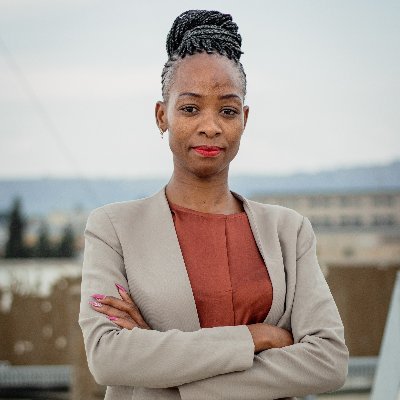
Co-Owner and Managing Editor of Newsday Media Lesotho. PEPFAR Media champion, Award wining features journalist, an Investigative journalist, REPSSI CAB member. Maseru, Lesotho Joined November 2009.