
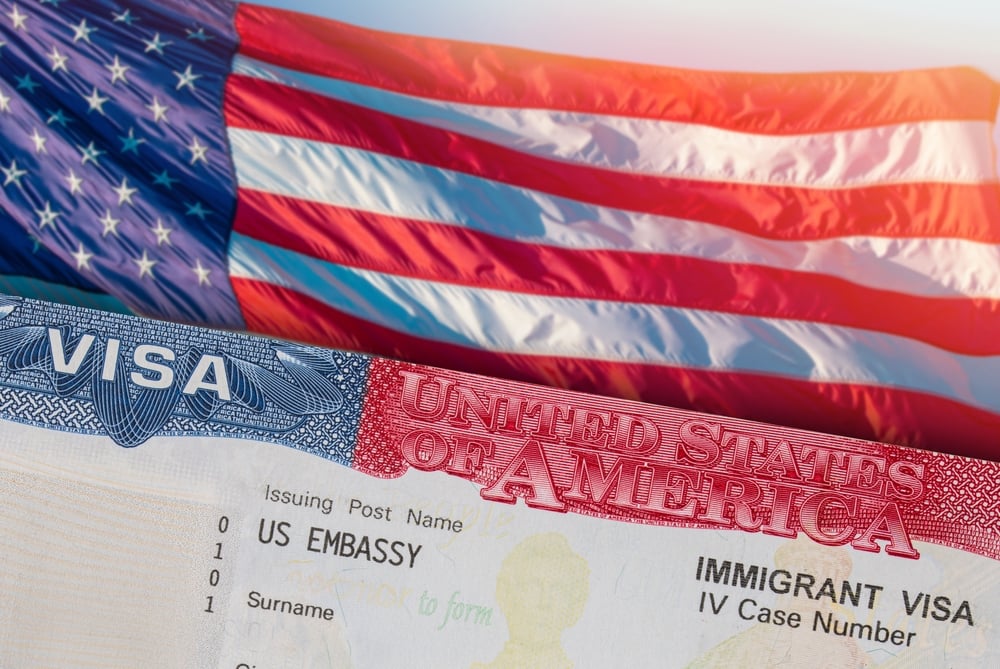
The United States has imposed a steep new financial barrier on Basotho seeking visitor visas, requiring them to pay a refundable bond of up to $15,000 (over M250,000) before a visa can be issued, a move likely to shut out many ordinary travellers.
The requirement, which takes effect on April 2, 2026, forms part of the Trump administration’s expansion of its Visa Bond Pilot Programme to 50 countries in a bid to curb visa overstays.
A spokesperson for the U.S. Embassy in Maseru confirmed the policy applies across the board.
“Any citizen or national travelling on a passport issued by Lesotho, who is found otherwise eligible for a B1/B2 visa, must post a bond for $5,000, $10,000, or $15,000.”
The bond amount will not be known in advance. “The amount is determined at the time of the visa interview,” the spokesperson added.
Lesotho applicants must still travel to the U.S. Consulate General in Johannesburg, South Africa, for their interviews, as the Embassy in Maseru offers only limited non-immigrant visa services.
This is not an individual risk assessment but a blanket country-level rule.
Every otherwise eligible Lesotho passport holder will face the same requirement, regardless of personal circumstances.
The embassy warned applicants not to pay anything prematurely. “Applicants should submit Form I-352 to post a bond only after a consular officer directs them to do so,” the spokesperson stressed.
Payment must be made online through the official U.S. Treasury platform Pay.gov using the provided direct link. “Never pay before receiving official instructions, and do not use third-party sites.”
The U.S. government takes no responsibility for money lost to scams.
The bond is fully refundable if the traveller complies. “Visa bonds will be refunded to travellers after they depart the United States or their B1/B2 visa expires, if they never travelled,” the Embassy explained.
“Returning the visa bond demonstrates that the B1/B2 visa holder travelled legally within the terms of the visa.”
If problems arise with refunds, applicants will receive contact information at the interview. The program is authorised under Immigration and Nationality Act Section 221(g)(3) and the Temporary Final Rule establishing the pilot, which runs through August 2026.
The Trump Administration is expanding the program “based on a range of immigration risk factors,” according to the spokesperson. “The Visa Bonds have proven effective in deterring illegal immigration, enforcing compliance with visa regulations.”
Officials point to early success. Nearly 1,000 bonded travellers have shown a 97 percent compliance rate in returning home on time.
By contrast, visitors from the 50 countries in the program have generated tens of thousands of overstays in recent years, costing U.S. taxpayers an average of over $18,000 per removal.
The embassy referred questions on specific Lesotho overstay rates to the Department of Homeland Security’s Entry/Exit Overstay Report.
The Embassy also declined to detail diplomatic consultations with the government of Lesotho prior to the country’s inclusion in the program.
Looking ahead, the spokesperson said the Department of State “may update the country list throughout the Visa Bond Pilot” and “is constantly reviewing and evaluating screening and vetting procedures worldwide and overstay rates to ensure that our visa process upholds the highest standards for U.S. national security and public safety.”
Details of the program, including the full list of 50 affected countries, are now public on the State Department website.
For many ordinary Basotho hoping to visit family, attend conferences, or explore the United States, the bond represents a significant barrier, thousands of dollars tied up for months, even if fully refunded later.
Critics see it as punishing an entire nation for the actions of a minority who overstay, while supporters argue it is a necessary tool to protect American borders and resources without banning travel outright.
Lesotho nationals are urged to review the official State Department and U.S. Embassy Maseru websites before scheduling interviews in Johannesburg.
The Embassy stressed that the bond does not guarantee visa issuance and is required only after an officer finds the applicant otherwise eligible.
Summary
- The United States has imposed a steep new financial barrier on Basotho seeking visitor visas, requiring them to pay a refundable bond of up to $15,000 (over M250,000) before a visa can be issued, a move likely to shut out many ordinary travellers.
- Looking ahead, the spokesperson said the Department of State “may update the country list throughout the Visa Bond Pilot” and “is constantly reviewing and evaluating screening and vetting procedures worldwide and overstay rates to ensure that our visa process upholds the highest standards for U.
- Critics see it as punishing an entire nation for the actions of a minority who overstay, while supporters argue it is a necessary tool to protect American borders and resources without banning travel outright.

Authored by our expert team of writers and editors, with thorough research.