
In the shadowy corners of Maseru’s shacks and backstreets, young women like “Thato,” not her real name, endure a harrowing ordeal that is both physically dangerous and emotionally scarring.
In a country where abortion is largely illegal, the true cost is paid not in maloti, but in blood, fear, and lives forever changed.
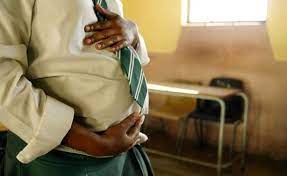
For Thato, the journey began in her final year of high school. “I found it very unbearable to continue with the pregnancy,” she recalled. The boy who got her pregnant had already been expelled for bad behaviour, and the future she had envisioned for herself and her family was slipping away. “I felt like I was going to break my aunt’s heart,” she said.
She is as an orphan.
Her story is neither unique nor rare. Lesotho’s Penal Code Act of 2012 criminalises abortion except in the narrowest circumstances, when the mother’s life is in danger, or in cases of rape, incest, or severe foetal abnormality. For most women, these exceptions are unreachable. The result is an underground network of unregulated abortions, where desperation drives women to risk everything.
A price paid in blood
The cost of an illegal abortion in Lesotho varies wildly. “For someone who was one month pregnant, he charged M400 and so on,” Thato explained. Add another M200 if you needed to stay overnight, more if you required monitoring, and yet another fee for disposing of the foetus. For many, even these sums are out of reach, pushing them toward even riskier methods, traditional medicines, industrial chemicals, and household cleaning agents like bleach.
But money is only one part of the price. Thato’s first abortion was a nightmare. Directed by a friend to a man in the shacks near the taxi rank known as Lepoqong, she received pills, likely Cytotec, a drug now infamous on social media, and was told to go home. “Even before I reached home, I felt so wet. I went home and used clothes instead of pads because the flow was too much,” she recounted. The bleeding did not stop for more than a month. “I was afraid to go to the doctor or any pharmacy because I was scared of getting arrested.”
When she finally reached out to her contact again, he demanded more money, then provided more pills and finally, a concoction of traditional Sesotho medicine for “cleaning the womb.” “At that point, I was just praying that the Lord God would help me,” Thato said.
Her second abortion was less traumatic, she credits the involvement of a nurse, allegedly part of the same underground network. But the fear lingered. “I was terrified, fearing that history would repeat itself and that this time I might not be so lucky.”
The hidden epidemic
Thato’s experience is far from isolated. Another woman, close to Thato and who describes herself as a born-again Christian, narrated her own ordeal: “I never thought I would commit such a sin,” she confessed. But with her boyfriend earning barely enough for himself and her own wages under M1000, the decision felt inevitable.
After Thato introduced her to a man selling Cytotec, she underwent the procedure in a Lepoqong shack. When the bleeding would not stop, Thato took her to the hospital. She required a dilation and curettage and days of medical care. Later, she suffered blood clots, likely a consequence of the procedure.
Healthcare professionals see the consequences firsthand. “Women undergoing unsafe abortions take whatever they can find, without knowing the effects on their bodies. Often, they ingest excessive doses, immediately putting their lives at risk,” warned ‘Mamonica Mokhesi. The dangers are stark: severe bleeding, infection, uterine perforation, infertility, and death.
A report by UNFPA found that among girls aged 10 to 14, a staggering 35.71 percent of all hospital admissions were abortion-related, a chilling testament to the scale of the crisis. For women aged 15–49, 12.35 percent of hospital admissions were due to induced or spontaneous abortions, a statistic that hints at the silent epidemic of unsafe procedures hidden behind closed doors.
The weight of guilt and survival
Beyond the physical risks, the emotional and spiritual burden is profound. “I thought I was going to die and be remembered as a young, brilliant woman who killed herself trying to terminate a pregnancy,” Thato admitted.
For her sister, the regret is clear: “As a dedicated person to my God, I feel very dirty. I wish I had allowed Him to take control of my situation.”
Yet for others, the sense of relief outweighs the guilt. “I did it under circumstances where I felt it was worth it. I did not want to bring a life into the world that I would never be able to raise and take good care of,” Thato said.
Her words echo the impossible choices women are forced to make.
A thriving underground economy
The underground abortion economy is thriving, staffed not just by shadowy figures but by nurses and even doctors, some operating out of clinics, others from backrooms behind Chinese shops.
“If abortion was legal, it could help avoid the deaths of others who are still using harmful substances like Jik (bleach), madubula (chemical disinfectant), and traditional medicines,” Thato argued. “Most of them just get lucky.”
Mokhesi shared concern about the nation’s readiness. “Even if we woke up tomorrow and abortion was legal, are we prepared in terms of infrastructure? No. Are we ready religiously? No.”
But she is unwavering in her demand for education, prevention, and compassion. “We must prioritise sexual and reproductive health education. The nation must also take responsibility for seeking healthcare services and preventing unwanted pregnancies.”
According to Afrobarometer findings published on February 18 this year, in Lesotho, 17 percent of women aged 15-19 have had at least one pregnancy.
In Qacha’s Nek, according to the findings, one-third of all pregnancies (162 of 486) between January and June 2025 occurred among 13- to 19-year-olds, a significant rise from the same period in 2024.
Findings further showed that Basotho overwhelmingly supported the inclusion of sexuality education in school curricula, ongoing education for girls who become pregnant or give birth, and access to contraception regardless of age and marital status.
Nearly eight in 10 citizens said women should be able to decide for themselves when and how many children to have, while an even larger share said girls and women should be able to decide for themselves whether and when to get married.
“Nearly half of Basotho say it is at least “sometimes justified” for a woman to terminate a pregnancy if her life or health is at risk or if the pregnancy is a result of rape or incest. Far smaller shares say abortion can be justified in the event of economic hardship or if the woman does not want to keep the pregnancy for any reason,” Afrobarometer said.
Summary
- In a country where abortion is largely illegal, the true cost is paid not in maloti, but in blood, fear, and lives forever changed.
- Lesotho’s Penal Code Act of 2012 criminalises abortion except in the narrowest circumstances, when the mother’s life is in danger, or in cases of rape, incest, or severe foetal abnormality.
- Directed by a friend to a man in the shacks near the taxi rank known as Lepoqong, she received pills, likely Cytotec, a drug now infamous on social media, and was told to go home.
Ntsoaki Motaung is an award-winning health journalist from Lesotho, specializing in community health stories with a focus on sexual and reproductive health and rights, as well as HIV. She has contributed to platforms like “Be in the KNOW,” highlighting issues such as the exclusion of people with disabilities from HIV prevention efforts in Lesotho.
In addition to her journalism, Ntsoaki serves as the Country Coordinator for the Regional Media Action Plan Support Network (REMAPSEN). She is also a 2023 CPHIA Journalism Fellow.