
The Revenue Service Lesotho (RSL) has fallen short of its revenue target for the 2025/26 financial year, citing a combination of economic pressures and structural challenges, even as overall collections showed modest growth.
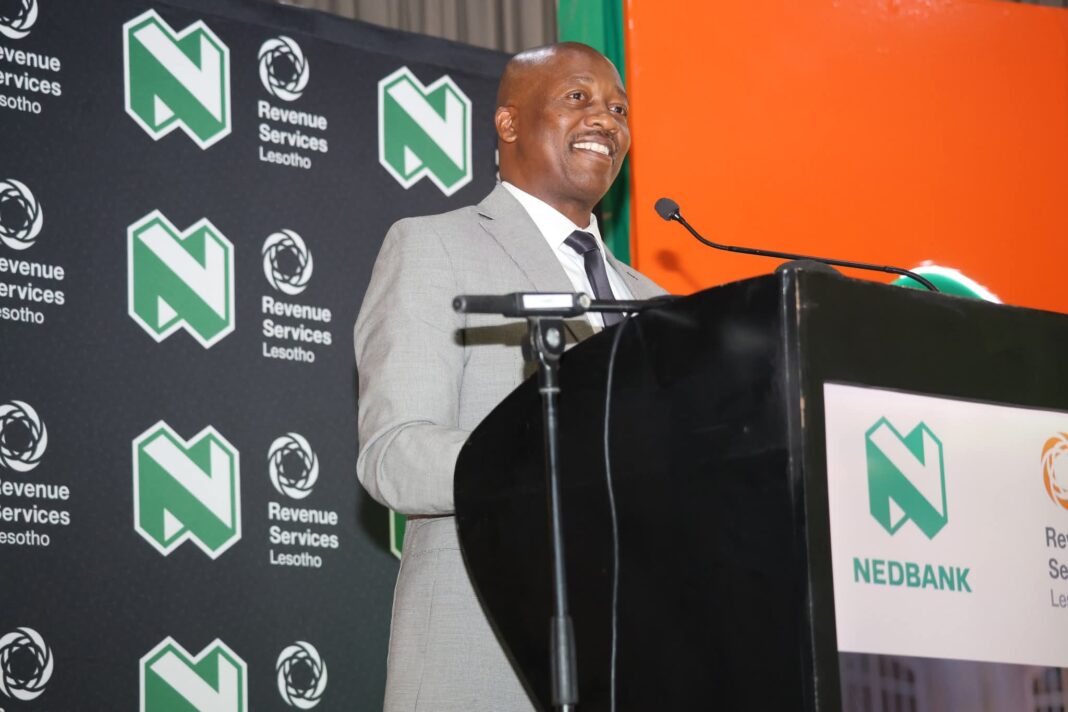
Acting Commissioner General Rakokoana Makoa yesterday revealed that the tax authority remitted M9.76 billion to government against the set target of M10.39 billion, resulting in a negative variance of M640.3 million.
The shortfall comes despite total tax collections reaching M10.89 billion, which were significantly reduced by M1.13 billion in processed tax refunds.
Makoa attributed the underperformance to “factors beyond the RSL’s control”, including the high volume of refunds issued during the year, subdued economic activity, rising inflation, and taxpayer non-compliance.
A significant portion of these refunds is linked to mining companies operating in Lesotho, which are exempted from paying Value Added Tax (VAT) on their exports. As a result, the firms routinely claim back VAT paid on inputs, creating a persistent refund burden on the fiscus, an issue that has been highlighted in previous reports.
Efforts to address this structural challenge have already been initiated at policy level. Parliament previously approved the VAT Amendment Bill framework aimed at reducing or eliminating the need for such costly refunds, particularly for export-oriented sectors like mining. However, the proposed changes have yet to be implemented, leaving the current refund-heavy system in place.
“Refunds remain a crucial part of maintaining a fair and credible tax system, ensuring businesses and individuals receive what is rightfully due to them,” he said.
The RSL’s revenue base remained anchored on four key streams: Income Tax, Value Added Tax (VAT), Tobacco and Alcohol Products Levy, and Gaming Levy.
Income Tax continued to dominate, contributing 55.8% of total revenue. Collections reached M5.44 billion, surpassing the M5.16 billion target by 5.4%. This category includes personal income tax, corporate tax, withholding taxes, and fringe benefits tax.
In contrast, VAT, the second-largest contributor at 42.1%, significantly underperformed. Collections stood at M4.11 billion against a target of M5.05 billion, representing a shortfall of M940 million or 18.6%.
The weak VAT performance reflects both reduced consumer spending and the structural impact of refunds. While households tightened their budgets amid economic strain, leading to lower consumption of taxable goods, the continued outflow of VAT refunds, particularly to mining companies, further eroded net collections.
Smaller tax streams delivered stronger results. The Tobacco and Alcohol Products Levy exceeded its target by 12.2%, generating M195.36 million, while the Gaming Levy recorded the highest proportional growth, outperforming its target by 24.9% to reach M12 million.
The RSL’s performance unfolded against a difficult global and domestic economic backdrop. Growth in Lesotho remained subdued at around 1.4% in 2025, with projections indicating a further slowdown to 1.1% by 2027.
Globally, the International Monetary Fund forecasts economic growth of just 1.4% for 2025 and 2026, well below the pre-pandemic average. Regionally, Sub-Saharan Africa is expected to grow at 4.6%, while South Africa, Lesotho’s largest trading partner is projected to expand by only 1.4% in 2026.
Domestically, the economy was largely supported by construction activity linked to the Lesotho Highlands Water Project Phase II, but remained vulnerable to external shocks such as global unrest, trade tensions, and climate change.
Inflation eased to 4% in 2025 and is expected to rise to 4.6% in 2026. While less severe than in the previous year, inflation continued to influence consumer spending patterns, dampening VAT performance.
RSL reported a 3.9% increase in taxable imports, equivalent to M71.8 million, while non-taxable imports declined sharply by 42%, or M233.4 million. These shifts, coupled with intensified customs inspections and anti-smuggling efforts, contributed to improved revenue efficiency.
The country’s tax-to-GDP ratio edged up from 22.5% to 22.9%, with a tax buoyancy ratio of 1.7%, indicating improved responsiveness of tax revenue to economic growth. However, annual remittance growth remained marginal at 0.1%, underscoring the constrained fiscal environment.
Despite ongoing challenges, the RSL highlighted improvements in taxpayer compliance, with more individuals and businesses registering, filing returns on time, and meeting their obligations.
“Failure to comply with tax laws is a criminal offence,” Makoa warned, stressing the role of taxation in equitable resource distribution.
To strengthen compliance and efficiency, the RSL rolled out several digital and operational reforms. These include a Private Shopper online platform for declaring personal imports, reducing paperwork and easing customs processes, and a new payment gateway developed in partnership with Standard Lesotho Bank, enabling payments via USSD, mobile apps, and internet banking.
Additionally, a mobile office initiative has been introduced to extend tax services to remote communities, offering registration, filing assistance, and electronic payment support.
On the enforcement front, the RSL has partnered with global and regional bodies including the Organisation for Economic Co-operation and Development, United Nations Development Programme, and the African Tax Administration Forum under the Tax Inspectors Without Borders programme to combat financial crime and strengthen investigative capacity.
These initiatives form part of a broader strategy to modernise tax administration, widen the tax base, and curb leakages that continue to undermine revenue collection.
While the RSL’s latest figures represent a 3% increase in gross collections compared to the previous year, they fall short of the stronger performance recorded in 2024/25, when the authority remitted M9.74 billion, a 9.9% increase year-on-year, exceeding its target.
The persistence of large VAT refunds, particularly to the mining sector, remains one of the most significant structural challenges facing the tax authority. Until legislative reforms are implemented, the pressure on net revenues is likely to continue.
At the same time, subdued economic growth, shifting consumer behaviour, and external vulnerabilities are expected to keep revenue performance under strain in the short to medium term.
The tax authority, however, remains cautiously optimistic, pointing to ongoing reforms and planned initiatives for the 2026/27 financial year aimed at broadening the tax base, improving compliance, and enhancing administrative efficiency.
Should the long-delayed VAT reforms finally be implemented alongside these administrative improvements, they could significantly ease the refund burden and strengthen Lesotho’s fiscal position, helping the RSL better meet its revenue targets in future.
Summary
- A significant portion of these refunds is linked to mining companies operating in Lesotho, which are exempted from paying Value Added Tax (VAT) on their exports.
- The firms routinely claim back VAT paid on inputs, creating a persistent refund burden on the fiscus, an issue that has been highlighted in previous reports.
- “Refunds remain a crucial part of maintaining a fair and credible tax system, ensuring businesses and individuals receive what is rightfully due to them,” he said.

Seabata Mahao is a general news reporter with special focus on Business and Sports. Started working at Newsday in 2021. Working in a team with a shared goal is what I enjoy most and that gives me the motivation to work under any environment leading to growth.