Ntsoaki Motaung is an award-winning health journalist from Lesotho, specializing in community health stories with a focus on sexual and reproductive health and rights, as well as HIV. She has contributed to platforms like "Be in the KNOW," highlighting issues such as the exclusion of people with disabilities from HIV prevention efforts in Lesotho.
In addition to her journalism, Ntsoaki serves as the Country Coordinator for the Regional Media Action Plan Support Network (REMAPSEN). She is also a 2023 CPHIA Journalism Fellow.
In a fresh push to improve childhood vaccination uptake, especially among children born to young parents, the organisation Paballo-ea-Bophelo is turning to peer influence and mobile journalism as tools for change.
The initiative directly addresses the complex challenges and societal stigma young mothers and fathers face when trying to access health services for their children.
According to the Lesotho Demographic Health Survey (LDHS) 2023–2024, only 63 percent of children aged 12–23 months are fully vaccinated against all basic antigens, falling short of the Ministry of Health’s 80 percent target in some areas.
This concerning data highlights the urgent need for new strategies to reach under-immunised and “Zero Dose” children, those who have not received their first vaccine.
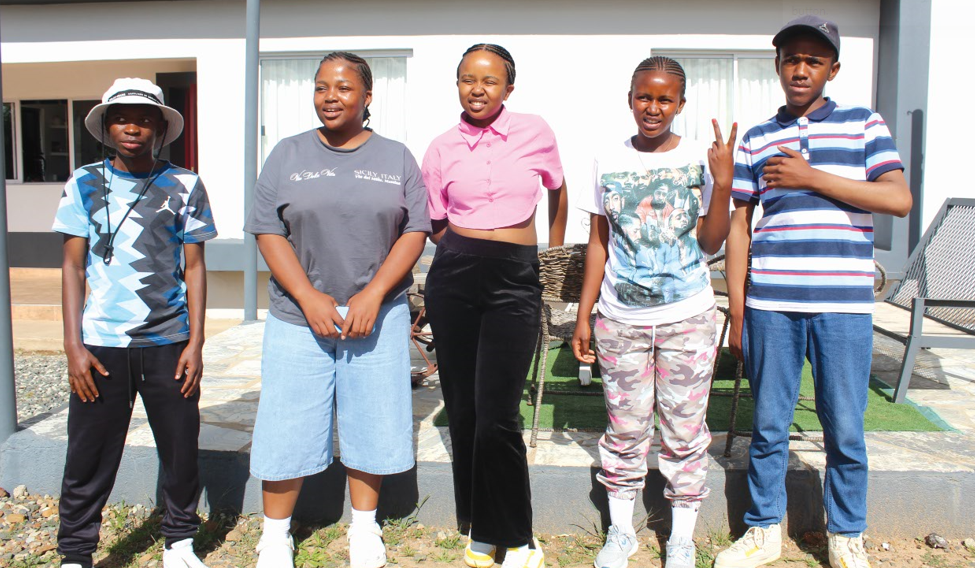
To bridge this gap, Paballo-ea-Bophelo, under a UNICEF-funded project, has trained five young people as citizen reporters.
These reporters were selected from the districts of Mokhotlong, Leribe, Berea, Maseru, and Mafeteng, which were identified as areas of concern due to high numbers of under-immunised children.
Pascalinah Kabi, the Secretary General of Paballo-ea-Bophelo, explained the rationale behind the program. “We are fully aware that there are teenagers or young people who have children and who may be facing challenges that prevent them from taking their children for vaccination,” Kabi said.
Instead of recruiting seasoned journalists, the organisation chose five young people, three girls and two boys, with no prior media background.
The goal is for them to use their newly acquired basic journalism and mobile journalism training to produce compelling Facebook and TikTok videos that resonate with their peers.
“For us, the main reason why we did not take people with a journalism background is that we have young children as young as 13 who are teenage mothers, hence we needed to train these ones who understand really the challenges teenagers face. They relate easily,” Kabi stated.
The young reporters are encouraged to use their stipends of M1000 to produce stories from their own communities about the importance of vaccines, using the skills they learned to pursue future interests in content creation and mobile journalism.
Kabi highlighted the significant obstacles young parents encounter, which contribute to the low vaccination uptake. She said: “Falling pregnant at a young age on its own is challenging with a lot of stigma and discrimination.” “Going to the clinic is hard because they feel judged harshly by the system.” This feeling of being “out of place” often discourages repeat visits.
She further indicated that, for some, the geographical distance between their homes and the health facilities remains a major barrier.
“That is why we want them to feel welcome, appreciated and not judged. And the better people to do that are their peers,” Kabi emphasised.
The newly trained citizen reporters say shared lived experiences will help them connect with young parents who feel isolated or ashamed.
Letlotlo Khali, 15, from Mokhotlong, said: “Because we are of the same age, when it is us encouraging them, they will feel more comfortable to share their challenges about why they do not want to take their children to health facilities. My role will be to speak about the benefits of vaccines.”
Karabo Busi, 17, from Maseru, sees her role as both educational and empowering. “My role is to encourage young mothers and tell them that even though they think they will be judged, vaccines are more important,” she said.
Busi added that the training also opens personal opportunities: “I’m interested in content creation, so this is a first step for me while I focus on vaccine promotion.”
Summary
In a fresh push to improve childhood vaccination uptake, especially among children born to young parents, the organisation Paballo-ea-Bophelo is turning to peer influence and mobile journalism as tools for change.
“For us, the main reason why we did not take people with a journalism background is that we have young children as young as 13 who are teenage mothers, hence we needed to train these ones who understand really the challenges teenagers face.
The young reporters are encouraged to use their stipends of M1000 to produce stories from their own communities about the importance of vaccines, using the skills they learned to pursue future interests in content creation and mobile journalism.
Ntsoaki Motaung is an award-winning health journalist from Lesotho, specializing in community health stories with a focus on sexual and reproductive health and rights, as well as HIV. She has contributed to platforms like “Be in the KNOW,” highlighting issues such as the exclusion of people with disabilities from HIV prevention efforts in Lesotho.
In addition to her journalism, Ntsoaki serves as the Country Coordinator for the Regional Media Action Plan Support Network (REMAPSEN). She is also a 2023 CPHIA Journalism Fellow.
To ensure optimal experiences, we utilize technologies such as cookies to store and/or access information from your device. Granting consent to these technologies enables us to process data, including browsing habits or unique identifiers on this website. Conversely, not consenting or revoking consent may negatively impact specific features and functionalities.
Functional
Always active
The technical storage or access is strictly necessary for the legitimate purpose of enabling the use of a specific service explicitly requested by the subscriber or user, or for the sole purpose of carrying out the transmission of a communication over an electronic communications network.
Preferences
The technical storage or access is necessary for the legitimate purpose of storing preferences that are not requested by the subscriber or user.
Statistics
The technical storage or access that is used exclusively for statistical purposes.The technical storage or access that is used exclusively for anonymous statistical purposes. Without a subpoena, voluntary compliance on the part of your Internet Service Provider, or additional records from a third party, information stored or retrieved for this purpose alone cannot usually be used to identify you.
Marketing
The technical storage or access is required to create user profiles to send advertising, or to track the user on a website or across several websites for similar marketing purposes.