
The fight against tuberculosis (TB) in Thaba-Tseka District is buckling under a severe budget deficit, high rates of HIV co-infection, and the immense challenge of delivering health services across some of Lesotho’s most difficult terrain.
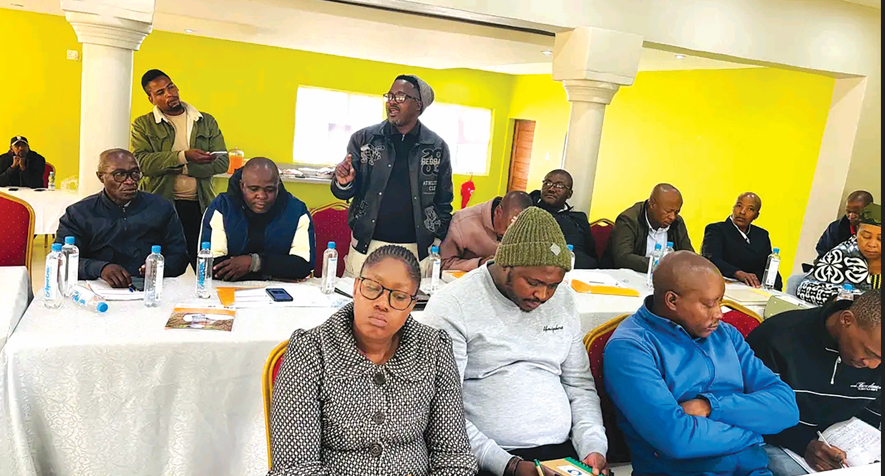
These concerns dominated a high-level engagement convened by the United Nations Population Fund (UNFPA), bringing together Members of Parliament (MPs), the District Health Management Team (DHMT) and local stakeholders.
Lesotho is among the countries with the highest TB burden globally, and Thaba-Tseka’s crisis starkly reflects the national struggle.
The DHMT’s financial constraints were laid bare by Assistant Finance Officer Khoeli-E-Sele Motene, who revealed that the district’s M15 million budget is almost entirely swallowed by staff costs.
“More than M12 million goes to salaries and M865,464 to allowances,” she said. “We are left with only M2 million to run the entire district and six facilities.”
The remaining M2 million must cover operations for Sehonghong, Linakeng, Katse and other facilities, leaving little room for strengthening TB detection, treatment or outreach.
The financial deficit is mirrored by stark programmatic challenges. Nteseng Mabote, the Thaba Tseka TB Programme Adherence and Psychosocial Support Officer, pointed to the high prevalence of HIV as a major driver of the TB epidemic in the district.
According to Mabote, 73 percent of TB patients in Thaba Tseka are also living with HIV. This aligns with the country’s status as a high co-infection burden area and an alarming 29.9 percent of diagnosed patients are classified as “missing”.
The primary reason for these missing patients is a logistical and socioeconomic one as people do not wait for the long hours required for TB testing results, as they face long hours walking back home and often do not return to check for results and start treatment.
Nationally, tracing these “invisible patients” who live in difficult terrains is a major programmatic gap.
Adding to the diagnostic challenge, the district lacks a public hospital. Screening tools like the X-ray are only found in private hospitals where patients are forced to pay for the service, meaning those who cannot afford the fee cannot be referred for diagnosis.
For a district characterised by remote, rugged terrain, the allocation of health resources has been fundamentally misaligned with community needs.
Mabote expressed frustration that resources, though funded by various partners, including development agencies like UNFPA, which co-funded the national Demographic and Health Survey, are not always based on district-specific requirements.
“Staff had requested horses to reach remote communities, but were instead given cars, which became less useful on the village roads. The essential X-ray equipment intended for outreaches has to be transported in a delicate travelling bag (touch case) using a donkey to access areas inaccessible by road. Widespread poverty and poor living conditions further expose residents to TB and make them difficult to reach for intervention,” Mabote explained.
District Administrator (DA), Tlali Mphafi, acknowledged the severity of the situation, confirming that TB is indeed a “huge challenge for the district”.
Furthermore, Member of Parliament Mohlominyane Tota emphasised the need for health professionals to actively engage community leaders to ensure that messages about outreaches are effectively spread, improving patient attendance on designated dates to reach those missing patients.
New data from the Lesotho Demographic and Health Survey 2023–2024 shows how limited TB knowledge is in the district. Only 85.2% of women aged 15–49 have heard of TB, below the national average.
Just 68.8% of women know TB can be cured. 72.2% of men incorrectly believe TB is caused by mining.
Only 11% of men and 5.6% of women correctly identify microbes as the cause.
Despite the misinformation, symptoms are widespread. 23.2% of women report having experienced weight loss since age 15, one of the highest rates nationally, yet many do not seek care.
Summary
- The fight against tuberculosis (TB) in Thaba-Tseka District is buckling under a severe budget deficit, high rates of HIV co-infection, and the immense challenge of delivering health services across some of Lesotho’s most difficult terrain.
- Nteseng Mabote, the Thaba Tseka TB Programme Adherence and Psychosocial Support Officer, pointed to the high prevalence of HIV as a major driver of the TB epidemic in the district.
- The primary reason for these missing patients is a logistical and socioeconomic one as people do not wait for the long hours required for TB testing results, as they face long hours walking back home and often do not return to check for results and start treatment.
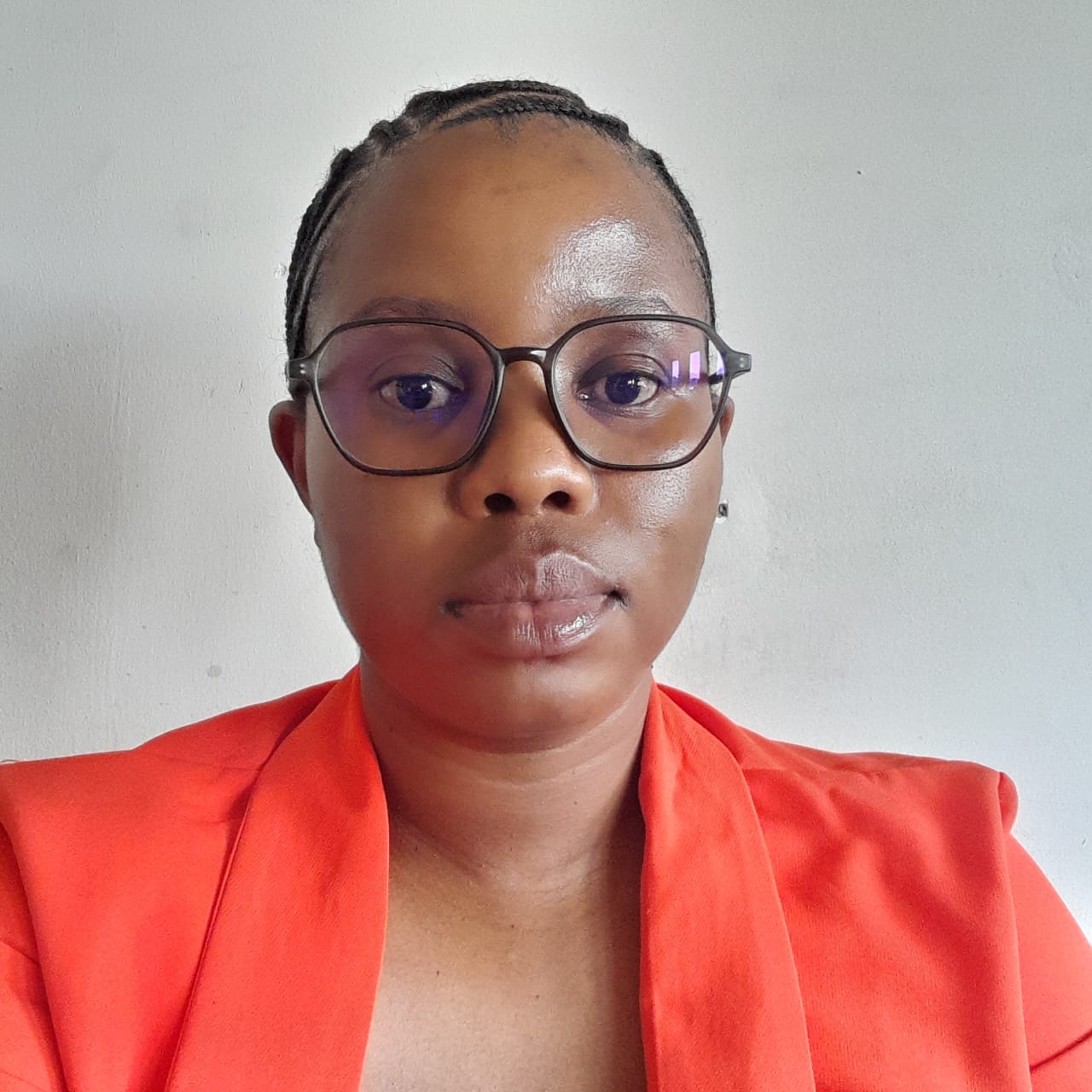
Ntsoaki Motaung is an award-winning health journalist from Lesotho, specializing in community health stories with a focus on sexual and reproductive health and rights, as well as HIV. She has contributed to platforms like “Be in the KNOW,” highlighting issues such as the exclusion of people with disabilities from HIV prevention efforts in Lesotho.
In addition to her journalism, Ntsoaki serves as the Country Coordinator for the Regional Media Action Plan Support Network (REMAPSEN). She is also a 2023 CPHIA Journalism Fellow.