

As Lesotho prepares for crucial Public-Private Dialogue sessions, a bold vision of restoring the Mountain Kingdom’s historic position as a major agricultural exporter to Southern Africa is emerging.
This after Chaba Mokuku, the Managing Director of the Competitiveness and Financial Inclusion (CAFI) Project, challenged stakeholders to think beyond incremental improvements.
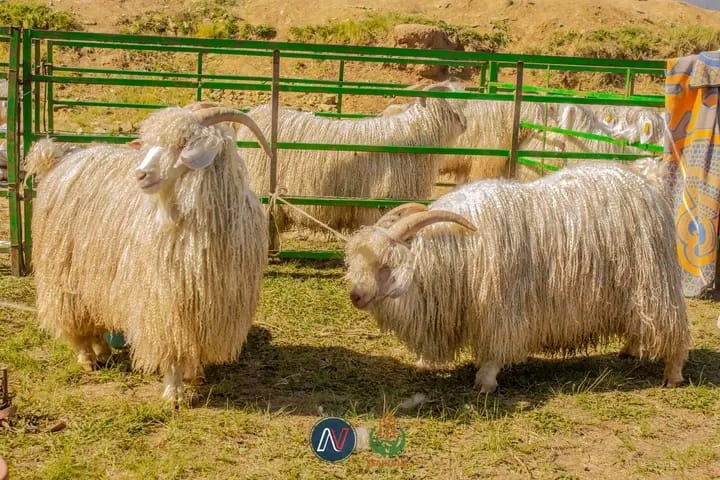
In the 19th century, Lesotho was a significant agricultural exporter, supplying grain and mohair to South African mining camps, before declining agricultural output transformed the nation into a net food importer.
Now, through a landmark partnership formalised in October 2024, the government and private sector leaders are working to reverse that trajectory.
Mokuku stressed the urgent need for sustained collaboration. He challenged stakeholders to envision Lesotho reclaiming its historic position as an exporter of high-quality agricultural commodities, a goal he said is only attainable through coordinated action that links policy reform with practical, on-the-ground support.
The October 2024 Memorandum of Understanding between the Government of Lesotho and the private sector establishes a predictable, institutionalised platform for dialogue designed to strengthen policy coherence, transparency, and consistency in implementing investment-climate reforms.
Under this framework, both parties have committed to driving reforms aimed at boosting trade, attracting investment, and expanding private-sector competitiveness.
The World Bank-funded CAFI Project, which runs from July 2022 to June 2028 with $52.5 million in financing, has established two strategic thematic working groups, one for Textile and Apparel, another for Agriculture and Food Security. Their mandate extends beyond discussion to delivering measurable reforms that influence economic outcomes across key value chains.
Speaking on behalf of the Principal Secretary of the Ministry of Agriculture, Food Security and Nutrition during a recent meeting of the Agriculture and Food Security thematic working group (TWG), Deputy Principal Secretary Johanne Masiea captured the shift in expectations.
“This TWG is not a talk space; it is an accountability mechanism. We expect concrete identification of bottlenecks, prioritization of high-impact reforms, and measurable progress that strengthens our farmers, agribusinesses, and national food security.”
Representatives of the Lesotho National Farmers’ Union (LENAFU) and the Lesotho National Dairy Board welcomed the formation of the working group, calling it a long-overdue platform to amplify farmers’ voices in national policy reforms. LENAFU emphasised the persistent challenges facing producers, from high input costs to limited market access.
“Our producers face persistent constraints… and only a coordinated reform process will unlock the sector’s full potential. We stand ready to contribute evidence, priorities, and solutions that strengthen commercial agriculture while protecting the livelihoods of smallholder farmers.”
The Dairy Board described the initiative as critical in stabilizing and modernizing the dairy value chain. “The sector needs clear regulatory alignment, upgraded production systems, and predictable standards that enable local processors and farmers to compete regionally. This TWG provides the structure required to drive those reforms.”
Aligned with this vision is the Lesotho Enterprise Assistance Programme (LEAP), a matching grant scheme under the CAFI Project that continues to broaden support for enterprises by financing advanced machinery and modern production technologies. The programme aims to strengthen production capacity, enhance value-chain competitiveness, and prepare local agribusinesses for the demands of regional and global markets.
CAFI has already incubated 150 enterprises, including 92 women-led and 111 youth-led businesses, creating over 1,200 jobs. The project has also established the Lesotho Horticultural Incubation and Training Centre at Mahobong in Leribe district, scaling commercial fruit farming to meet both domestic and export market demands.
Together, the MoU, the thematic working groups, and the CAFI-supported initiatives signal a decisive shift toward building a coherent and resilient investment ecosystem. The strengthened partnership lays the groundwork for evidence-based policymaking, faster reform delivery, and increased investor confidence.
Summary
- The October 2024 Memorandum of Understanding between the Government of Lesotho and the private sector establishes a predictable, institutionalised platform for dialogue designed to strengthen policy coherence, transparency, and consistency in implementing investment-climate reforms.
- Speaking on behalf of the Principal Secretary of the Ministry of Agriculture, Food Security and Nutrition during a recent meeting of the Agriculture and Food Security thematic working group (TWG), Deputy Principal Secretary Johanne Masiea captured the shift in expectations.
- Representatives of the Lesotho National Farmers’ Union (LENAFU) and the Lesotho National Dairy Board welcomed the formation of the working group, calling it a long-overdue platform to amplify farmers’ voices in national policy reforms.

Seabata Mahao is a general news reporter with special focus on Business and Sports. Started working at Newsday in 2021. Working in a team with a shared goal is what I enjoy most and that gives me the motivation to work under any environment leading to growth.