
Mbeki criticises policies that enrich a small elite while ignoring unemployment, inequality and human welfare
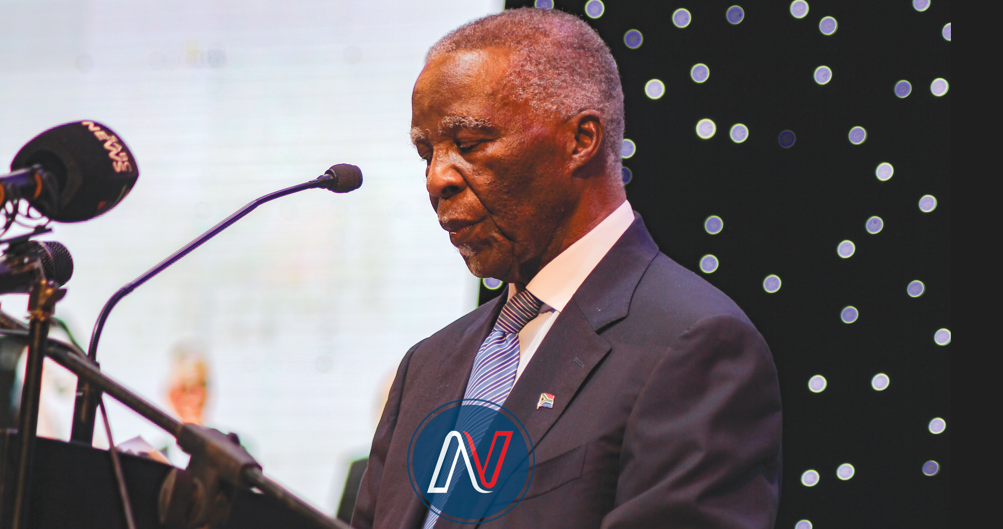
Former South African president Thabo Mbeki has invoked the legacy and words of the late King Moshoeshoe II to deliver a powerful critique of Africa’s development path, warning that decades after independence, many African countries, including Lesotho, remain trapped in poverty because they ignored early warnings against trickle-down economics.
Mbeki was delivering a public lecture in Maseru to mark 30 years since the death of His Majesty King Moshoeshoe II, one of Lesotho’s most prominent post-independence leaders. The lecture focused on social policy, development and poverty eradication, among others, drawing heavily on the late King’s 1989 address on development.
Recalling that speech, Mbeki said King Moshoeshoe II had sharply criticised the idea that economic growth alone would automatically improve the lives of ordinary people.
“That narrow emphasis has led to a situation whereby only a very thin layer of the population has prospered, while the vast majorities have continued to sink further and further into the backwaters of under-development,” the King warned in 1989.
Mbeki told the audience that the King’s assessment remains disturbingly relevant today, as inequality deepens across the continent despite decades of economic reforms and development programmes.
“One result of this,” the King had said, “is that developing nations, like Lesotho, came to reflect the current international unjust world economic order, with its vast and increasing gaps between rich and poor nations, and between citizens of the same nation, in spite of its serious implications for world peace and economic stability.”
According to Mbeki, King Moshoeshoe II challenged African leaders and policymakers to confront fundamental questions that remain unanswered.
“He argued that all of us in the developing world must answer the questions: ‘Development for what? And for whom?’” Mbeki said.
To underscore the point, Mbeki quoted development economist Dudley Seers, whom King Moshoeshoe II cited in his address.
“The questions to ask about a nation’s development are as follows: what has happened to poverty? What has happened to unemployment? What has been happening to inequality?” Seers argued. “If all three of these have decreased from high levels, then there has been development. But if one or more of these central problems of under-development have been getting worse, especially if all three have, it would be very strange indeed to call the result ‘development’, even if per capita incomes had doubled.”
Mbeki linked this critique to recent continental data. He cited the 2024 African Sustainable Development Report, which shows that less than six percent of Africa’s measurable Sustainable Development Goal targets are on track to be achieved by 2030.
“This means that four years from now, our continent will not have met the targets mentioned by Dudley Seers,” Mbeki said, despite the existence of ambitious frameworks such as Agenda 2063.
“The actuality we face is a very disturbing reality concerning the quality of life of the overwhelming majority of more than a billion Africans, and our escape from poverty and under-development,” he said.
Mbeki said King Moshoeshoe II believed that economic growth should be treated not as an end in itself, but as a tool for human development.
“Economic growth must be understood as an instrument of human development which, firstly, sets out to meet the basic human needs of all the people, and then moves on to quality of life,” the King said. He advocated a shift “from a decided and acceptable programme of national austerity, to national prosperity, via a more self-reliant, human-needs-oriented national philosophy of development.”
Mbeki outlined eight key principles the late monarch believed were essential for successful development, including legitimate political leadership, public participation, the empowerment of women, rural development, education aligned with national needs, a capable developmental state, cultural renewal and African unity.
He quoted King Moshoeshoe II’s insistence that development must be participatory.
“Plan with the people, not for the people; and we must act with the people, not for them,” the King said.
On education, Mbeki recalled the King’s view that institutions such as the National University of Lesotho (NUL) must serve society directly through relevant skills development and research.
“What is required,” the King said, “is the kind of education that creates not only academic skills, but which also creates awareness of what is needed to transform the nation socially and economically for the good of all the people.”
Mbeki also highlighted the King’s belief that development strategies must respect African culture and institutions, rather than discard them in favour of imported models.
“We must look for our own version of democracy for people’s participation, taking into account our own culture, our own history, our own time-honoured institutions,” the King observed, “and see them not as an obstruction, but as the living base from which modernisation and change can and must take place.”
Turning to accountability, Mbeki quoted the King’s view that public authority must be subject to scrutiny.
“It is absolutely important to ensure that civil servants, public offices, local leaders, and anyone exercising authority are all subject to review procedures regarding their performances,” King Moshoeshoe II said.
Mbeki concluded that the late monarch’s ideas remain relevant and unfulfilled.
“Clearly, he was correct in this assessment,” Mbeki said.
King Moshoeshoe II, born Constantine Bereng Seeiso in 1938, was the son of Paramount Chief Seeiso Griffith. He ascended to the throne in 1960 and became Lesotho’s first King at independence in 1966.
His reign was marked by political turbulence, including tensions with successive governments, periods of exile, and temporary removal from the throne. Despite these challenges, King Moshoeshoe II emerged as a vocal advocate for constitutionalism, national unity and people-centred development.
He died on January 15, 1996, in a car accident at the age of 57. His death shocked the nation and ended a life defined by both political struggle and intellectual engagement with Lesotho’s future.
Three decades on, Mbeki said the King’s legacy should not be reduced to symbolism.
Summary
- “That narrow emphasis has led to a situation whereby only a very thin layer of the population has prospered, while the vast majorities have continued to sink further and further into the backwaters of under-development,” the King warned in 1989.
- “One result of this,” the King had said, “is that developing nations, like Lesotho, came to reflect the current international unjust world economic order, with its vast and increasing gaps between rich and poor nations, and between citizens of the same nation, in spite of its serious implications for world peace and economic stability.
- “Economic growth must be understood as an instrument of human development which, firstly, sets out to meet the basic human needs of all the people, and then moves on to quality of life,” the King said.
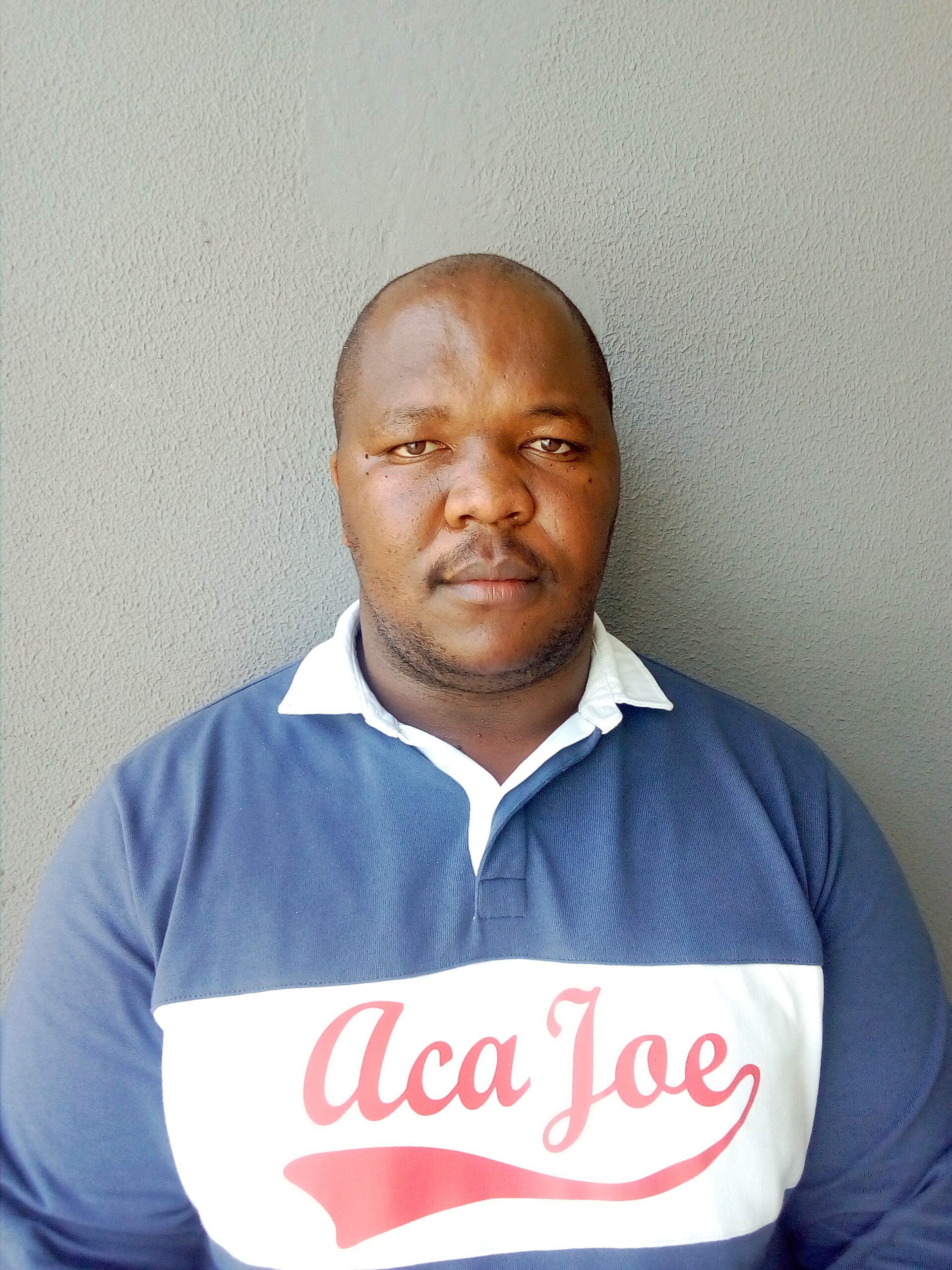
Thoboloko Ntšonyane is a dedicated journalist who has contributed to various publications. He reports on accountability, human rights, exposes corruption and wrong doing by those in power. He reports have exposed corruption, abuse of power, fraud, misconduct and negligence. He subscribes to evidence-based reporting. He reports on governance, parliament, courts, climate change, human rights, sexual and reproductive health rights (SRHR), health, business and agriculture. He gives a voice to the marginalised while also demanding accountability. His work inspires change, triggers dialogue and also promote transparency in a society.