

Lesotho’s monetary authorities have opted for caution, keeping interest rates unchanged as global risks mount, even as easing inflation offers short-term relief to households.
At its recnt meeting, the Central Bank of Lesotho’s (CBL) Monetary Policy Committee (MPC) resolved to maintain the policy rate at 6.50 per cent, indicating a delicate balancing act between supporting a fragile domestic economy and safeguarding external stability.
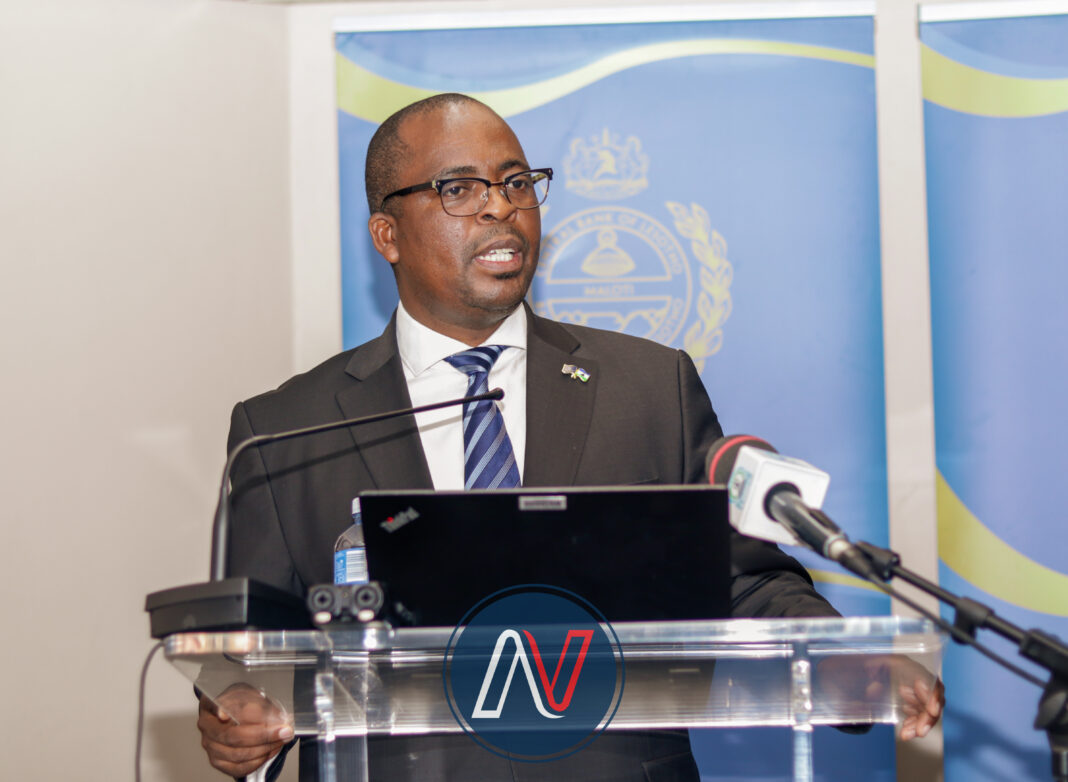
“The MPC has decided to maintain the CBL policy rate at 6.50 per cent per annum. At this level, the Committee noted that it is appropriate to maintain a modest negative interest rate differential of between 0 and 50 basis points relative to the SARB repo rate of 6.75 per cent. This is intended to sustain the exchange rate peg and, consequently, support domestic economic activity,” said CBL Governor Dr Maluke Letete.
“The MPC will continue to closely monitor global developments, particularly the evolution of the Middle East conflict and its implications for energy prices, inflation, and capital flows, alongside domestic inflation dynamics and the evolution of the external position. Future policy decisions will remain data dependent and guided by the need to safeguard reserves and preserve macroeconomic stability,” Letete added.
The decision comes at a time when inflationary pressures in Lesotho have eased significantly. Headline inflation slowed to 2.7 per cent in February 2026, down from 3.4 per cent in January, largely driven by declining food and transport costs.
Improved cereal harvests and earlier drops in global oil prices contributed to the slowdown, offering some breathing space for consumers.
However, Letete warned that this relief may be short-lived. The Committee revised the medium-term inflation outlook upwards, pointing to rising global oil prices, potential El Niño-induced weather shocks in 2027, and exchange rate volatility as key risks.
He said the decision to hold rates steady reflects the need to strike a balance between maintaining macroeconomic stability and supporting growth.
“At this level, it is appropriate to maintain a modest negative interest rate differential of between 0 and 50 basis points relative to the South African Reserve Bank’s repo rate of 6.75 per cent,” Letete said.
“This is intended to sustain the exchange rate peg and support domestic economic activity.”
A key factor underpinning the MPC’s stance is Lesotho’s relatively strong external position. Net International Reserves stood at US$1.125 billion as of 18 March 2026, about 30.9 per cent above the minimum threshold, equivalent to 4.3 months of import cover.
This cushion has given the central bank room to avoid tightening monetary policy despite growing global uncertainty.
Nonetheless, external risks are intensifying. A sharp escalation of conflict in the Middle East has disrupted global oil supply, with the closure of the Strait of Hormuz pushing crude oil prices up by nearly 50 per cent since December 2025.
“These developments could raise fuel and transport costs and feed into broader price pressures,” Letete warned.
At the domestic level, economic activity remains subdued. The Composite Indicator of Economic Activity grew by just 1.5 per cent in January 2026, a notable slowdown from 4.3 per cent in December, as declines in construction and transport sectors offset gains in domestic demand and financial services.
While private sector credit growth remains relatively strong at 12.8 per cent year-on-year, it is projected to slow significantly to 4.6 per cent by 2028. This anticipated slowdown is linked to reduced investment as major infrastructure projects under Phase II of the Lesotho Highlands Water Project wind down.
Summary
- At this level, the Committee noted that it is appropriate to maintain a modest negative interest rate differential of between 0 and 50 basis points relative to the SARB repo rate of 6.
- “At this level, it is appropriate to maintain a modest negative interest rate differential of between 0 and 50 basis points relative to the South African Reserve Bank’s repo rate of 6.
- A sharp escalation of conflict in the Middle East has disrupted global oil supply, with the closure of the Strait of Hormuz pushing crude oil prices up by nearly 50 per cent since December 2025.

Seabata Mahao is a general news reporter with special focus on Business and Sports. Started working at Newsday in 2021. Working in a team with a shared goal is what I enjoy most and that gives me the motivation to work under any environment leading to growth.