
Serious questions are being raised over how a prominent local health foundation spends its money, after a leaked financial report revealed that a staggering 84 percent of its annual M40 million government funding goes towards staff salaries and allowances, leaving very little for direct patient care, medical supplies, and equipment.
The Baylor College of Medicine Children’s Foundation Lesotho is believed to receives nearly M40 million annually from the Government of Lesotho to support critical frontline services, including treatment access, viral load monitoring, clinical care, adherence support, and nutrition services across the country.
According to the financial breakdown seen by this publication, the budget spending is 56 percent on salaries and wages, 28 percent on employee fringe benefits and allowances, 5 percent on contractual services, 2 percent on travel, 1 percent on patient care costs, 1 percent on medical supplies and 1 percent on equipment.
Compounding the financial controversy, close sources have revealed that the foundation recently laid off an undisclosed number of employees, the majority of whom are frontline clinical staff.
The revelation has triggered a fierce debate among health observers and the public regarding whether the funding is truly benefiting vulnerable children living with HIV, or simply sustaining administration costs.
Insiders expressed deep concern that these sudden terminations will cause a severe workload crisis and burnout for the healthcare workers left behind, ultimately threatening the quality of care provided to sick children.
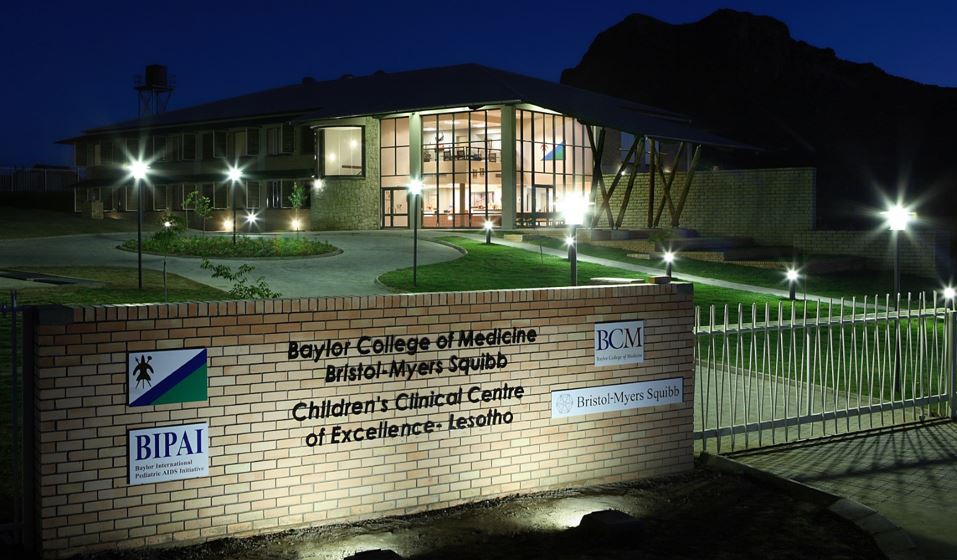
Baylor Lesotho operates seven clinical sites across the country including Maseru, Leribe, Botha-Bothe, Mohale’sHoek, Mokhotlong, and Qacha’s Nek. According to its website, the organisation employs 801 staff members and runs eight ongoing projects, such as KaraboeaBophelo, PINCH, PROTECT, COHIP SEC, ALPEC, and LEADER.
The foundation provides vital services ranging from HIV care and treatment, adolescent care, and teen clubs, to tuberculosis (TB) services, cervical cancer screening, and psychosocial support.
Baylor leadership defends budget structure, points to clinical success and national supply chains
In response to these allegations, the Executive Director of Baylor Lesotho, Dr. LineoThahane, along with her senior management team and the Chairman of the Board of Trustees, issued a detailed defense of the foundation’s spending.
They argued that the high allocation toward personnel reflects the clinic’s core mission of delivering high-quality, clinical expertise, rather than a failure to support patient care.
According to management, the foundation’s staffing frameworks are intentional and heavily regulated. “The Foundation operates standalone facilities, delivering high-quality, comprehensive clinical care for Basotho through Government of Lesotho funding,” management said.
“The Foundation operates in close partnership with the Ministry of Health, and staffing structures have been aligned with Ministry of Health norms and programmatic requirements to ensure efficiency and quality in service delivery.”
Management further clarified that their personnel do not just sit in standalone clinics, but also drive country-wide healthcare training. “Foundation staff supports health care capacity building, mentorships, and coaching across all health centers in supported districts and participate in technical working groups.”
Responding to concerns that only a combined 2 percent of the budget goes toward medical supplies and patient care, Baylor explained that the direct costs of medications and medical commodities are actually absorbed by the Ministry of Health (MoH) and international donor networks, meaning these multi-million maloti costs do not need to be pulled from the foundation’s M40 million government grant.
“The Foundation operates public health clinics therefore all commodities, supplies and medications for prevention, testing or diagnosis, and management of HIV, TB and related conditions are provided through Ministry of Health and supplemented through donor-supported supply chains,” Baylor stated. “This includes all ARVs, HIV test kits, condoms and other prevention commodities, TB screening and diagnosis supplies and commodities.”
The same paradigm applies to nutritional support. The foundation stated that “nutritional support commodities primarily for the management of malnutrition are provided to vulnerable clients in a form of treatment, through Ministry of Health supply chain channels,” while additional food security supplies are supplemented via donor-funded collaborations.
Furthermore, they clarified that the seemingly low 1 percent budget allocation for equipment is misleading, noting that “all required diagnostic and clinical equipment is procured, maintained, and serviced through the Foundation’s operational and maintenance budgets, and are not fully captured under this heading.”
Defending the 2 percent travel allocation, leadership noted that the funds are utilised for supportive supervision of district-based teams, and that mobile outreach services in remote regions are primarily financed through external, international donor-funded projects.
Despite public anxieties regarding potential fallout from clinical layoffs, Baylor’s leadership pointed to stellar clinical data as proof that their operational model continues to yield exceptional outcomes for Basotho children.
“For the last reported quarter, Baylor Lesotho recorded a Viral Load coverage at 98 percent, 99 percent amongst children <15) and Viral suppression at 97 percent, 98 percent in children <15).” Crucially, Mother-to-Child Transmission (MTCT) of HIV under their watch stands at just 3 percent with the national level at 5.3 percent, while 93 percent of clients receive multi-month ARV treatment.”
Addressing transparency and financial integrity amid the public outcry, the Chairman of the Board of Trustees emphasised that the foundation operates under strict public oversight.
“As a publicly funded entity, the Foundation is audited on an annual basis by the Office of the Auditor General, in line with its MOU with the Government of Lesotho,” the management said.
“Its financial statement audits are therefore included in the comprehensive OAG audit of Government of Lesotho fiscal resources. Quarterly financial and programmatic reports are provided to the Ministry of Health for grant management and oversight.”
Summary
- According to the financial breakdown seen by this publication, the budget spending is 56 percent on salaries and wages, 28 percent on employee fringe benefits and allowances, 5 percent on contractual services, 2 percent on travel, 1 percent on patient care costs, 1 percent on medical supplies and 1 percent on equipment.
- Responding to concerns that only a combined 2 percent of the budget goes toward medical supplies and patient care, Baylor explained that the direct costs of medications and medical commodities are actually absorbed by the Ministry of Health (MoH) and international donor networks, meaning these multi-million maloti costs do not need to be pulled from the foundation’s M40 million government grant.
- The foundation stated that “nutritional support commodities primarily for the management of malnutrition are provided to vulnerable clients in a form of treatment, through Ministry of Health supply chain channels,” while additional food security supplies are supplemented via donor-funded collaborations.
Ntsoaki Motaung is an award-winning health journalist from Lesotho, specializing in community health stories with a focus on sexual and reproductive health and rights, as well as HIV. She has contributed to platforms like “Be in the KNOW,” highlighting issues such as the exclusion of people with disabilities from HIV prevention efforts in Lesotho.
In addition to her journalism, Ntsoaki serves as the Country Coordinator for the Regional Media Action Plan Support Network (REMAPSEN). She is also a 2023 CPHIA Journalism Fellow.