
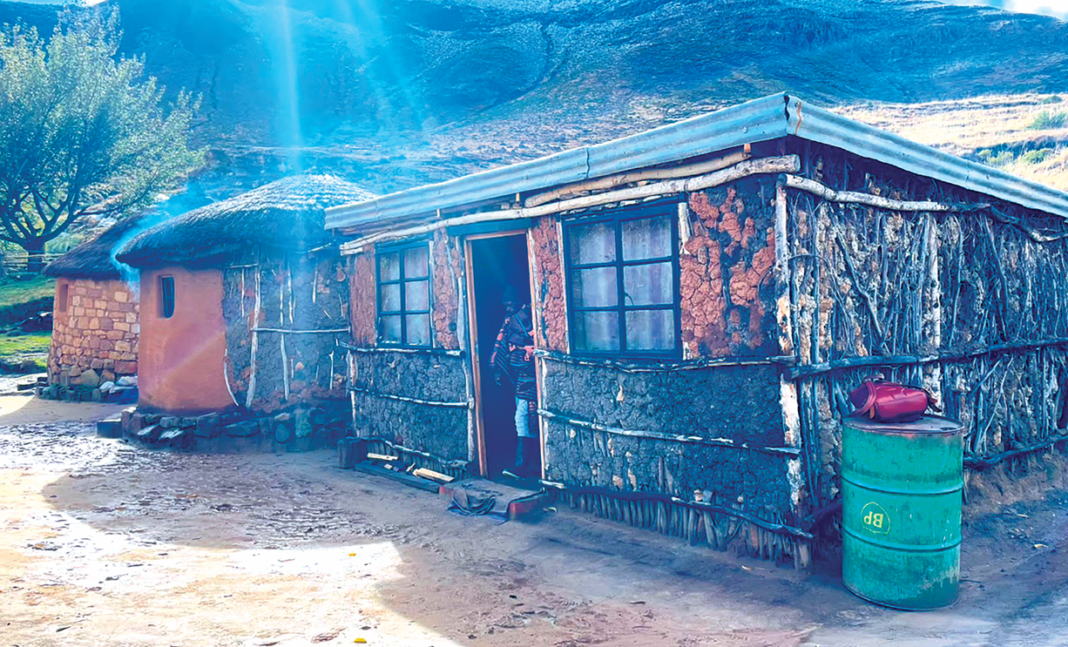
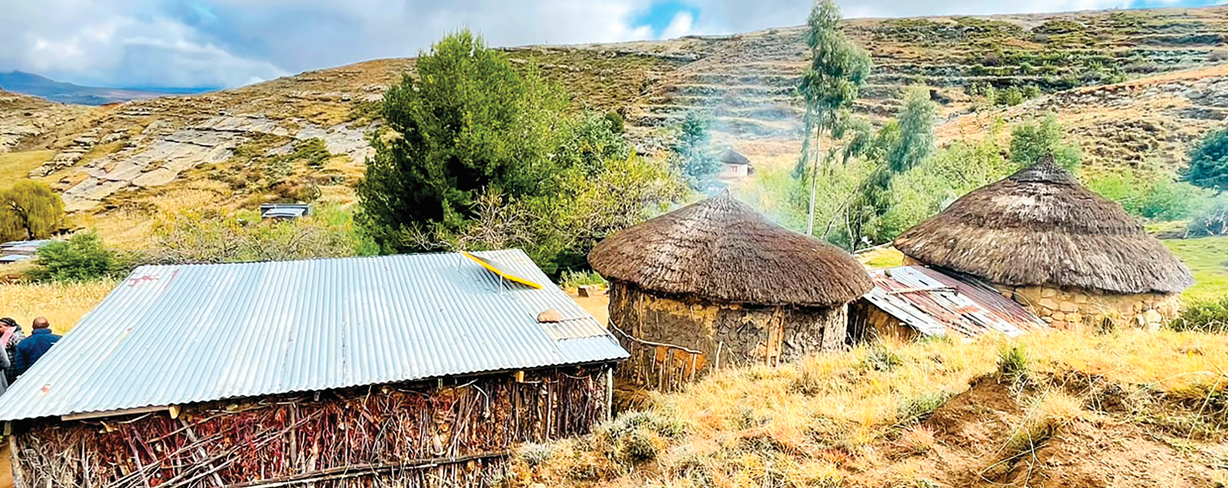
For years, nightfall in the rugged mountains of Lefikeng Sekokoaneng, in Mount Moorosi, brought more than darkness to the Mothibe family. It brought a heavy, exhausting routine that tested their endurance.
As the sun dipped behind the hills in this remote corner of Quthing district, some 210 kilometres from Maseru, the real work for the family of 12 would often begin. With no electricity, staying connected to the world or simply having light to study by became a daily struggle that drained both time and scarce resources.
Lekhetho and ’Matetiea Mothibe, together with their children, daughters-in-law and grandchildren, lived a life where basic needs like phone charging turned into punishing expeditions.
To keep their five mobile phones alive, essential for receiving vital social cash transfers, a family member had to walk three hours to the village of Ha Mphethi, leave the phones at a charging shop, return home, and later make the same six-hour round trip again to collect them. Twelve hours of walking, three times a week.
The financial strain was just as heavy as the physical toll. In a household where making ends meet is a daily struggle, finding an extra M25 for phone charging at M5 per phone pushed the family budget to its absolute limit.
In a household where every coin is already spoken for, that money came mostly from ’Matetiea, the mother, who earns what she can cooking meals at a nearby school. When the cash ran dry, the family went into debt at the charging station, just to keep the lines open.
When darkness fell, the home fell quiet. Five children are still in primary and high school. Studying by candle meant squinting at a page that seemed to disappear with every flicker. Paraffin lighters were brighter but poisoned the air. And some nights, there was simply nothing, no candle, no paraffin, no light at all.
Now, that world is beginning to fade.
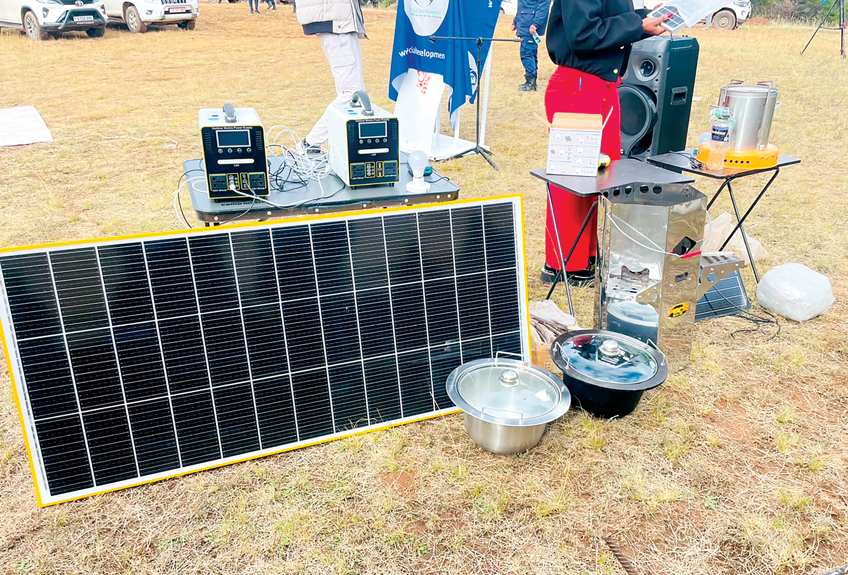
Under the newly launched energy component of the Ntlafatsa Bana (“Improving the Lives of Children”) programme, the Mothibe family was selected as one of five households in their village to receive a modern solar home system.
For 20-year-old ’Mabaeti Mothibe, the impact was immediate.
“Under the Ntlafatsa Bana Project, our family chose a solar panel for lighting and charging amongst the cooking and charging stoves because lighting was the most essential to them,” ’Mabaeti explained. “The family still has children who are still attending school, and lighting from the panel would be useful and empower my siblings to focus more on their studies, without worrying about using a candle which its light is not even enough for one to see their books, or use a paraffin lighter which sometimes we find ourselves in the dark because there is no money to buy paraffin or even a candle.”
The most profound change, however, is measured in the hours restored to their lives.
“I could use the time that I take travelling for charging phones to do some other things like house chores,” ’Mabaeti said, reflecting on the relief of no longer facing that 12-hour walking routine.
The Mothibe family is far from alone. Their household is one of 104 selected from the Telle and Tosing community councils, and part of a broader cohort of 1,000 vulnerable households with children under the age of five receiving clean energy solutions across five mountainous districts, Quthing, Qacha’s Nek, Thaba-Tseka, Leribe, and Mohale’s Hoek.
Funded by the European Union (EU) and implemented by the Government of Lesotho in partnership with UNICEF, Ntlafatsa Bana is a flagship five-year initiative. It uses an innovative Cash Plus approach, recognising that while direct financial aid through the Child Grants Programme (CGP) is vital, cash alone cannot solve the overlapping complexities of rural poverty.
At the official launch ceremony held at the Telle Community Center on June 5, 2026, Marcella Veneziani, representing the European Union, addressed the gathered crowd, highlighting why clean energy is a fundamental right for a developing child.
“Today is a special day for Quthing, and for your community as we are gathered here to launch the Energy Component of the Ntlafatsa Bana project, under the broader Equitable Lesotho Programme,” Veneziani said. “Many of our Child Grants Programme households, especially in rural and mountainous areas, still live with candles, paraffin and open fires. These are expensive. They are dangerous. And they fill our homes with smoke. Because of this, children struggle to study after dark, mothers and children breathe smoke that damages their lungs, and families spend a lot of time and money collecting and buying fuel.”
Veneziani emphasised that energy acts as the glue that binds other social interventions together, ensuring that digital cash transfers can actually be received on time because phones remain powered.
“Under this renewable energy component, 1,000 Child Grants Programme households with children under five will receive renewable energy solutions of their choice, including solar home systems and clean cookstoves,” Veneziani continued, addressing the mothers, fathers, and village chiefs directly. “When you receive your Cash transfer on the phone, you will be able to keep that phone charged, so you can get your money safely and on time. With light in the house, you can do small home-based activities in the evening sewing, selling small goods, charging phones for neighbours, or other small businesses. No child in Lesotho should be left in the dark.”
The political leadership of Lesotho turned out in full force to support the initiative, signaling a unified multi-ministerial push to integrate green energy into national social protection safety nets.
The Minister of Gender, Youth and Social Development, Pitso Lesaoana, expressed immense gratitude to the international partners who made the rollout possible, pointing out that Ntlafatsa Bana has already rehabilitated 26 rural water systems and established 47 community nutrition clubs.
“Ntlafatsa Bana has provided services to children in rural areas where access and service provision is challenged. Today we are gathered to launch the provision of renewable energy to 1,000 households in nine community councils. I urge everyone who will use the cookstoves, the chargers, to ensure safe keeping and protection of all these assets so that they benefit you for a long time,” he said.
Adding to this sentiment, the Minister of Energy and Mining, Lejone Mpotjoane, took the stage to remind beneficiaries that these assets belong to the community as a whole.
He urged the families who received the systems to take excellent care of them and to share their charging capabilities with neighbors, fostering communal harmony in the face of ongoing electricity deficits.
Mpotjoane also brought a wave of hope to the region by promising that formal grid connectivity expansion is underway, announcing that the nearby villages of Masiu and Moqalo will soon be connected to the national electricity supply line.
Representing the United Nations children’s agency, UNICEF Representative Mr. Deepak Bhaskaran reinforced the organisation’s unwavering commitment to the youth of the mountain kingdom.
He noted that changing a child’s physical environment is an essential part of changing their life trajectory.
“The initiative signifies our commitment to improving lives of children across the country,” Bhaskaran said. “Access to clean energy solutions will contribute to safer homes, improved well-being and greater household resilience. The Ntlafatsa Bana project has successfully assisted families to improve nutrition practices and access to clean water amongst others, and this energy component is the next vital piece of that puzzle.”
Summary
- To keep their five mobile phones alive, essential for receiving vital social cash transfers, a family member had to walk three hours to the village of Ha Mphethi, leave the phones at a charging shop, return home, and later make the same six-hour round trip again to collect them.
- Under the newly launched energy component of the Ntlafatsa Bana (“Improving the Lives of Children”) programme, the Mothibe family was selected as one of five households in their village to receive a modern solar home system.
- “The family still has children who are still attending school, and lighting from the panel would be useful and empower my siblings to focus more on their studies, without worrying about using a candle which its light is not even enough for one to see their books, or use a paraffin lighter which sometimes we find ourselves in the dark because there is no money to buy paraffin or even a candle.
Ntsoaki Motaung is an award-winning health journalist from Lesotho, specializing in community health stories with a focus on sexual and reproductive health and rights, as well as HIV. She has contributed to platforms like “Be in the KNOW,” highlighting issues such as the exclusion of people with disabilities from HIV prevention efforts in Lesotho.
In addition to her journalism, Ntsoaki serves as the Country Coordinator for the Regional Media Action Plan Support Network (REMAPSEN). She is also a 2023 CPHIA Journalism Fellow.