
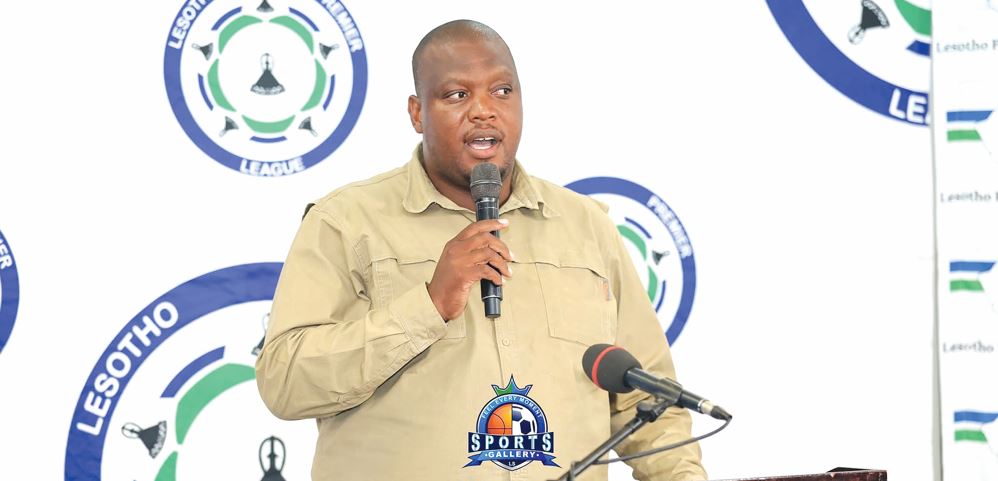
Lesotho’s top flight football is hurtling towards a season opener on August 22 under the stewardship of a committee that cannot prove who its chairperson is, how he got there, or whether it even has enough validly seated members to make a lawful decision.
The Premier League Management Committee (PLMC) is a body operating outside its own rulebook, and the question the Lesotho football fraternity can no longer avoid is whether the PLMC in its current form, has any legal standing to run the league at all.
On August 5, the PLMC informed clubs that Litsie Nokoane had become Chairperson of the Premier League “with immediate effect,” replacing Hlompho Maitin after Lioli FC withdrew Maitin.
A club withdrawing its own representative is normal and squarely within its rights under the league’s regulations, but what is not in order is the PLMC filling the chairmanship without showing the due processes that the regulations require.
The Premier League and A-Division League Rules and Regulations 2023, as amended, on Clause 8.6 state that any vacancy in the seven-member executive, arising from death, relegation, resignation, dismissal or “another cause,” must be filled through elections among the nominated members. Not appointment or co-opting but elections.
Bantu FC has since demanded the paperwork that would prove such an election happened: the notice convening the meeting, the list of eligible voters, an attendance register, nomination records, minutes, voting results and a signed resolution.
As of now, none of that has been produced. If it exists, publishing it would end the dispute in a single afternoon. Its absence, so far, speaks for itself.
Clause 8.6 exists precisely so that the chairmanship of a national league cannot be handed over informally, by memo, on the say-so of whichever club happens to hold leverage at the time.
If the PLMC cannot show that Nokoane’s ascension followed this process, then strictly by the league’s own regulations, he is not lawfully the chairperson, and every decision he signs off on inherits that defect.
Remarkably, the PLMC’s own paperwork concedes the problem. A memo dated August 10 referred to a “PLMC structural transition” and a “slight shift” in its composition, promising a “formal communique” once unspecified internal processes were concluded.
In the very same breath, the committee declared itself “fully functional” and available to push ahead with preparations for the 2026/27 season.
Read plainly, the PLMC is telling stakeholders two contradictory things at once: that its own leadership structure is unresolved and under review, and that it retains full authority to launch a season, sanction fixtures and bind clubs to obligations in the meantime.
A body cannot simultaneously be mid-transition on the question of who legitimately sits on it and be exercising untrammelled executive power. That is not transition. That is a committee governing in a legal vacuum and hoping no one notices before the first whistle blows.
The composition question goes further than the chair. Bantu has pointed out that after a string of withdrawals and unresolved vacancies, the PLMC may have as few as four members left, and possibly fewer who are validly in office, depending on how those vacancies were actually handled.
That matters because the regulations set quorum at four members, provided the chairperson or deputy chairperson is among them. If Nokoane’s chairmanship is legally contestable and the deputy chairperson’s position is also vacant or disputed, then the PLMC cannot simply count warm bodies in a room and declare itself quorate.
A quorum built on a disputed chair is not a quorum; it is an assumption dressed up as one. Every resolution passed under those conditions, including the fixture list already released, sits on uncertain legal ground.
Bantu has also challenged the PLMC’s instruction that it replace its withdrawn representative within 48 hours, asking the committee to cite the specific rule that empowers it to impose such a deadline. No provision has been produced.
A committee that invents deadlines it cannot source from its own regulations is not administering the rules it is improvising authority it does not clearly have.
Compounding all of this is the postponement of an Annual General Meeting (AGM), initially scheduled for 8 August 2026. An AGM is a mechanism through which member clubs receive reports, scrutinise the previous season, examine finances and hold the league’s administrators to account.
Skipping it before a new season begins removes the one formal setting in which clubs could compel the PLMC to answer exactly the questions now being asked through letters and public disputes instead.
A committee cannot invoke the rulebook to legitimise a fixture list while ignoring the same rulebook’s requirements on elections, vacancies and accountability meetings. Either the regulations bind the PLMC or they don’t. It cannot be both ways depending on convenience.
Lesotho’s Premier League is not a private, self-governing corporation like England’s Premier League, where clubs sit as shareholders in an autonomous company. Nor is it structured like South Africa’s PSL, an affiliate of a national federation but still a distinct administrative entity.
The PLMC operates inside the LeFA’s own structure, meaning LeFA, which describes itself as the sole custodian of football in the country, carries direct responsibility for what happens when the body beneath it stops following its own rules.
That is precisely why this is not simply an internal squabble for clubs to sort out among themselves. Clubs have already sunk money into player recruitment, coaching staff, transport and preparations for August 22.
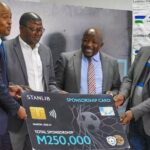
This also means that the league’s title sponsor is bankrolling a competition currently administered by a committee that cannot prove its own leadership is lawfully constituted. Sponsors, broadcasters and players are all being asked to trust an institution whose legal footing is, at minimum, seriously in question.
The danger here is not that August 22 might be delayed, it probably won’t be. The danger is precedent.
If a chairmanship can change hands without a documented election, if a committee can call itself quorate while its own membership is disputed, if deadlines can be issued with no rules behind them, and if an AGM can simply be skipped while the season proceeds regardless, then Lesotho football will have quietly rewritten its own governing culture, rules as suggestions, process as optional, accountability as something to promise “once processes are concluded” and never quite deliver.
Every exception normalised now becomes the baseline the next committee inherits. That is how footballing institutions hollow themselves out, not through one dramatic scandal, but through a accumulation of unanswered questions that everyone eventually stops asking.
The remedy is neither complicated nor dramatic. The PLMC must publish its full current composition and the legal basis for each seat. It must produce the election record for the chairmanship, or admit that none exists.
It must cite the rule behind the 48-hour ultimatum to Bantu, or withdraw it. And it must convene the postponed AGM before, not after, a ball is kicked.
LeFA, for its part, cannot continue watching from the sidelines. Oversight is not interference, it is the federation doing the job its own statutes assign it. A season opening on schedule means nothing if the body running it cannot answer the most basic question in football governance: by what lawful authority do you hold office?
Until the PLMC can answer that, in documents rather than in memos, Lesotho football is not being governed. It is being administered by default, and default is not the same thing as legitimacy.
Summary
- Lesotho’s top flight football is hurtling towards a season opener on August 22 under the stewardship of a committee that cannot prove who its chairperson is, how he got there, or whether it even has enough validly seated members to make a lawful decision.
- The Premier League Management Committee (PLMC) is a body operating outside its own rulebook, and the question the Lesotho football fraternity can no longer avoid is whether the PLMC in its current form, has any legal standing to run the league at all.
- A club withdrawing its own representative is normal and squarely within its rights under the league’s regulations, but what is not in order is the PLMC filling the chairmanship without showing the due processes that the regulations require.

Senior journalist and communications professional with extensive experience in general news reporting, specializing in business and sports journalism. Skilled in public speaking, media relations, and strategic communication, with a proven ability to deliver accurate, engaging, and impactful stories.
A strong team player who thrives in collaborative environments and adapts effectively to diverse working conditions. Passionate about continuous learning, professional growth, and enhancing communication practices to meet evolving industry demands.