

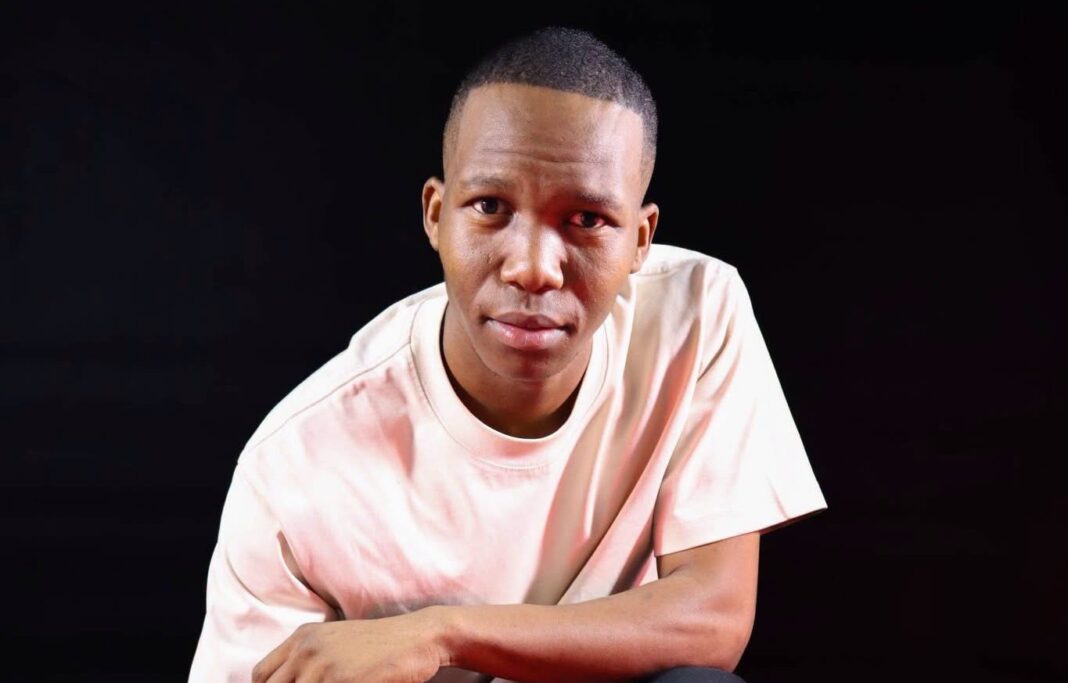
When a song becomes a hit, the artist usually gets the applause. The producer is often somewhere behind the curtain.
Listeners remember the voice, the performance, the music video and the lyrics. The person who helped turn an idea into the final sound can remain largely invisible.
For Shev-Shengu (Kabelo Khomohali), however, that invisibility has never meant insignificance.
“From when I started I knew that I wanted to be part of the influence of music business and culture, I knew I would want to be a different kind of music producer,” Shev-Shengu said.
Over the years, his production work has taken him across different chapters of Lesotho’s music scene, from working with established names such as Cityzeen LS, Sannere and Phoka Ea Boroa to becoming part of the creative force behind the more recent rise of Litšepe Lr.
Songs such as Hohle Ke Lesotho, Lerato La Ka and Natala have placed his production before a new generation of listeners, while his work across different styles has established him as one of the country’s most active and versatile producers.

“I cannot say I have always wanted to be in production, my love was in being a rapper back in the day when I was in High School as the Lesotho hip hop and Sotho Hop scene was taking shape,” he said.
“It was only later that I got curious about how the beats are made, the entire production process and what it takes to produce a masterpiece of a song. That curiosity got me to purchase some startup production equipment, and I never went back to rapping.”
But his journey into music was not always the obvious career path. In 2018, Shev-Shengu was studying Mechanical Engineering at Lerotholi Polytechnic. Music, meanwhile, was beginning to pull him in another direction.
Shev-Shengu traces his professional journey in music to around 2018 and 2019.
“At the time I was studying Mechanical Engineering at Fokothi, but production was increasingly becoming more than an interest. I was getting my name out there and working with big names such as SkebzaD, Robocop and others,” he stated.
“What began as an exploration of music gradually developed into a professional pursuitand when I completed my studies now in formal employment, I started working with Sannere who at the time was known as RM Leever.”
The decision to pursue music meant stepping away from the more conventional career path represented by his studies and committing himself to an industry whose financial prospects were far less certain.
“When Sannere started booming, he was the one who convinced me to stop my day job and focus on music. It was risk considering music was known and still to some extent known to not be financially sustainable, but I took the risk, he explained.
That decision would eventually define his career.
Rather than abandoning the technical mindset he had developed through engineering, he brought another kind of discipline into the studio: an interest in how things work, how they fit together and how individual components can be transformed into a functioning whole.
In production, however, technical knowledge alone is not enough.Shev-Shengu says instinct has played an important role in his creative process.
“For me production is not simply about knowing which buttons to press or understanding the technical aspects of recording. It is also about feeling where a song should go and understanding what an artist is trying to communicate,” Shev-Shengu said.
“That instinct has helped me avoid being confined to a single musical box.One my most striking characteristics in my career is my versatility. I am unboxed when it comes to music production, it can be gospel, hip hop, sotho hop, famo, maskandi and so on.”
His work has moved across different musical influences and styles, while retaining what he describes as a strong local influence.That distinction matters.
In an era when African musicians can access virtually any sound in the world with a few clicks, producing music that feels rooted in home while remaining contemporary is a delicate balance.
“I do not describe my sound as belonging exclusively to one genre.Instead, my approach always guided by the music itself and by the artist in front of me. The artist shares the vision or idea and I combine the beats,” he says.
That flexibility has allowed him to work with artists from different generations and backgrounds without attempting to force them into one predetermined sonic formula.
It is also part of what makes his production journey a useful lens through which to examine the evolution of contemporary Basotho music.
The music has changed.The technology has changed.The audience has changed.And producers like Shev-Shengu have had to change with it.
His work with artists such as Sannere and Phoka Ea Boroa forms part of that journey.
“Working with established musicians such as those has givenme exposure into different approaches to songwriting, performance and recording, while also teaching me that production is fundamentally collaborative and that’s the magic trick,” he expressed.
“As a producer I may build the instrumental foundation, but the final record emerges from a conversation between myself and the artist.”
Instead of treating recording as simply a technical exercise, the studio became a place where ideas could develop organically, where artists could experiment and where the producer could spend more time shaping the final product. It also brought challenges.
Creating music is rarely as straightforward as pressing record. Artists have different personalities, expectations and creative instincts. Producers must learn when to push an artist, when to compromise and when to allow an idea to develop without interference.
For Shev-Shengu, those experiences have been part of the education that no classroom could provide.
If his earlier collaborations established his credentials, his work with Litšepe Lr represents one of the most interesting chapters of his recent career.
The relationship developed into a creative partnership that would contribute to a sound increasingly associated with the group.
Rather than simply producing individual songs, Shev-Shengu became part of a broader creative process as he later left Metšoaka Group to start working with Grystal Group which also houses Litšepe Lr following his departure from Metšoaka Group as well.
The objective of Grystal group with Shev-Shengu was not merely to make music that sounded good.It was to create something that could carry a sense of place while still speaking to contemporary audiences.
That tension between local identity and modern sound is particularly evident in the music associated with Litšepe Lr.
Litšepe Lr’s music draws from a broader Southern African musical vocabulary, while incorporating elements that speak to Basotho identity.
For Shev-Shengu, this is not necessarily about choosing between traditional and modern music. The sound that Motheo Album released earlier this year and subsequently the Maja-Samo EP was heavily influenced by the Zulu culture genre “Maskandi” and it was a result of a conversation between Litšepe and Shev-Shengu.
“It is mainly about understanding that Basotho music can absorb outside influences without losing its identity,”Shev-Shengu explains.
“If you listen to those songs on both projects, they have both Sesotho and Zulu influences. There’s accordion and there’s that maskandi guitar which means we have strategically positioned to cultures in one sound.”
Two songs that stand out from this period are Lerato La Ka and Natala.For listeners, the records exist as finished products.
For the people who created them, however, a song begins much earlier “For me every song begins with an idea, an atmosphere, an instrumental, a melody or sometimes simply an experiment in the studio,” Shev-Shengu said.
That is where the producer’s contribution becomes difficult to separate from the final record. Shev-Shengu’s role in these projects illustrates the often-overlooked complexity of production.
The producer is not simply the person who creates a beat.He is involved in decisions about sound, arrangement, texture, musical direction and how an artist’s idea eventually reaches an audience.
And when the song succeeds, the producer shares in that successeven if the public recognition overwhelmingly goes to the artist.
Chev-Shengu does not appear particularly troubled by the fact that audiences often pay more attention to the artist than the producer.
“There is an acceptance that production is, by nature, a behind-the-scenes profession.But that does not make the contribution less important,” he says.
“In fact, in myexperience this is one of the persistent problems in Lesotho’s music industry, the people who make the industry function are often not adequately recognised or compensated.”
A successful song is rarely the work of one person.Behind an artist are producers, songwriters, engineers, managers, publicists, videographers, photographers and other creative professionals.
Yet the public conversation often begins and ends with the performer.For Shev-Shengu, changing that perception requires greater understanding of the music business.
“Producing good music is one thing.Building a sustainable career from it is another,” Shev-Shengu says.
He says he has become increasingly conscious of the importance of educating artists and producers about the business side of music.
“Questions around compensation, ownership, producer credits, royalties, publishing and digital revenue are not peripheral concerns. They determine whether creative work can become a sustainable livelihood,” he says.
“The rise of digital platforms has made the conversation even more urgent.”
“Music can now travel beyond Lesotho through streaming services and social platforms, potentially reaching audiences that traditional radio could never reach.”
“But access to a global audience does not automatically mean a sustainable income.”
“Artists and producers need to understand how those platforms work, how their rights are protected and how revenue flows from a successful record.”
For Chev-Shengu, education is therefore part of building the industry.Talent alone is not enough.
Chev-Shengu’s own career offers a complicated answer to whether a person can build a sustainable career in music in Lesotho.He chose music despite having been trained in another field.
That choice has allowed him to establish himself professionally, but he is also candid about the challenges of building a sustainable music career in Lesotho.
“The problem is not necessarily a lack of talent.Lesotho has artists, producers, musicians and other creative professionals capable of producing work that can compete beyond the country’s borders,” Shev-Shengu says.
“The challenge is building the ecosystem around that talent.”
“That includes stronger business knowledge, better structures for compensation, greater recognition of producers and more opportunities for artists to develop audiences beyond Lesotho.”
Shev-Shengu also sees a role for government and industry institutions in developing the country’s creative sector.
He believes Initiatives such as the National Music Awards, establishment of LESCOSAA and broader government efforts around the creative economy can contribute to building recognition and opportunity.
“But recognition alone cannot create an industry.The bigger question is whether Lesotho can build systems that allow creative professionals to make a living from their work, he says.
“That means thinking beyond artists.Producers, engineers, managers, publishers, promoters and other professionals all form part of the creative economy.”
According to him, If one part of that ecosystem remains weak, the entire industry struggles.
He believes the future of Basotho music therefore depends not only on producing better songs, but on producing a better environment in which those songs can become businesses.
Perhaps the most interesting aspect of Shev-Shengu’s philosophy is his apparent refusal to see local identity and international relevance as opposing ideas.
The contemporary Basotho sound can borrow from Southern African musical traditions, international production techniques and modern digital culture while still maintaining a recognisable sense of home.
That is particularly important at a time when music from across Africa is travelling further than ever.
For Lesotho, the question is no longer whether Basotho musicians can make music.They can.
The question is whether they can develop sounds, structures and business models capable of carrying that music beyond the country’s borders.
“My work with Litšepe Lr provides one possible answer to that dilemma.The sound is contemporary, but it is not detached from its surroundings,” he says with pride.
“It is influenced by the region, yet filtered through a Basotho creative sensibility.”
And that may ultimately be his most important contribution, not simply producing songs, but participating in the ongoing conversation about what Basotho music can become.
When asked what advice he would give to a young producer entering the industry, Shev-Shengu does not offer a shortcut to success.
His message is consistency.
“Keep producing.Keep learning.Keep improving.
Keep showing up,” he says.
It is perhaps fitting advice from a producer whose career has not been built around a single defining moment.
His story has been one of evolution, from a Mechanical Engineering student exploring production, to a professional producer working with established artists, to a key creative contributor in a newer generation of Basotho music.
The songs may belong to the artists.The applause may belong to the performers.But somewhere beneath the vocals, melodies and rhythms is the architecture of the record.
And for more about a decade, Shev-Shengu has been learning how to build that architecture.
The next chapter may be his most important yet.
Because if Lesotho is going to build a music industry rather than simply produce hit songs, it will need people who understand both sides of the equation:the music, and the business behind it.
Summary
- “From when I started I knew that I wanted to be part of the influence of music business and culture, I knew I would want to be a different kind of music producer,” Shev-Shengu said.
- “I cannot say I have always wanted to be in production, my love was in being a rapper back in the day when I was in High School as the Lesotho hip hop and Sotho Hop scene was taking shape,” he said.
- “What began as an exploration of music gradually developed into a professional pursuitand when I completed my studies now in formal employment, I started working with Sannere who at the time was known as RM Leever.

A Professional Communications practitioner with a wealth of expertise in marketing, public speaking, communication and media relations. I believe in learning everyday and improving one’s personal and professional capabilities.
* A former journalist and radio host who is passionate about media and it’s impact on society.