

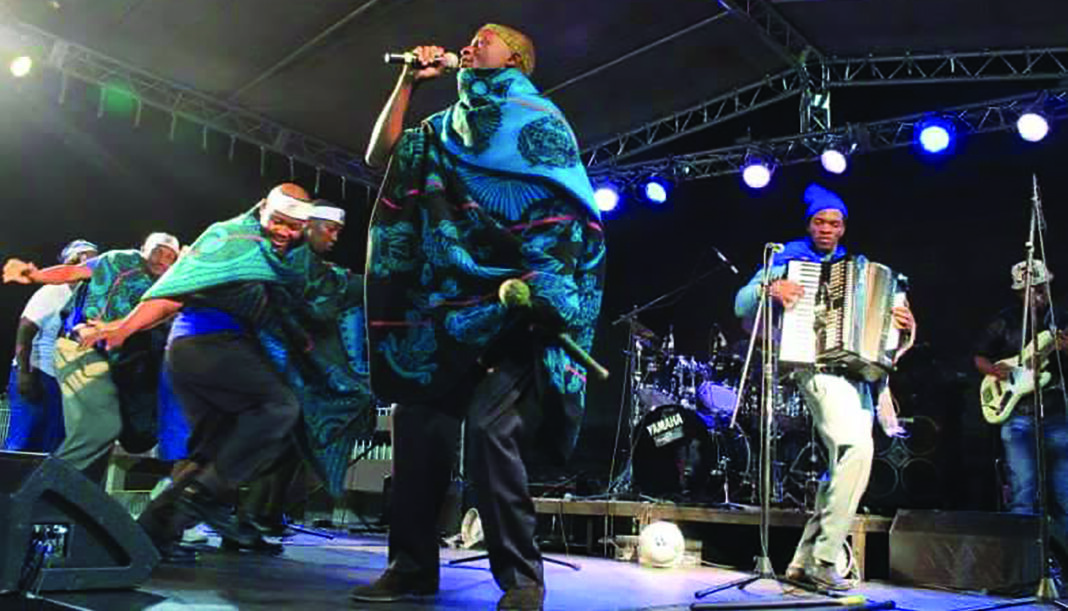
As Lesotho marks 60 years of independence, its music offers a remarkable record of the country’s changing identity, from traditional and choral music to Famo, Sankomota, hip hop and the contemporary Sotho Hop movement. But after six decades of creativity, has Lesotho built a sustainable music industry around its talent?
When Lesotho celebrates six decades of independence, the country will inevitably reflect on its political history, its leaders, institutions, struggles and achievements.
But there is another history that has accompanied the nation throughout those 60 years. It is the history told through music.
From the voices of traditional performers and choirs to the accordion-driven Famo of Apollo Ntabanyane and his generation; from Sankomota and the late Tsepo Tshola to the pioneers of local hip hop; and from Skebza D and his contemporaries to Ntate Stunna, Sannere and Litšepe LR, the evolution of Basotho music mirrors the evolution of Basotho society itself.
It is a story of migration, faith, love, hardship, identity, politics, social commentary and, increasingly, entrepreneurship. And perhaps most importantly, it is a story of adaptation.
Before independence, there was already a Basotho sound
Although this article looks at the six decades since 1966, Lesotho’s musical story did not begin at independence.
Before the flag of the independent kingdom was raised, Basotho musicians were already developing forms of musical expression that blended indigenous traditions with influences brought by Christianity, formal education and migration.
Among the most significant figures was composer Joshua Pulumo Mohapeloa, whose work became an important part of Basotho choral music.
His Moshoeshoe, Tsoha, composed before independence, was performed during the 1966 Independence celebrations, an indication that music was already intertwined with national identity at the birth of the modern Basotho state.
The young nation therefore inherited not an empty musical landscape, but a culture with an established vocabulary of song, poetry, oral history and communal performance.
Then came the sound that would become perhaps the most recognisable musical expression of Basotho life: Famo.
When the accordion found the Basotho story
Famo’s roots stretch back to the early 20th century. The genre developed among Basotho communities, including migrant workers in South Africa’s mines, and evolved from older Basotho musical traditions. The accordion eventually became one of its defining instruments.
The genre’s importance was not simply musical. For Basotho migrants, music became a means of carrying home with them.
In shebeens and other social spaces, the accordion, drums and voices became vehicles for storytelling. Famo could speak about relationships, money, migration, work, betrayal, hardship and everyday life.It was, in many ways, a newspaper without paper.
By the late 1960s, Tau ea Matšekha, featuring Forere Motloheloa and Apollo Ntabanyane, had become one of the first major Famo acts to make a living from recorded music. Their recordings, including Ha Peete Kea Falla, helped establish Famo as a commercial recording genre.
Ntabanyane would later declare himself the “King of Famo” in 1974.
His generation demonstrated that a musical form associated with ordinary Basotho could become commercially viable and culturally influential.
But the journey was not without prejudice.
Veteran musician Lephoi Mohale, better known as Mantša, says Famo was once among the genres most taken for granted.
“Especially FAMO music, it was one of the most taken for granted genres back then.”
For Mantša, however, that perception was something musicians themselves fought to change.
“We worked so hard to turn that around and I am not even ashamed to say that I was at the forefront of fighting to protect and grow the music industry specifically in the FAMO genre.”
His recollection is significant because it places musicians themselves at the centre of Famo’s transformation from a marginalised musical form into an important component of Basotho cultural identity.
The women who entered a man’s world
The history of Famo is also a history of women challenging the boundaries of the genre.
Famo was traditionally dominated by men, with women often participating as dancers rather than principal performers.
That began to change with artists such as ’Malitaba and, most prominently, Puseletso Seema.
Seema would become known as the Queen of Famo and is widely recognised as one of the genre’s pioneering female performers. Recent reporting on her life describes her as one of the women who broke into a musical space that had previously been largely reserved for men.
Her story adds another dimension to the history of Lesotho’s music. The evolution of the industry was not only about new sounds. It was also about who was allowed to speak.
Beyond Famo: a country finding its musical range
It would nevertheless be misleading to describe Lesotho’s musical history as simply a history of Famo.
Choral music, gospel, traditional music and other popular forms continued to flourish alongside it.
Lesotho’s geographical position also made it a significant meeting point for musicians from across Southern Africa. During the apartheid era, South African artists performed in Lesotho, exposing local audiences and musicians to different sounds while giving Basotho performers access to a wider musical environment.
Then there was Sankomota.
The group, associated with musicians including Tsepo Tshola and Frank Leepa, became one of Lesotho’s most important musical exports, developing a sound that drew on African musical traditions and international influences.
Its history also demonstrated the political reality of the region. The group’s predecessor, Uhuru, encountered restrictions under apartheid before its evolution into Sankomota.
By the 1980s, Sankomota had become an important example of the ability of Basotho musicians to create music that could travel beyond Lesotho’s borders.
This was also an era when radio was extraordinarily influential.
Radio Lesotho had been launched in 1964, two years before independence. For generations of Basotho, radio would become one of the most important routes through which local music reached national audiences.
Before streaming services, social media and algorithmic playlists, radio was the gatekeeper.A song that received airplay could become a national hit.
Then the young people picked up the microphone
By the 1990s, another cultural force was changing the musical landscape: hip hop.
There is some uncertainty about exactly when hip hop first arrived in Lesotho, but the early 1990s saw a wave associated with figures such as Papa Zee, while the genre became increasingly established towards the end of the decade.
Initially, the influence was overwhelmingly American.The fashion was American.The language was often English.The production was heavily influenced by American hip hop.
But young Basotho did what young people everywhere eventually do with imported culture.They made it their own.
Maseru became a centre of emerging hip hop culture. Crews developed, rap battles and competitions provided platforms for young artists, and performers including Kislev, Skebza D, Sadon, Core Wrekah and T-Mech helped shape the emerging scene.
The significance of that generation lies not only in the music it produced, but in the cultural confidence it represented.
Young Basotho were no longer simply consuming international popular culture.They were participating in it.
From hip hop to Sotho Hop
Eventually, the question became less about whether Basotho could rap and more about what it meant to rap as a Mosotho.
This is where the evolution commonly described as Sotho Hop becomes significant.
Rather than simply reproducing American hip hop, artists increasingly incorporated Sesotho, local narratives, Basotho cultural references and traditional musical elements.
Skebza D has been particularly vocal about this cultural dimension, describing Sotho Hop as a form rooted in Southern African and Sotho identity. His career has stretched across generations of Lesotho’s hip hop culture, with music, mentorship and cultural storytelling forming part of his contribution to the scene.
The contemporary generation has taken that evolution further.
Ntate Stunna has become one of the most recognisable names in contemporary Sotho Hop, while artists such as Sannere and Litšepe LR represent different expressions of the current sound.
Sannere is especially interesting in this historical continuum because his music brings together elements that might once have been regarded as belonging to different eras: the accordion and hip hop.
Academic research on the evolution of Sotho accordion music documents the way storytelling, spoken word and rap styles became incorporated into the music, illustrating that the boundaries between genres have never been as rigid as they might appear.
Mantša sees the connection even more directly.
He argues that the influence of Famo can be heard in the newer generation:
“Basotho from all walks of life have accepted and embraced and even became influenced by famo music so much that it has even birthed other genres such as Sotho Hop.”
Whether one describes Sotho Hop as a direct descendant of Famo or as a parallel development influenced by the wider Basotho musical tradition, the important point is that contemporary artists are increasingly comfortable combining modern production with older cultural vocabulary.
The accordion did not necessarily have to disappear for the hip hop beat to emerge.The old story could survive inside the new sound.
The soundtrack has changed. The economic question has not.
And this brings us to the uncomfortable part of Lesotho’s musical history.The country has produced musicians.It has produced genres.It has produced audiences.It has produced stars.
But has it produced a sustainable music industry?
The distinction matters.
A music culture can exist without musicians earning sustainable incomes from their work.
Lesotho’s history contains numerous examples of artists struggling to benefit financially from the music they created.
Ntate Mantša himself is a striking example.
Ntate Mantsa began recording in 1987, but because Lesotho lacked the recording infrastructure he needed, he travelled to South Africa to record. He eventually received his first royalties in 2010, more than two decades after he began recording.
His experience points to a problem that has persisted across generations: Basotho have been able to create musical value faster than the country’s systems have been able to monetise it for them.
Today, the problem is being confronted through efforts to strengthen copyright and collective rights management.
Building the machinery behind the music
LESCOSAA, the Lesotho Copyright Societyof Authors and Artists, represents an important development in this regard.
The organisation’s own assessment is that Lesotho’s music industry is not yet financially sustainable.
One of the major missing pieces has been collective management, a system through which music users can be licensed and royalties collected and distributed to creators.
According to LESCOSAA’s Membership and Documentation Manager Relebohile Tsoamotse, the collective-management system had effectively not been functioning in Lesotho for many years, despite the legal framework having existed on paper. LESCOSAA became operational in 2021, but says royalty collection has yet to fully take off.
That is an important distinction.The problem is not necessarily that the concept of royalties does not exist.
It is that the machinery required to systematically collect and distribute them has been underdeveloped.
LESCOSAA says almost 300 artists are currently registered, but acknowledges that this remains a small number.
The organisation also identifies another problem: some artists lack sufficient knowledge of copyright and the business side of music.
That means the industry’s challenge is not simply about legislation.
It is about education, enforcement, licensing, infrastructure and professionalisation.
As Tsoamotse puts it:“Music has value, as does intellectual property. It should be protected and paid for.”
That sentence captures perhaps the central economic question facing the industry at 60.
Recognition is growing
There are nevertheless signs that the industry is becoming more organised.Music awards have become increasingly prominent vehicles for recognition and visibility.
The National Music Awards, now in their third edition, have established categories covering Famo, Sotho Hop, gospel, jazz, traditional music, amapiano, choral music and hip hop, among others. The awards’ 2025 winners included Apolo Ntabanyane, who received the Queen Mamohato Lifetime Achievement Award, while Mants’a was recognised as Best Recognised Artist.
The 2026 edition, held in September as Lesotho approached its Independence anniversary, also used the awards platform to celebrate the country’s musical heritage and cultural identity.
The significance of such platforms goes beyond trophies.
They help create visibility, establish career milestones and provide an industry narrative in which musicians can be recognised as professionals.
But recognition alone cannot build an industry.An award cannot replace a publishing agreement.A performance cannot replace a royalty system.A viral song cannot replace financial literacy.
And popularity does not automatically translate into sustainable income.
Music as an employer
For Mantša, the next chapter requires government to look at musicians differently.Not simply as entertainers.Not simply as cultural ambassadors.But as economic participants.
He argues that government should protect and invest in musicians, particularly after the damage COVID-19 inflicted on the live entertainment sector.
His argument is that musicians can also contribute to employment creation.
“Musicians can help government create jobs and reduce high unemployment rate.”
He wants to see public funding allocated to musicians to help them create employment and build sustainable enterprises around their work.
He also challenges the private sector to give Basotho artists greater opportunities at events and festivals instead of routinely importing performers from outside the country.This is an important shift in the conversation.
If music is treated only as entertainment, support for musicians can be viewed as discretionary.
If music is treated as part of the creative economy, the discussion changes to investment, employment, intellectual property and economic returns.
The Famo question
Any serious retrospective of Lesotho’s music must also confront the difficult modern history of Famo.
The genre has become entangled with violent rivalries and criminal activity, and the government has taken action against certain Famo groups.
That reality cannot simply be erased from the genre’s history.But neither should the contemporary violence be allowed to define Famo’s entire history.Famo existed for generations before the modern conflicts.
Its roots lie in Basotho storytelling, migration, working-class life and musical innovation. Its artists have used it to document relationships, social problems and everyday experiences. Recent reporting has also shown that the music remains deeply embedded in Basotho cultural life.
The challenge, therefore, is to distinguish between a cultural genre and the criminal activities that have become associated with some groups operating around it.
Mantša’s own perspective is that musicians have worked for decades to protect the reputation and value of Famo.
That history deserves to remain part of the national conversation.
Six decades later, what have we actually built?
Perhaps the most revealing thing about Lesotho’s musical history is how consistently musicians have adapted.
The traditional performer adapted to Christianity and formal education.Famo absorbed the accordion.The accordion travelled with migrant workers.Sankomota absorbed regional and international sounds.Hip hop arrived from America.Basotho rappers localised it.
Sotho Hop emerged as a contemporary expression of Basotho identity.Digital technology then changed how music is recorded, promoted and consumed.
Every generation has found a way to take what came before and reinterpret it.
That is why describing the history simply as “Famo versus Sotho Hop” would miss the point.It is not a story of replacement.It is a story of evolution.The music changes because the people change.
And yet, beneath the changing beats, the fundamental function remains surprisingly familiar.
Tell the story.
Tell the story of the migrant worker.Tell the story of the shepherd.Tell the story of the lover.Tell the story of the politician.Tell the story of the young person trying to find an identity.Tell the story of the nation.
That is what Basotho musicians have been doing for generations.
The unfinished business of musical independence
At 60, therefore, Lesotho’s music industry presents something of a paradox.The country has extraordinary musical heritage.It has generations of recognised performers.It has an increasingly diverse contemporary scene.It has awards platforms.It has digital access to audiences beyond its borders.
And it has institutions beginning to address copyright and collective rights management.
Yet the systems that convert creativity into sustainable income remain incomplete.
LESCOSAA is still trying to establish an effective collective-management system.Artists still need greater copyright and business education.
The private sector still has an important role to play in creating local opportunities.Government policy and infrastructure can still do more to treat creative work as an economic sector.
And musicians themselves need to become increasingly conscious of the business behind the art.
That may ultimately be the central lesson of Lesotho’s first 60 years of musical independence.
The country has never lacked people capable of creating the soundtrack.
The unfinished work is building an industry capable of rewarding those who create it.
From Apollo Ntabanyane to Puseletso Seema.From Mantša to Tsepo Tshola.From Sankomota to Skebza D.
From the early hip hop crews to Ntate Stunna, Sannere and Litšepe LR.The names change.The instruments change.The technology changes.The audience changes.But the music continues.
And as Lesotho enters its next 60 years, perhaps the ambition should be bigger than producing more successful musicians.
It should be to build a country in which Basotho music is not only culturally valuable, but economically valuable to the Basotho who create it.
After six decades of creating the soundtrack of the nation, that may be the next stage of Lesotho’s musical independence.
Summary
- As Lesotho marks 60 years of independence, its music offers a remarkable record of the country’s changing identity, from traditional and choral music to Famo, Sankomota, hip hop and the contemporary Sotho Hop movement.
- And from Skebza D and his contemporaries to Ntate Stunna, Sannere and Litšepe LR, the evolution of Basotho music mirrors the evolution of Basotho society itself.
- “We worked so hard to turn that around and I am not even ashamed to say that I was at the forefront of fighting to protect and grow the music industry specifically in the FAMO genre.

A Professional Communications practitioner with a wealth of expertise in marketing, public speaking, communication and media relations. I believe in learning everyday and improving one’s personal and professional capabilities.
* A former journalist and radio host who is passionate about media and it’s impact on society.