
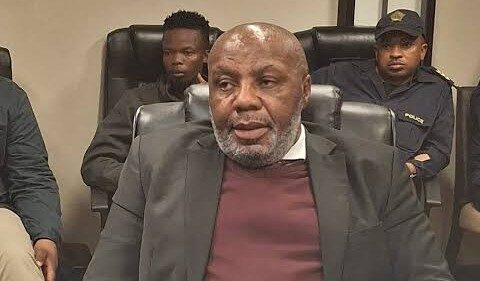
Attorney General Advocate Rapelang Motsieloa (KC) has until next month to advise the Ministry of Health on how to make Lesotho’s 11,000 village health workers (VHWs) staff of the ministry and put them on a salary, as the Labour Court has ordered.
The court ruled in the workers’ favour in November 2023, under case number LC/REV/57/22. It declared the VHWs to be employees of the Ministry of Health and ordered the ministry to pay them, “at least the minimum wage.”
Almost three years later, the workers are still waiting. The order has not been carried out, and their pay remains a small monthly stipend.
The court has now turned to the goverment’s top legal adviser to help break the deadlock. The move is the latest step in a long dispute that has drawn in the Ministry of Health, the Ministry of Finance, Parliament and the workers’ trade union.
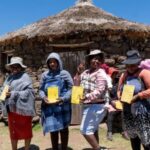
According to a study by the United Nations Development Programme (UNDP), Lesotho has about 11,000 active VHWs across the country. They monitor and respond to health problems in their communities, including HIV/AIDS, tuberculosis (TB), malnutrition and immunisation campaigns. In many villages, they are the closest health help people can reach.
VHWs are often the first person a family turns to. UNICEF Lesotho says they bring health information, support and referrals closer to communities. The agency also notes that “digital tools are helping VHWs identify health risks, track referrals and connect children and families with the timely care they need,” writes UNICEF Lesotho.
Yet the ministry pays each worker a stipend of only M800 a month. The pay scale agreed in the case is a bit higher. The requested monthly pay for a VHW was M1,200 for 2025/2026 and M2,500 for 2026/2027. The first figure is one and a half times the current stipend. The second is more than three times as much.
Despite the court ruling, the workers remain in hardship.
Because the ministry has not complied, the Labour Court has changed its approach. On 14 September 2026, it ordered the Office of the Attorney General to draft a legal opinion for the Ministry of Health, as custodian of the VHW programme. The opinion is to cover the “administrative process mandated to ensure legal compliance to the court order”.
In plain terms, the court wants the Attorney General to tell the ministry how to place the VHWs on its staff roll and pay them. The aim is to give the ministry clear, technical guidance on the steps it must take.
Newsday has seen a copy of communication between ministry officials, dated 24 September 2026.
The court says the ministry cannot remain in contempt of its order indefinitely. It should be guided by the Attorney General towards compliance. Put simply, the court does not expect the ministry to ignore its order for ever, and it has asked the Attorney General’s office to point the way
The ministry has said before that it did not have enough money in its budget for the process. The VHWs, through their trade union, the Lesotho Workers Association (LEWA), asked Parliament’s Social Cluster portfolio committee to step in last year. The matter was not resolved.
LEWA’s Secretary General, Hlalefang Seoaholimo, told Newsday last night that the Attorney General has until 4 November to provide the legal opinion for the ministry, “because this is the same date we will all be back in court, for the court to make the final decision on this matter”.
On 23 May 2025, the Ministry of Health formally asked the Ministry of Finance for money to pay the workers’ minimum wage and the arrears owed to them. The request referred back to an earlier one made in January 2024. Despite this request and the court order, the Ministry of Finance did not release the funds.
On 2 June 2025, the Ministry of Finance replied. It acknowledged the importance of following the court’s ruling and paying the workers fairly, but raised some concerns of its own.
So for more than a year after the judgment, the case went back and forth between the ministries and the workers’ union. The workers carried on with their duties in the villages while their pay stayed the same.
On 22 September 2025, the union and the Ministry of Health reached a settlement, which the court made an official order. Under it, the ministry was to request higher pay for the workers in two stages.
For the 2025/2026 financial year, the requested monthly pay was M2,500 for coordinators, M1,800 for supervisors and M1,200 for village health workers.
For 2026/2027, the requested monthly pay was to rise to M3,100 for coordinators, M2,800 for supervisors and M2,500 for village health workers.
The settlement said it “shall be served and/or attached to the documents submitted to the Ministry of Finance relating to payment of Village Health Workers,” showing that the Ministry of Finance was meant to play a direct role in making the payments happen.
On 7 January 2026, the Ministry of Health again asked for the money needed to carry out the order. It explained that the increases were meant to happen gradually over two years, from 2025/2026 to 2026/2027.
On 3 March 2026, the union wrote to the Ministry of Health, copying the Ministry of Finance. It raised concern that the workers had still not been placed on the agreed pay scale. The letter argued: “This explanation is legally untenable. A court order cannot be suspended or ignored on the grounds of budgetary inconvenience. The rules of law require strict and immediate compliance.”
The Ministry of Health replied on 14 April 2026. It said it had asked the Ministry of Finance for the necessary budget but that the request “was not honoured.”
The reply shows where the dispute now sits. The Ministry of Health says it has done its part by asking for the money. The workers say the court order must be obeyed whatever the budget position. Between the two, the VHWs are still paid a stipend.
By April 2026, the start of the new financial year, the workers’ pay had still not gone up. The Ministry of Finance was then formally added to the case, because it controls the release of money to all government ministries.
The applicants argue that the Ministry of Health cannot carry out the court’s order without funds from the Ministry of Finance. They say the continuing failure to pay amounts to “wilful contempt of a lawful court order.” Contempt of court means refusing to obey an order of the court.
In their court papers, the applicants stated: “It is against this background that the Respondents are deliberately and intentionally disobeying the order of this court… This matter is extremely urgent because the respondents have been contemptuous against this court and they seem not to have an intention to adhere to this court.”
The Labour Court postponed the case to 28 September to give the ministries time to study it and prepare their defence. This gave both ministries a chance to explain to the court why the order has not been carried out.
The Attorney General now has until next month to give the Ministry of Health its legal opinion. If the advice is clear and the ministry follows it, the VHWs could finally be placed on the ministry’s staff roll and paid at least the minimum wage, as the court ordered in 2023.
Much will depend on money. The ministry has said it lacks the budget, and the Ministry of Finance, which controls the release of funds, is now a party to the case. The applicants say the ministries cannot use budget limits as a reason to ignore a court order.
Summary
- Attorney General Advocate Rapelang Motsieloa (KC) has until next month to advise the Ministry of Health on how to make Lesotho’s 11,000 village health workers (VHWs) staff of the ministry and put them on a salary, as the Labour Court has ordered.
- The move is the latest step in a long dispute that has drawn in the Ministry of Health, the Ministry of Finance, Parliament and the workers’ trade union.
- LEWA’s Secretary General, Hlalefang Seoaholimo, told Newsday last night that the Attorney General has until 4 November to provide the legal opinion for the ministry, “because this is the same date we will all be back in court, for the court to make the final decision on this matter”.
I am a journalist based in Maseru, Lesotho, renowned for investigative reporting. Over the years, my work has been published both locally and internationally, including in South Africa through the Amabhungane Centre for Investigative Journalism and the Daily Maverick, among other publications.
In Lesotho, I have served as a senior reporter for several leading weekly newspapers, including the Lesotho Times, Public Eye, and Sunday Express. My reporting has focused on uncovering issues of public interest, promoting accountability, and giving voice to underreported stories.
In 2016, I co-founded the MNN Centre for Investigative Journalism in Maseru, an initiative dedicated to strengthening investigative journalism and fostering a culture of transparency and public-interest reporting in Lesotho.