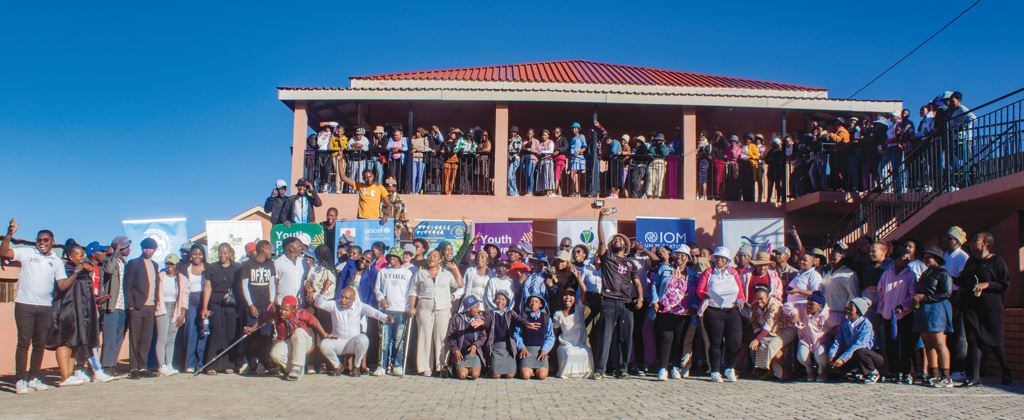
Young people in Thaba-Tseka are being equipped with physical, digital and technical skills to help communities respond to climate change through a Youth Power Hub Central Region Networking Pitso aimed at strengthening partnerships for climate resilience.
Senior journalist and communications professional with extensive experience in general news reporting, specializing in business and sports journalism. Skilled in public speaking, media relations, and strategic communication, with a proven ability to deliver accurate, engaging, and impactful stories.
A strong team player who thrives in collaborative environments and adapts effectively to diverse working conditions. Passionate about continuous learning, professional growth, and enhancing communication practices to meet evolving industry demands.
Thaba Tseka youth trained to combat El Nino effects
Young people in Thaba-Tseka are being equipped with physical, digital and technical skills to help communities respond to climate change through a Youth Power Hub Central Region Networking Pitso aimed at strengthening partnerships for climate resilience.
The one-day gathering, held at Motherland Guest House, brought together youth-led organisations, civil society organisations (CSOs), government representatives and development partners to strengthen collaboration and promote youth participation in climate action, particularly in preparation for the anticipated effects of El Niño.
The initiative is led by UNICEF and its partners, including the European Union (EU), the Government of Japan and the International Organization for Migration (IOM), with Plant One Tree (POT) serving as the organising association for the central region.
The Youth Power Hub works with 30 civil society organisations across Lesotho, nine of which operate in the central region. The programme seeks to empower young people to take leadership roles in climate action, build resilient communities and contribute to sustainable solutions to some of the country’s pressing challenges.
The regional networking pitso forms part of a broader initiative to ensure that young people are not merely recipients of climate interventions but active participants in shaping policies and programmes that affect their livelihoods, education and wellbeing.
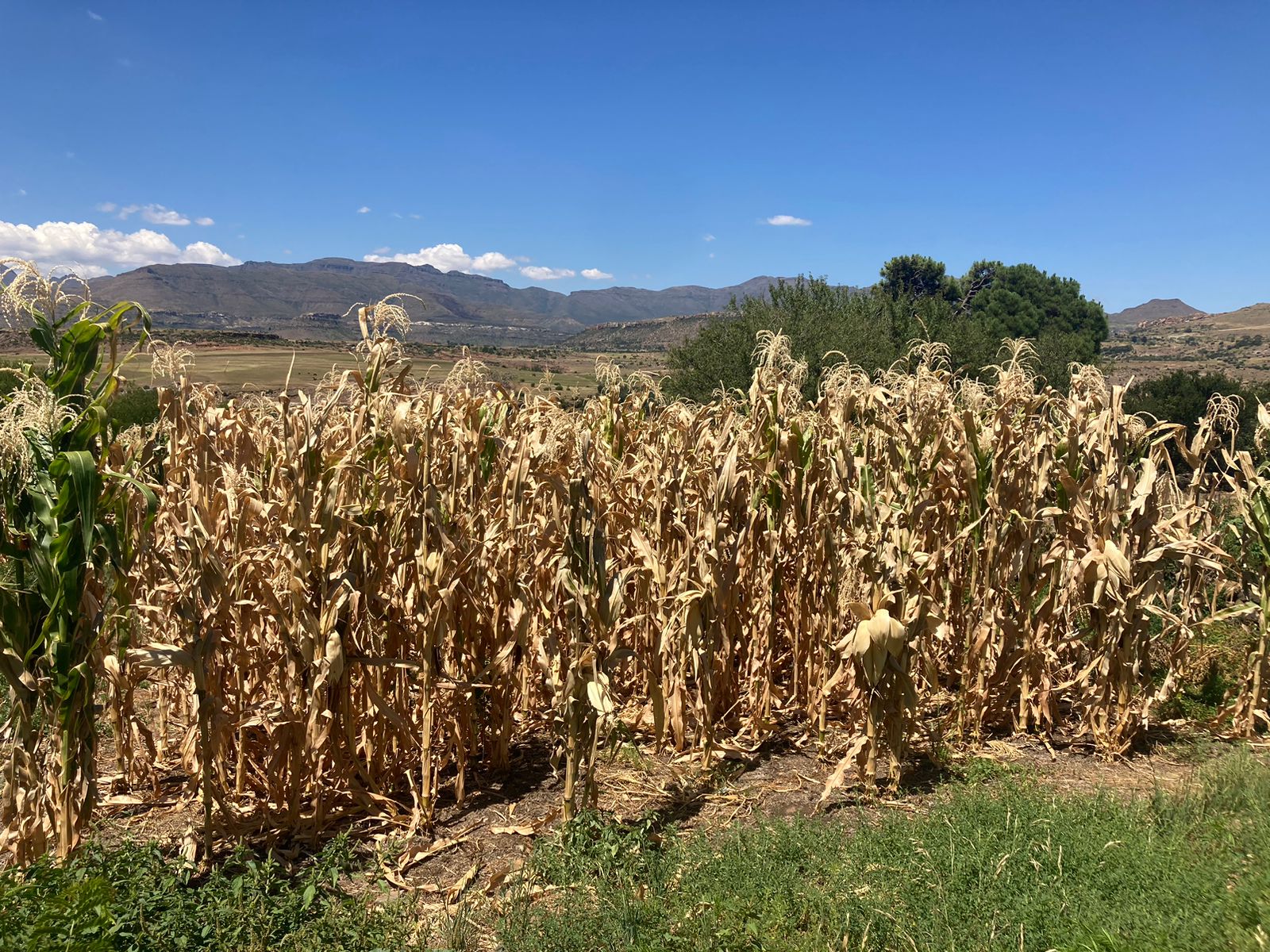
Speaking at the event, UNICEF Lesotho Deputy Representative Dr Ngozi Kennedy said climate change was increasingly affecting children and young people worldwide, with Lesotho experiencing recurring droughts, erratic rainfall, extreme weather conditions and declining agricultural productivity.
She said these challenges were not abstract environmental concerns for Basotho families but daily realities affecting livelihoods, food security, access to water, health and educational opportunities.
Kennedy explained that climate shocks threatened progress made in improving the lives of children and young people, stressing that every child deserved the opportunity to grow up healthy, learn in a safe environment and acquire skills needed to thrive.
“Our commitment, therefore, is not only to support immediate responses to climate-related challenges but also to help build resilience among children, young people, communities, and institutions,” she said.
Although young people were among those most affected by climate change, Kennedy said they were also well positioned to develop solutions.
Across Lesotho, she noted, young people were already mobilising communities, establishing environmental initiatives, advocating for change, embracing innovation and supporting sustainable livelihoods.
She emphasised that young people should be involved in decision-making processes from the outset rather than being consulted after decisions had already been made.
“UNICEF firmly believes that young people should not simply be consulted after decisions have already been made. Young people must be active participants in shaping those decisions,” Kennedy said.
She added that the solutions to climate change would not emerge only from conference rooms and government offices but also from communities such as Thaba-Tseka, youth-led organisations, schools and digital platforms.
Kennedy said the Youth Power Hub was established on the belief that organised, connected, skilled and empowered young people could become a powerful force for change.
She thanked the nine youth-led CSOs in the central region for organising the gathering, saying it provided an opportunity to strengthen cooperation, establish new partnerships, share experiences and identify practical actions to accelerate climate resilience.
Meanwhile, Mpho Lebesa from Plant One Tree said Lesotho’s four agro-ecological zones were all vulnerable to persistent climate shocks, particularly those associated with El Niño.
She warned that forecasts pointed to another intense El Niño cycle from November 2026 to March 2027, with extreme temperatures and below-normal rainfall expected to place additional pressure on communities.
“In our mountain and central communities, these shocks translate directly into severe mid-summer droughts, disrupted school attendance, strained water availability, and threatened livelihoods,” she said.
Mpho added that rural youth, young women, out-of-school youth and young people living with disabilities were likely to bear a disproportionate share of the effects because of their exposure to climate pressures and limited opportunities to influence responses.
However, she said young people should be recognised for their contributions as farmers, herders, entrepreneurs and community mobilisers rather than viewed merely as victims of climate change.
She explained that the pitso was designed to move youth engagement “from consultation to contribution” through three key objectives: amplifying young people’s experiences at national level, securing institutional commitments and strengthening networks for sustained advocacy.
Discussions focused on five priority areas: agriculture and food security; water and sanitation; continuity of education during climate shocks; livelihoods and green jobs; and access to early warning systems and climate information.
The recommendations emerging from the regional discussions will be consolidated into a regional resolution and contribute to a National Youth Declaration on Climate Resilience to be presented at a national pitso in Maseru.
The process is also intended to secure practical commitments from ministries, district authorities, development partners and the private sector, in line with national frameworks such as the National Strategic Development Plan II, Lesotho’s updated Nationally Determined Contributions, the National Climate Change Policy and the National Youth Policy.
Representing IOM, Tšepo Molefi highlighted the connection between climate change and human mobility, noting that environmental pressures could affect livelihoods and influence decisions about where people live, work and seek opportunities.
“Young people must not only be seen as people affected by climate change. They must be recognized as partners, innovators and agents of climate resilience,” Molefi said.
He urged participants to go beyond identifying challenges and provide practical recommendations to partners, explaining how proposed solutions could be translated into concrete action.
Molefi reaffirmed IOM’s commitment to working with the Government of Lesotho, young people, civil society, United Nations partners and development organisations to strengthen the links between human mobility, climate resilience and sustainable development.
He said the success of the pitso would ultimately be measured by the actions taken after the discussions.
Providing a seasonal climate outlook, Kealeboha Lenka from Lesotho Meteorological Services warned that much of the country was likely to experience below-normal rainfall during the early part of the 2026/27 summer season, while temperatures were expected to remain above normal.
Lenka said the October–December 2026, November 2026–January 2027 and December 2026–February 2027 periods were most likely to experience below-normal rainfall across much of Lesotho, although near-normal conditions were expected in the eastern parts.
He added that rainfall conditions could improve during January–March 2027, particularly in the eastern and southern parts of the country.
“Overall interpretation of the seasonal forecast points to a warmer-than-normal summer period from October 2026 through to March 2027, with the strongest indication occurring during January–February–March 2027,” Lenka said.
He cautioned that the outlook suggested an increased likelihood of hot spells and heatwaves, particularly during prolonged periods of high-pressure systems and reduced rainfall.
Thaba-Tseka District Administrator Tlali Mphafi urged young people to take immediate action, warning that climate-related shocks would not wait for communities to become prepared.
He said although time was running out to address the effects of climate change, meaningful progress remained possible if people acted collectively and used available opportunities wisely.
Mphafi encouraged young people to avoid taking time for granted and to participate actively in implementing climate interventions.
He stressed that climate change affected everyone regardless of social or economic background, making cooperation essential in preparing communities for its consequences.
“We cannot fight against climate change; we have to live with it and adapt to it in a way that will make us live happily,” he said, calling for coordinated efforts to help communities cope with changing weather conditions.
The Thaba-Tseka gathering is part of a series of regional youth networking pitsos held in Lesotho’s northern, southern and central regions, including Leribe, Mohale’s Hoek and Thaba-Tseka, ahead of a national engagement in Maseru.
The Youth Power Hub initiative, running from 2024 to 2029, targets young people aged between 10 and 25, with particular attention to adolescent girls and young women, youth living with disabilities, rural youth, migrants and young people in the diaspora.
Through dialogue, peer learning and collaboration with decision-makers, the programme seeks to ensure that youth priorities inform national climate planning and adaptation efforts.
Summary
Young people in Thaba-Tseka are being equipped with physical, digital and technical skills to help communities respond to climate change through a Youth Power Hub Central Region Networking Pitso aimed at strengthening partnerships for climate resilience.
The initiative is led by UNICEF and its partners, including the European Union (EU), the Government of Japan and the International Organization for Migration (IOM), with Plant One Tree (POT) serving as the organising association for the central region.
Kennedy explained that climate shocks threatened progress made in improving the lives of children and young people, stressing that every child deserved the opportunity to grow up healthy, learn in a safe environment and acquire skills needed to thrive.
Senior journalist and communications professional with extensive experience in general news reporting, specializing in business and sports journalism. Skilled in public speaking, media relations, and strategic communication, with a proven ability to deliver accurate, engaging, and impactful stories.
A strong team player who thrives in collaborative environments and adapts effectively to diverse working conditions. Passionate about continuous learning, professional growth, and enhancing communication practices to meet evolving industry demands.
To ensure optimal experiences, we utilize technologies such as cookies to store and/or access information from your device. Granting consent to these technologies enables us to process data, including browsing habits or unique identifiers on this website. Conversely, not consenting or revoking consent may negatively impact specific features and functionalities.
Functional
Always active
The technical storage or access is strictly necessary for the legitimate purpose of enabling the use of a specific service explicitly requested by the subscriber or user, or for the sole purpose of carrying out the transmission of a communication over an electronic communications network.
Preferences
The technical storage or access is necessary for the legitimate purpose of storing preferences that are not requested by the subscriber or user.
Statistics
The technical storage or access that is used exclusively for statistical purposes.The technical storage or access that is used exclusively for anonymous statistical purposes. Without a subpoena, voluntary compliance on the part of your Internet Service Provider, or additional records from a third party, information stored or retrieved for this purpose alone cannot usually be used to identify you.
Marketing
The technical storage or access is required to create user profiles to send advertising, or to track the user on a website or across several websites for similar marketing purposes.