

Water in Lesotho is more than a natural resource; it is a lifeline that reflects cultural heritage, emotional depth and community resilience.
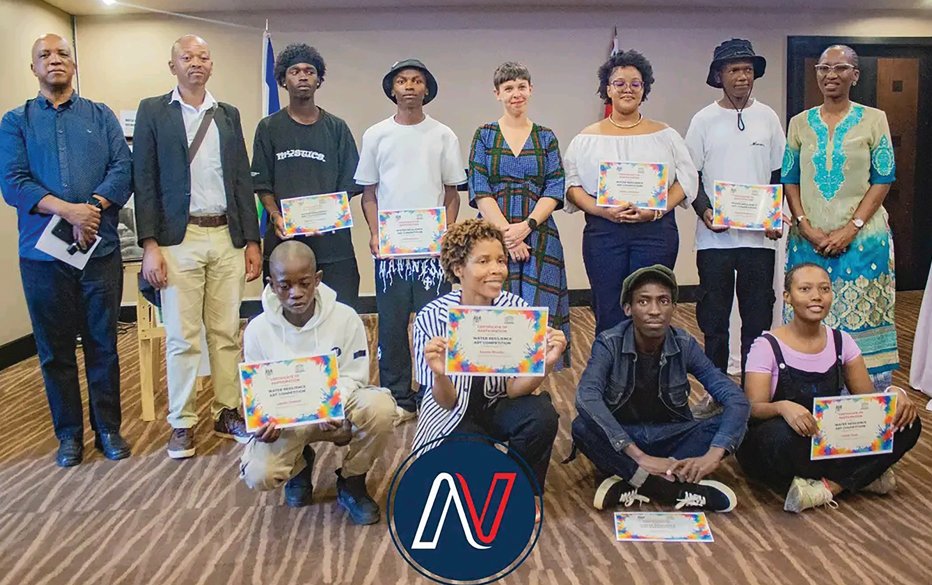
This message was vividly captured during the recent Water Resilient Art Competition, where local artists used creativity to explore the relationship between people and water while raising awareness about conservation.
The initiative, organised by the United Kingdom High Commission and the Lesotho Commission for UNESCO, brought together artists from different backgrounds to express the importance of water resilience through visual art.
Participants submitted drawings and paintings that highlighted the value of water and the need to protect what is often referred to as Lesotho’s “white gold”. Outstanding artists were recognised with prizes for their powerful artistic interpretations.
British High Commissioner to Lesotho, Martine Sunshine Sobey, praised the creativity displayed and emphasised the role of art in connecting communities and addressing important issues.
“We launched the competition to bring together the artistic community and to highlight the vital topic of water, cultural, emotional, and deeply human.”
Providing an overview of the competition, Pheko Mathibeli commended the British High Commission for supporting an initiative that allowed Basotho artists to engage with an important environmental issue.
“The artists have carefully considered the relevance, clarity of message, depth, diversity, and creativity of their pieces,” he said, acknowledging their efforts to highlight the challenges surrounding water access.
One of the standout artists, Senate Nkuebe, produced a painting of a woman carrying a baby and a clay bucket of water, symbolising the daily realities of many Basotho families.
“This art piece also inspires and encourages people to know the value of water,” she explained, linking her work to Sustainable Development Goal 6, which promotes universal access to safe water and sanitation.
Nkuebe scooped the first prize, winning a laptop. Despite Lesotho’s abundant water resources flowing from its mountains, concerns remain about balancing conservation and exploitation of the resource.
Another runner-up, Tlotliso Mathews, painted a vivid depiction of the rainy season, illustrating the importance of rainfall for rural communities that often lack adequate water infrastructure.
“The persistent generosity of water sustains life and shapes communities,” he said, emphasising how closely water is tied to Lesotho’s cultural identity.
In the under-16 category, Khati Moroma highlighted the importance of conserving water resources for the benefit of both Lesotho and neighbouring countries.
“If properly conserved, water could benefit not just Basotho, but also neighbouring countries,” Moroma said, calling for stronger policies to protect the resource.
However, climate change continues to threaten water availability in Lesotho. Increasingly unpredictable weather patterns, including droughts and floods, pose risks to agriculture, water supply and livelihoods.
A World Bank report has warned that climate change could lead to significant water shortages in the future due to reduced rainfall and rising temperatures.
Large infrastructure projects such as the Lesotho Highlands Water Project have also sparked debate, with some communities arguing that the initiative benefits South Africa more than local residents who still struggle with water access.
To address environmental challenges, several initiatives are promoting community involvement in water conservation. Programmes such as the ReNOKA movement encourage communities to protect natural resources through integrated catchment management.
Educational initiatives supported by the European Union have also engaged schoolchildren in climate change awareness through creative activities, including photography exhibitions and art competitions.
Meanwhile, the Ministry of Natural Resources continues to implement projects such as the Lesotho Lowlands Water Development Project Phase II, aimed at improving water supply systems in communities that have long struggled with access to potable water.
Senior Arts and Crafts Officer ‘Mabokang Mokotso said art remains a powerful tool for raising awareness about environmental issues while supporting the growth of the creative sector.
“Artists, through their art, help us see beyond statistics and policies. They address the current challenges, making us feel the urgency, the beauty, and the responsibility of protecting this vital resource,” she said.
Summary
- The initiative, organised by the United Kingdom High Commission and the Lesotho Commission for UNESCO, brought together artists from different backgrounds to express the importance of water resilience through visual art.
- One of the standout artists, Senate Nkuebe, produced a painting of a woman carrying a baby and a clay bucket of water, symbolising the daily realities of many Basotho families.
- Meanwhile, the Ministry of Natural Resources continues to implement projects such as the Lesotho Lowlands Water Development Project Phase II, aimed at improving water supply systems in communities that have long struggled with access to potable water.

Thoboloko Ntšonyane is a dedicated journalist who has contributed to various publications. He focuses on parliament, climate change, human rights, sexual and reproductive health rights (SRHR), health, business and court reports. His work inspires change, triggers dialogue and also promote transparency in a society.