
Four months after enacting historic reforms to protect national sovereignty, the very government that passed them may have brazenly defied its own Constitution to lock the nation into a foreign pact that surrenders citizens’ biological heritage, health data, and regulatory independence to the United States for a generation.
On December 19, Newsday exposed the sweeping terms of a $364 million health Memorandum of Understanding (MoU) signed between Lesotho and the United States.
The report revealed a 25-year commitment to share pathogen samples and national health data, unilateral U.S. audit and termination powers, and a requirement for Lesotho to surrender its medical regulatory sovereignty to America’s Food and Drug Administration (FDA).
Now, a deeper legal examination reveals an even more fundamental problem. The signing of the MoU may have directly violated Lesotho’s Constitution, enacted just four months earlier, rendering the entire agreement potentially void and without legal effect.
The core of this constitutional crisis lies in the Tenth Amendment to the Constitution, which came into force in August 2025. This amendment introduced a rigorous new democratic safeguard, Section 153A.
This new constitutional clause was designed to end the era of secret diplomatic deals. It mandates a clear, transparent process for binding the nation.
For binding international agreements (Section 153A(2) and (3)), the section directs that the Executive must table the agreement in Parliament with an explanatory memo and obtain approval from both houses. The Executive may sign for expediency, but “the signing shall not have effect until” parliamentary approval is granted.
For non-Binding instruments (Section 153A(8) and (9)), it states that the full parliamentary process does not apply to items like “non-binding memoranda of understanding.” However, even for these, a “designated person shall not sign such non-binding instrument without the approval of the Executive” (i.e., the Cabinet).
This creates a binary constitutional test for any document like the US-Lesotho Health MoU.
The $364 million question: Which path was taken?
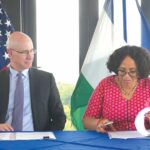
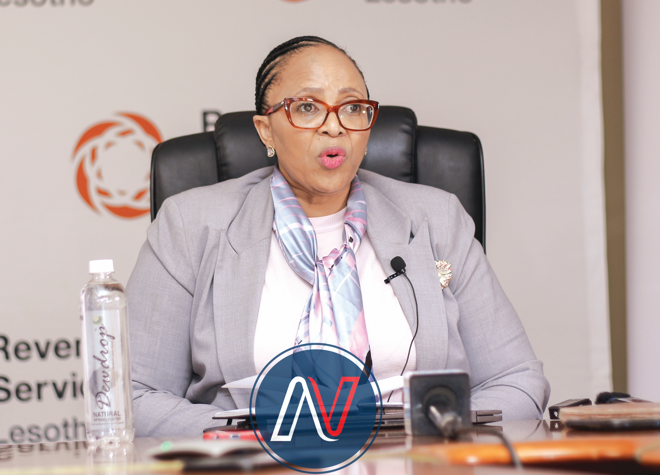
The MoU was signed on December 10, 2025, by the Minister of Finance and Development Planning, Dr. Retšelisitsoe Matlanyane. Based on the draft text and the Constitution, only two legal pathways existed.
Pathway A: The “non-binding” route
The MoU’s own Section 6.9 declares: “This MOU is not an international agreement and does not give rise to legal rights and obligations under international or domestic law. Nothing in this MOU is intended to override or invalidate any existing arrangements between the U.S. government and Lesotho.”
If the government relied on this U.S.-drafted clause to classify the deal as “non-binding,” it could argue the full parliamentary process under Section 153A(2) was unnecessary.
However, the Constitutional hurdle is that even on this path, Section 153A(9) applies. The Minister, as a “designated person,” needed “the approval of the Executive” (Cabinet) before signing.
Now, there are two critical questions for the government. Where is the Cabinet resolution or minute authorising Dr. Matlanyane to sign this specific MoU? Was the full draft, with its 25-year commitments and requirement to change Lesotho’s laws, presented to and approved by the full Cabinet?
If this internal approval was not formally sought and documented, the signing was unconstitutional from the outset.
Pathway B: The “substantive agreement” route
A powerful legal argument exists that this MoU, regardless of its “non-binding” label, is de facto a binding international agreement due to its profound implications.
Firstly, it commits Lesotho to change its laws (Section 2.7 – recognising the U.S. FDA over LEMERA).
Secondly, it establishes 25-year commitments for specimen and data sharing.
Thirdly, it triggers significant domestic co-investment of $132 million.
And lastly, it creates enforceable conditions with real consequences, such as aid withdrawal.
If this is the correct legal characterisation, then Sections 153A(2) and (3) may apply in full force.
If this is the pathway, the sequence mandated by the Constitution is clear that the draft MoU must be tabled in Parliament with explanatory memo, both houses of parliament must debate and pass approval via resolution, and only then can a minister’s signature have legal “effect.”
The MoU was signed in December 2025. Parliament was in recess. There is no public record of it being tabled, debated, or approved by the National Assembly or Senate.
Therefore, if Pathway B is correct, Dr. Matlanyane’s signature is, according to Section 153A(3), currently without legal effect. The MoU is constitutionally stillborn.
The government’s silence
Newsday’s attempts to get clarity from the signatory, Dr. Matlanyane, and the negotiating minister, Lejone Mpotjoane, were unsuccessful. This vacuum of official explanation fuels the crisis.
By remaining silent, the government creates the perception that it either ignored the new Constitution it swore to uphold, or deliberately used the “non-binding” label – a term written by the American counterparty, as a loophole to evade the democratic scrutiny the Tenth Amendment was designed to guarantee.
“This is a classic case of substance over form,” argued one activist who preferred to remain anonymous. “A court looking at this would ask: does an agreement that demands we change our laws, spend our money, and bind our successors for 25 years merely ‘not give rise to legal obligations’? The label is a shield for the executive against the people. The Constitution was amended precisely to break that shield.”
Newsday understand that a group of local rights groups last month planned to write to the government but the plan did not materialise as after drafting the letter, all efforts to have the letter signed and sent were unsuccessful.
This publication has seen a copy of the draft letter.
“We strongly recommend that the MOU be subjected to formal constitutional and legal review by the Attorney General, consistent with Section 98, to confirm full compliance with the Constitution and the laws of Lesotho, as now amended,” read the draft letter.
“No administrative, operational, or financial measures be undertaken that would anticipate, substitute for, or pre-empt statutory or Parliamentary authorisation, where such authorisation is constitutionally or legally required,” it added.
The U.S. Embassy’s defence and the sovereignty paradox
The U.S. Embassy’s statement to Newsday last month, that the MoU “does not create new legal obligations” and that “Lesotho retains full authority,” now rings in a hollow constitutional echo chamber.
Their defence hinges on the very Section 6.9 that creates the legal ambiguity Lesotho’s executive may have exploited to avoid Parliament. It is a profound irony that the United States is providing the textual justification for a potential bypass of Lesotho’s democratic process.
The Embassy’s assurance that “all programmes will continue to operate within existing national legal frameworks” is starkly contradicted by Section 2.7 of the MoU, which requires Lesotho to change its existing legal framework to suit the U.S. FDA.
An agreement built on shaky ground
The December 19 exposé revealed an agreement of concerning substance. This analysis reveals it may also be an agreement of flawed and illegitimate process.
The Tenth Amendment was a hard-won victory for parliamentary oversight and public transparency in foreign affairs. If the government signed this monumental MoU without adhering to its new rules, it represents more than a policy error but also a fundamental breach of constitutional trust.
The path forward is dictated by the Constitution itself. The government must immediately table the final, signed MoU in Parliament, along with a clear explanation of which constitutional pathway (153A(9) or 153A(2)) it followed and the supporting documentation (Cabinet resolution or parliamentary vote).
Both houses must now perform the duty the constitution mandates which is to scrutinise, debate, and approve or reject this agreement that will shape Lesotho’s health and sovereignty until 2050.
It is highly likely this will end before the courts. The judiciary will have the unenviable task of deciding whether a document labeled “non-binding” but laden with consequential, long-term commitments can circumvent the clear intent of Section 153A.
Until these steps are taken, the $364 million US-Lesotho Health MoU exists in a constitutional limbo, a deal that promises to build a resilient health system, but whose own legal foundation is dangerously unsound.
Summary
- Four months after enacting historic reforms to protect national sovereignty, the very government that passed them may have brazenly defied its own Constitution to lock the nation into a foreign pact that surrenders citizens’ biological heritage, health data, and regulatory independence to the United States for a generation.
- For binding international agreements (Section 153A(2) and (3)), the section directs that the Executive must table the agreement in Parliament with an explanatory memo and obtain approval from both houses.
- If this is the pathway, the sequence mandated by the Constitution is clear that the draft MoU must be tabled in Parliament with explanatory memo, both houses of parliament must debate and pass approval via resolution, and only then can a minister’s signature have legal “effect.

Authored by our expert team of writers and editors, with thorough research.