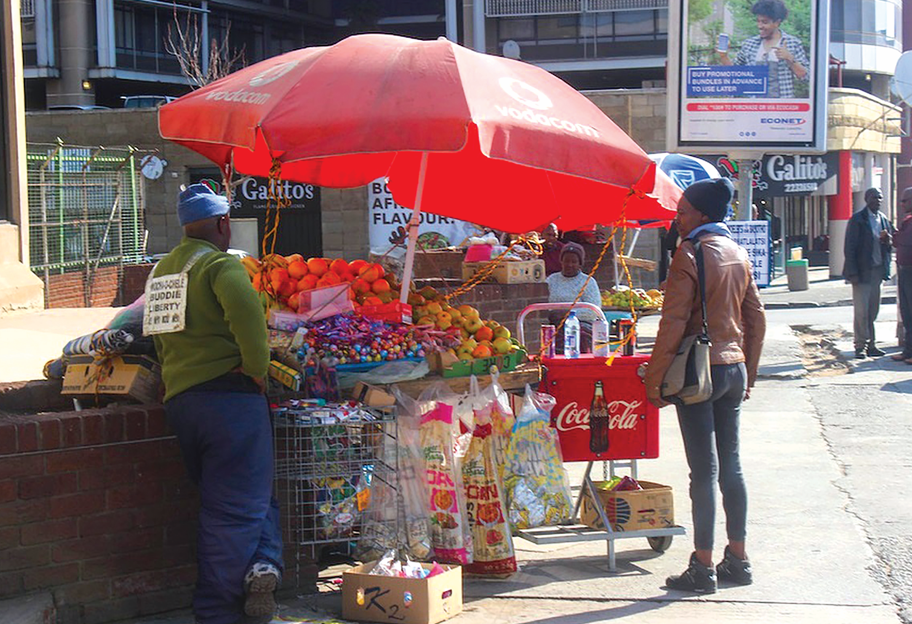
A staggering 89 percent of micro, small to medium enterprises (MSMEs) in Lesotho are not insured for either personal or business risk, exposing firms and their employees to all manner of risks that could affect operations.
A 2023 FinScope MSME Survey Lesotho revealed that most businesses surveyed found insurance too expensive (48 percent), while some (27 percent) said they did not need insure. About 20 percent of those surveyed did not know available insurance types for their businesses.
“Currently, 89% of MSMEs are not covered for any personal or business risk,” the study report said, noting that a slight improvement compared to the previous 2016 study.
“The main barrier is the perceived cost of insurance and its relevance (perception) compounded by the lack of information on how to obtain insurance and the types of insurance that are relevant to MSMEs.”
The issued of low MSME insurance was highlighted in a recent International Monetary Fund (IMF) Selected Issues Paper prepared by Athene Laws and Ann-Alice Ticha titled: Unleashing Private Sector Job Creation: Challenges and Opportunities for Lesotho.
The IMF Selected Issues Papers are prepared by IMF staff as background documentation for periodic consultations with member countries. It is based on the information available at the time it was completed on August 21, 2025.
“While financial access for individuals has seen gains in Lesotho, firm access remains a key barrier to growth…Banks report MSME lending as too high risk, with limited bankable projects, and instead focus on FDI and state-level projects.
“SACCOs provide localised business finance through their cooperative structure, but they are limited in scale. Banks, in turn, do not leverage SACCOs local networks and enforcement as intermediation to scale lending. There is an insurance gap too with 89 percent of firms not covered for any personal or business risk.”
On the other side of the market, the report said firms are hesitant to use products from formal financial institutions. Financial literacy is a factor with many entrepreneurs unaware of the financial products available, unsure how to access them, or afraid to take on financial risks. Only 11 percent of businesses have a written business plan, and only 35 percent have a business budget (Finscope 2025).
The report said only four in ten firms are aware of support organisations, such as the Basotho Enterprises Development Corporation (BEDCO), with even fewer utilising services available.
“Lending terms are another barrier—33 percent of firms report “unfavorable rates, collateral, or procedures as main reason for not applying to loans” (B Ready Lesotho 2025). The lack of business insurance is similarly driven by perceived costs, and a lack of knowledge of how to obtain, or the types of insurance, available.
The authors said these gaps in financial knowledge and capacity hinder MSMEs from engaging with formal financial institutions or scaling their operations.
“The authorities have developed a comprehensive reform agenda to address the challenges, and recent developments are encouraging. Discussions with industry stakeholders in June 2025 highlighted some green shoots of financial deepening to MSMEs: the take up rate of the main partial credit guarantee scheme is increasing, and banks and NBFIs are experimenting with new MSME-focused lending products, such as operating loans based on signed government tenders.
“In addition, coordination across the key actors in the system (BEDCO, banks, MFIs, industry groups, development partners) appears to be improving. The authorities have put forward a comprehensive reform agenda in the National Financial Inclusion Strategy II (2024–28) and (forthcoming) Financial Sector Development Strategy II (2025–30).
“Key pillars include strengthening credit infrastructure (e.g., expanding credit bureau coverage to include MSMEs, integrating registries), enhancing public support instruments (e.g., reforming partial credit guarantee schemes, establishing a development finance institution), and promoting financial literacy through targeted education programs. The strategies also emphasise digitization, fintech regulation, and the development of inclusive financial products. Success will depend on sustained political commitment, effective institutional collaboration, and mobilisation of resources from both public and private sectors.”
The authors recommended for expansion of insurance access for uninsured firms among possible means of unleashing private sector job creation in the country.
They said addressing job creation problem requires a concerted effort on multiple policy fronts including combining public-sector reform, business-environment reform, expanding financial access for firms, better skills matching, and careful macroeconomic management.
Summary
A staggering 89 percent of micro, small to medium enterprises (MSMEs) in Lesotho are not insured for either personal or business risk, exposing firms and their employees to all manner of risks that could affect operations.
“The main barrier is the perceived cost of insurance and its relevance (perception) compounded by the lack of information on how to obtain insurance and the types of insurance that are relevant to MSMEs.
The lack of business insurance is similarly driven by perceived costs, and a lack of knowledge of how to obtain, or the types of insurance, available.
To ensure optimal experiences, we utilize technologies such as cookies to store and/or access information from your device. Granting consent to these technologies enables us to process data, including browsing habits or unique identifiers on this website. Conversely, not consenting or revoking consent may negatively impact specific features and functionalities.
Functional
Always active
The technical storage or access is strictly necessary for the legitimate purpose of enabling the use of a specific service explicitly requested by the subscriber or user, or for the sole purpose of carrying out the transmission of a communication over an electronic communications network.
Preferences
The technical storage or access is necessary for the legitimate purpose of storing preferences that are not requested by the subscriber or user.
Statistics
The technical storage or access that is used exclusively for statistical purposes.The technical storage or access that is used exclusively for anonymous statistical purposes. Without a subpoena, voluntary compliance on the part of your Internet Service Provider, or additional records from a third party, information stored or retrieved for this purpose alone cannot usually be used to identify you.
Marketing
The technical storage or access is required to create user profiles to send advertising, or to track the user on a website or across several websites for similar marketing purposes.