
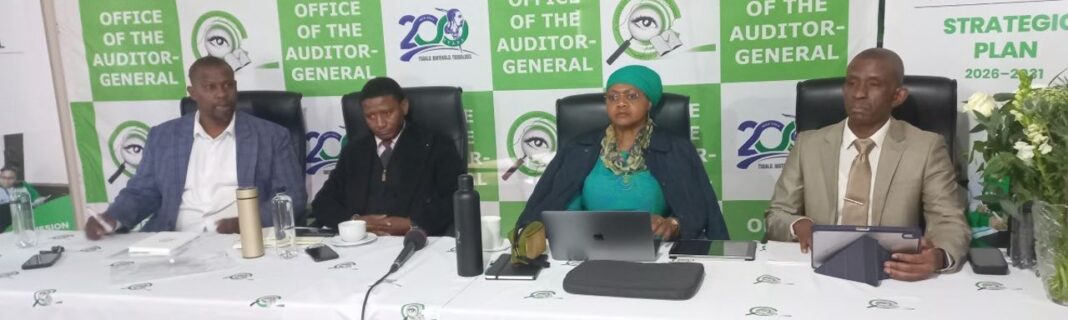
The Office of the Auditor-General (OAG) has unveiled an ambitious five-year strategic plan aimed at strengthening its institutional performance, improving audit quality and expanding its oversight of public finances.
The Strategic Plan 2026–2031 sets out a roadmap for sharpening execution, improving efficiency and aligning resources to deliver measurable outcomes while positioning the institution to respond to emerging governance and technological challenges.
Launching the strategy this week, Auditor-General ‘Mathabo Makenete said the plan would guide the institution’s growth and ensure staff are equipped with the skills and tools needed to keep pace with evolving trends.
The OAG is constitutionally mandated to audit public finances and hold the executive accountable. Following recent constitutional reforms, the office now reports directly to Parliament rather than the Ministry of Finance and Development Planning, reinforcing its institutional independence.
Makenete said the office’s vision is to become “a supreme audit institution that empowers citizens through transparent oversight and promotes a culture of public accountability.”
The strategy is built around four strategic priorities: strengthening the OAG’s financial independence; improving audit coverage and impact; enhancing audit quality and value; and cultivating institutional, organisational and professional excellence.
To fully implement the plan, the OAG estimates it will require M339 million over the next five years. However, the institution is already facing a funding shortfall of more than M100 million, which it hopes to bridge through government support and assistance from development partners.
Officials said a substantial portion of the budget will be directed towards infrastructure development, including the construction of the OAG’s own headquarters.
The office currently operates from government premises but plans to relocate to purpose-built facilities designed to support its growing operational and technological needs.
Makenete said the new offices would be equipped with modern, state-of-the-art systems, including secure facilities for housing servers and other critical information technology infrastructure.
Deputy Auditor-General Paul Letlela said technology will play a central role in improving the institution’s effectiveness.
“We will focus heavily on technology so that we can respond effectively to today’s challenges,” Letlela said.
He added that operating from independent premises would enhance the institution’s autonomy and enable it to manage its operations more efficiently.
On plans to decentralise services, Makenete said establishing regional offices is not an immediate priority.
She said the institution must first strengthen its operations in Maseru before expanding elsewhere, adding that decentralisation is likely to remain a long-term objective that could take at least another decade to achieve.
Makenete noted that local councils also require regular audits, meaning any future expansion will depend on the availability of both financial resources and skilled personnel.
Public Accounts Committee (PAC) member Dr Tšeliso Moroke welcomed the strategy, describing it as a commitment to strengthening accountability and improving governance.
“The strategy is a promise to the people that public institutions will continue to evolve, improve and respond to the demands of a changing governance landscape,” Moroke said.
“The Office of the Auditor-General occupies a unique and indispensable position within our constitutional democracy. It serves as a guardian of public financial accountability, ensuring that public funds are spent lawfully, efficiently, effectively and for the benefit of our citizens.”
Moroke said effective parliamentary oversight was essential to ensuring audit reports translated into meaningful reforms.
“Effective parliamentary oversight transforms audit findings from reports on shelves into meaningful reforms that improve governance and service delivery,” he said.
He stressed that recommendations contained in audit reports should not simply be acknowledged but should be actively monitored to ensure the relevant institutions implement corrective measures.
Summary
- The Strategic Plan 2026–2031 sets out a roadmap for sharpening execution, improving efficiency and aligning resources to deliver measurable outcomes while positioning the institution to respond to emerging governance and technological challenges.
- She said the institution must first strengthen its operations in Maseru before expanding elsewhere, adding that decentralisation is likely to remain a long-term objective that could take at least another decade to achieve.
- “The strategy is a promise to the people that public institutions will continue to evolve, improve and respond to the demands of a changing governance landscape,” Moroke said.
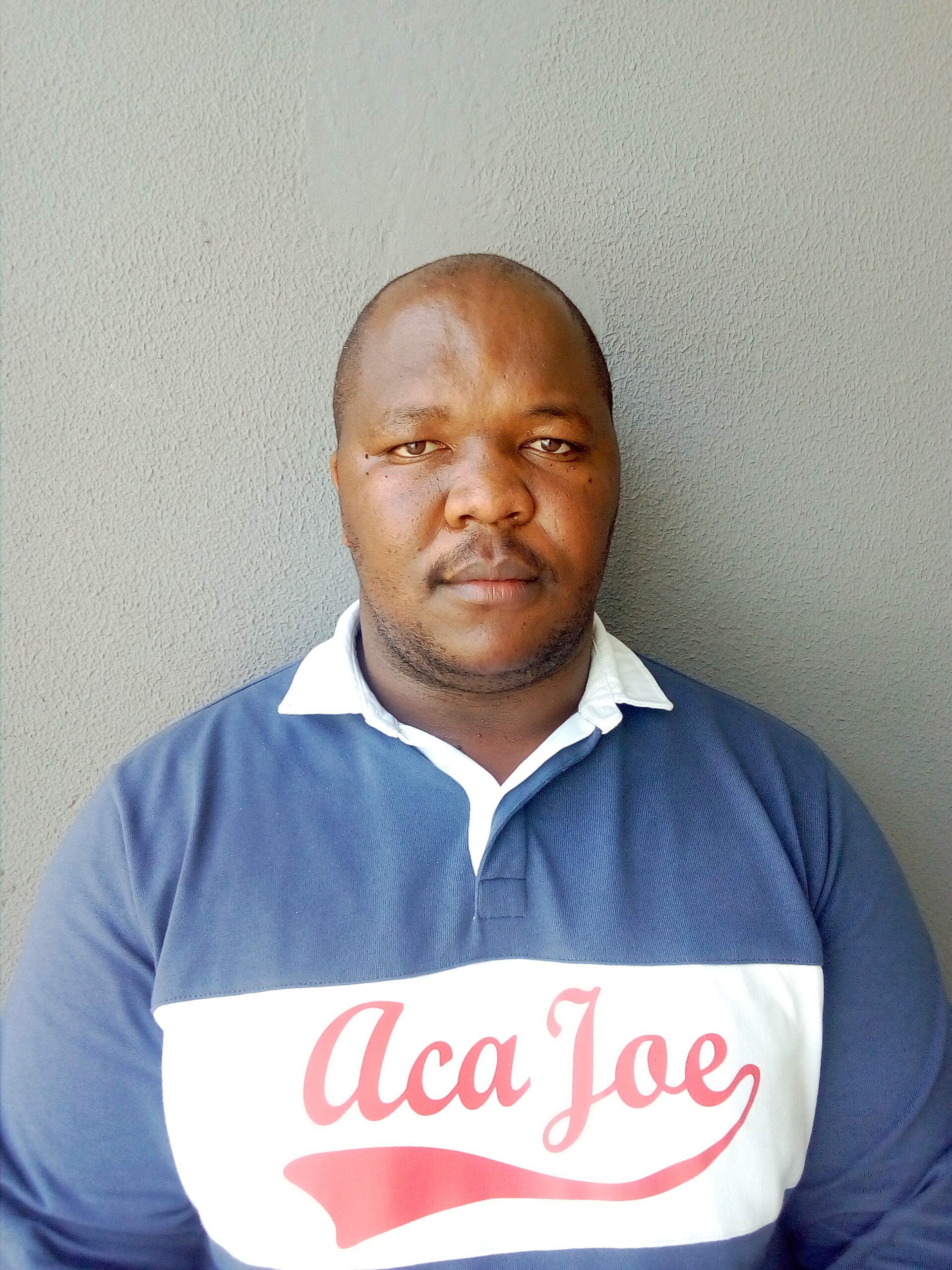
Thoboloko Ntšonyane is a dedicated journalist who has contributed to various publications. He reports on accountability, human rights, exposes corruption and wrong doing by those in power. He reports have exposed corruption, abuse of power, fraud, misconduct and negligence. He subscribes to evidence-based reporting. He reports on governance, parliament, courts, climate change, human rights, sexual and reproductive health rights (SRHR), health, business and agriculture. He gives a voice to the marginalised while also demanding accountability. His work inspires change, triggers dialogue and also promote transparency in a society.