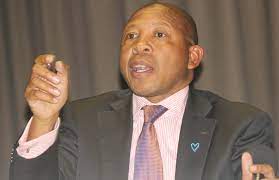


Theko Tlebere
…. Continuation
This week, I delve into the political reforms outlined in Act No. 2 of 2025 and their implications for Basotho. I want to emphasise one point without reservation: reform is a journey, not merely a ribbon-cutting ceremony. While Act No. 2 of 2025 marks a significant milestone, it is not the end of the road. Unless the new constitutional framework is implemented through enabling bi-laws, adequate budgets, and independent institutions, we risk congratulating ourselves while old political habits resurface. It is simply too early to celebrate.
The political reforms in Act No. 2 of 2025 have profound implications for the future of democracy in Lesotho. For instance, the recognition of multiple official languages is not just a symbolic gesture; it is a political statement about inclusivity. By acknowledging linguistic diversity, the state strengthens access to government services, judicial processes, and public information for all citizens.
The Act also establishes limits on executive power. Provisions that restrict the Prime Minister’s tenure, enhance parliamentary oversight, and clarify accountability mechanisms are crucial for mitigating the risk of authoritarianism. In a political landscape plagued by unstable coalitions and concentrated power, these checks and balances ensure that the executive remains accountable to the legislature, and ultimately to the people.
Floor-crossing has long been a contentious issue. Initially intended to promote political dynamism and give Members of Parliament (MPs) flexibility, this provision can also incentivise opportunism without consequences. The revisions in the final Act reflect a conscious effort to stabilise party politics: by restricting floor-crossing to constituency MPs and mandating by-elections for those crossing the floor outside a designated window, the Act seeks to balance political choice with voter accountability.
The enactment of Act No. 2 of 2025 represents a critical moment in Lesotho’s political and constitutional evolution. The reforms address longstanding issues that have hindered national progress: recurring governance crises, political instability, and deep economic inequality. By fostering inclusivity, accountability, and credible democratic processes, the Act guides Lesotho toward a more transparent and equitable political order.
However, constitutional text does not implement itself. The success of these reforms hinges on three practical conditions: political leaders must adhere to the principles enshrined in the Act; state institutions must possess the capacity and independence to fulfill their new mandates; and citizens must be ready to utilise the new rules to defend democratic practices. If any of these pillars falters, the reforms will remain aspirational.
For Act No. 2 of 2025 to lead to tangible change, the government must treat implementation as a national program, complete with timelines, budgets, appointments, and measurable outputs. The priority should be the enforcement of the accountability mechanisms provided in the Act. Parliamentary oversight, impeachment procedures, and the strengthening of independent commissions must go beyond mere headlines. Institutions such as the Parliamentary Service Commission, the Anti-Corruption Commission, and the Human Rights Commission should be fully operational, adequately funded, and shielded from political interference.
Second, newly established and reformed institutions cannot succeed on goodwill alone. They require reliable funding and competent staffing based on merit. Capacity-building must be intentional, particularly for institutions expected to uphold heavy constitutional responsibilities, such as the National Prosecuting Authority, the Salaries and Remuneration Commission, and other oversight bodies that will set the standard for integrity in public life.
Third, reform without public understanding equates to reform without ownership. The government should invest in civic education and public awareness, especially for marginalised communities historically excluded from political decision-making. Citizens require practical information: what rights have changed, how to access services under the new framework, how to lodge complaints, and how to engage meaningfully in elections and community dialogue.
Fourth, given Lesotho’s long history of political conflict, the country must institutionalise dialogue across party lines. Platforms such as the Council of State can mediate disagreements early, reduce polarisation, and promote cooperative governance. Stability is not achieved by silencing dissent; it is fostered by establishing credible channels for peaceful disagreement management.
Finally, the Act’s emphasis on natural resources as the property of the Basotho nation opens the door for reforming resource governance. Institutions like the Mining Authority must prioritise transparency, accountability, and sustainable development, ensuring that revenues from extraction are tracked, audited, and distributed in ways that benefit the public, especially communities enduring the direct social and environmental costs of extraction.
The enactment of Act No. 2 of 2025 presents Basotho with a renewed opportunity to engage in the country’s political life, not only on election day but throughout the policy cycle. The Act broadens the political space for inclusivity; citizens should respond by enhancing civic engagement: registering to vote, joining political parties or community platforms as appropriate, and participating in community dialogues that keep reforms aligned with genuine public priorities.
The new accountability mechanisms also require public utilisation. With clearer parliamentary oversight and impeachment procedures, citizens have stronger grounds to demand transparency and performance from their leaders. The Human Rights Commission and the Anti-Corruption Commission can become effective avenues for accountability, but only if the public engages them, reports wrongdoing, and demands follow-through.
Civil society remains a vital backbone of reform. It has long amplified marginalised voices and maintained pressure on the political class when public attention wanes. Basotho should continue to support these organisations so they can monitor implementation, educate communities, and serve as watchdogs when institutions stray from their constitutional commitments.
The recognition of multiple official languages and the Act’s affirmative action provisions should be viewed as practical mandates, not mere celebratory slogans. Inclusivity must be upheld in classrooms, workplaces, courts, and public service delivery. This is how democratic consolidation becomes tangible: when every voice is not only acknowledged on paper but respected in the daily life of the nation.
So yes, Act No. 2 of 2025 is historic. But the true test lies in what happens next. As the Act transitions from theory to practice, Basotho must remain vigilant and organised, monitoring government actions, tracking enabling laws and budgets, and using social media, community meetings, and public forums to demand implementation. Reform is a journey, and progress only occurs when the people insist on it. The future is NOW!
Summary
- In a political landscape plagued by unstable coalitions and concentrated power, these checks and balances ensure that the executive remains accountable to the legislature, and ultimately to the people.
- by restricting floor-crossing to constituency MPs and mandating by-elections for those crossing the floor outside a designated window, the Act seeks to balance political choice with voter accountability.
- Capacity-building must be intentional, particularly for institutions expected to uphold heavy constitutional responsibilities, such as the National Prosecuting Authority, the Salaries and Remuneration Commission, and other oversight bodies that will set the standard for integrity in public life.

Your Trusted Source for News and Insights in Lesotho!
At Newsday Media, we are passionate about delivering accurate, timely, and engaging news and multimedia content to our diverse audience. Founded with the vision of revolutionizing the media landscape in Lesotho, we have grown into a leading hybrid media company that blends traditional journalism with innovative digital platforms.