Welcome to Newsday Media – Your Trusted Source for News and Insights in Lesotho!
At Newsday Media, we are passionate about delivering accurate, timely, and engaging news and multimedia content to our diverse audience. Founded with the vision of revolutionizing the media landscape in Lesotho, we have grown into a leading hybrid media company that blends traditional journalism with innovative digital platforms.
Our mission is simple: to inform, inspire, and empower our readers by providing comprehensive coverage of local and global events, current affairs, and cultural happenings. Whether you’re looking for breaking news, in-depth analysis, or captivating storytelling, Newsday Media is your go-to destination for all things news-related.
With a dedicated team of journalists, editors, and multimedia experts, we are committed to upholding the highest standards of journalistic integrity and professionalism. We pride ourselves on delivering content that not only informs but also sparks conversation, fosters understanding, and drives positive change in our society.
From our flagship newspaper to our dynamic digital platforms, we offer a wide range of multimedia content to cater to the diverse interests and preferences of our audience. Whether you prefer to stay informed through print, online articles, videos, or podcasts, Newsday Media has something for everyone.
We believe in the power of storytelling to connect people, bridge divides, and inspire action. That’s why we’re dedicated to providing a platform for voices from all walks of life, championing diversity, inclusion, and authenticity in everything we do.
Thank you for visiting Newsday Media. We invite you to explore our website, engage with our content, and join us on our journey to inform, inspire, and empower our community. Together, let’s shape the future of media in Lesotho.
Ntsoaki Motaung
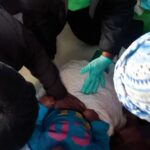
At seven years old, Mamots’oane Ts’ephe’s child is unable to walk and wears diapers because he has cerebral palsy and the mother says this was caused by medical malpractice.
Cerebral palsy is a group of disorders that affect a persons movement, posture, and balance.
Itis caused by abnormal brain development or damage to the developing brain and usually happens before a child is born, but can also occur at birth or in early infancy.
Ts’ephe believes her child would not have cerebral palsy if she was given the attention she needed during labour.
She told a gathering during the commemoration of the Rare Disease Day organised by Botho University in Maseru that she would have given birth to a healthy baby if it was not for the incompetence of the health professionals.
Rare Disease Day is an observance held worldwide on the last day of February to raise awareness for rare diseases and improve access to treatment and medical representation for individuals with rare diseases and their families.
Ts’ephe broke into tears while narrating how she learned a few moments after giving birth that the child seems to have cerebral palsy.
I was told the baby might delay to develop or do other things like walking, talking or might not do them at all, she recalled.
She said she was told that her child’s brain did not receive adequate levels of oxygen during birth.
I was told that there were complications when I gave birth and was supposed to have been taken to the theatre but that was not done. That is why today I have a child who is seven years but still acts like a newborn today, she said.
By not doing what they are supposed to do, health professionals leave us with lifetime burdens, she added as she broke into tears again.
Ts’ephe said seven years later, her child cannot walk, talk, sit, or keep a head up. The child still uses nappies and requires certain kinds of food, she said.
She called on the health professionals to give their patients the utmost attention and care to ensure that this kind of thing does not happen.
I wish to say to health professionals that when someone asks for help they should attend to them and not ignore them as if they are being asked to do something which is not part of their responsibilities, she said.
Ts’ephe also told the gathering that raising a child with cerebral palsy as a young and single mother was a challenge that was exacerbated by the lack of necessary equipment in Lesotho.
If things were done right in the country, she said, she was supposed to take her child to occupational therapy at least once every week but said she was only able to do so once a month.
Rare Diseases Specialist, Nthabeleng Ramoeli, who is also the founder of the Rare Diseases Lesotho Association said the chances that Ts’ephe’s baby will ever walk are slim.
This was because the child was recently diagnosed with six types of rare diseases, Ramoeli said.
She, however, indicated that TÅ¡ephe was lucky to have her children diagnosed with cerebral palsy a few moments after they were born.
She said some mothers usually find out later when they see their children not developing as expected.
According to the Multi Agency International Training (MAITS), cerebral palsy is the main cause of physical disability in childhood.
Changes in muscle tone and movement, says MAITS, are the main characteristics, impairing functionality, hindering independence, and interfering with the affected persons quality of life.
As per Mo-Rate Cerebral Palsy Association Lesotho database, there are currently 134 children with cerebral palsy in the 10 districts of Lesotho that the association is directly working with.
According to this database, the district with highest number of children with cerebral palsy is Leribe (45) followed by Maseru (34), Botha-Bothe (18), Qacha’s Nek (17), Mafeteng (12), Mohale’s Hoek (11), Thaba-Tseka (10), Berea (seven), and Mokhotlong (three).
It is not clear how many children in Quthing have cerebral palsy.
It is estimated that there are 77 girls and 57 boys with cerebral palsy.
According to the Centers for Disease Control and Prevention (CDC), cerebral palsy is the most common motor disability in childhood.
It states: Recent population-based studies from around the world report prevalence estimates of cerebral palsy ranging from 1 to nearly 4 per 1,000 live births or per 1,000 children. The prevalence of cerebral palsy is higher for children born preterm or at low birthweight.
Summary
She told a gathering during the commemoration of the Rare Disease Day organised by Botho University in Maseru that she would have given birth to a healthy baby if it was not for the incompetence of the health professionals.
Ts’ephe also told the gathering that raising a child with cerebral palsy as a young and single mother was a challenge that was exacerbated by the lack of necessary equipment in Lesotho.
If things were done right in the country, she said, she was supposed to take her child to occupational therapy at least once every week but said she was only able to do so once a month.
Welcome to Newsday Media – Your Trusted Source for News and Insights in Lesotho!
At Newsday Media, we are passionate about delivering accurate, timely, and engaging news and multimedia content to our diverse audience. Founded with the vision of revolutionizing the media landscape in Lesotho, we have grown into a leading hybrid media company that blends traditional journalism with innovative digital platforms.
Our mission is simple: to inform, inspire, and empower our readers by providing comprehensive coverage of local and global events, current affairs, and cultural happenings. Whether you’re looking for breaking news, in-depth analysis, or captivating storytelling, Newsday Media is your go-to destination for all things news-related.
With a dedicated team of journalists, editors, and multimedia experts, we are committed to upholding the highest standards of journalistic integrity and professionalism. We pride ourselves on delivering content that not only informs but also sparks conversation, fosters understanding, and drives positive change in our society.
From our flagship newspaper to our dynamic digital platforms, we offer a wide range of multimedia content to cater to the diverse interests and preferences of our audience. Whether you prefer to stay informed through print, online articles, videos, or podcasts, Newsday Media has something for everyone.
We believe in the power of storytelling to connect people, bridge divides, and inspire action. That’s why we’re dedicated to providing a platform for voices from all walks of life, championing diversity, inclusion, and authenticity in everything we do.
Thank you for visiting Newsday Media. We invite you to explore our website, engage with our content, and join us on our journey to inform, inspire, and empower our community. Together, let’s shape the future of media in Lesotho.
To ensure optimal experiences, we utilize technologies such as cookies to store and/or access information from your device. Granting consent to these technologies enables us to process data, including browsing habits or unique identifiers on this website. Conversely, not consenting or revoking consent may negatively impact specific features and functionalities.
Functional
Always active
The technical storage or access is strictly necessary for the legitimate purpose of enabling the use of a specific service explicitly requested by the subscriber or user, or for the sole purpose of carrying out the transmission of a communication over an electronic communications network.
Preferences
The technical storage or access is necessary for the legitimate purpose of storing preferences that are not requested by the subscriber or user.
Statistics
The technical storage or access that is used exclusively for statistical purposes.The technical storage or access that is used exclusively for anonymous statistical purposes. Without a subpoena, voluntary compliance on the part of your Internet Service Provider, or additional records from a third party, information stored or retrieved for this purpose alone cannot usually be used to identify you.
Marketing
The technical storage or access is required to create user profiles to send advertising, or to track the user on a website or across several websites for similar marketing purposes.