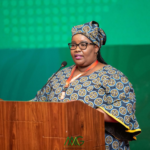

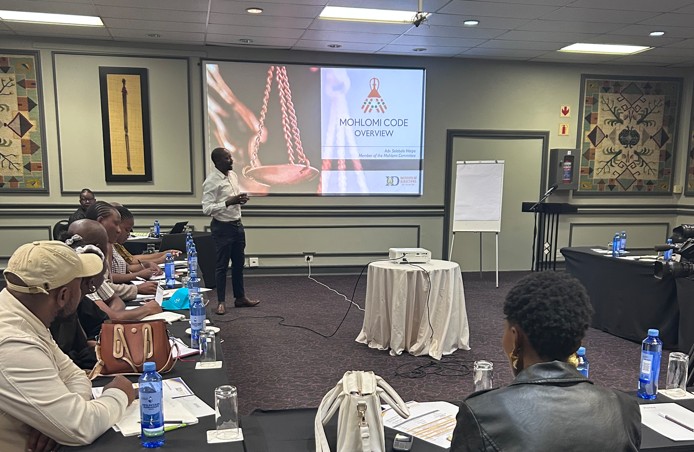
The Chief Executive Officer of the Institute of Directors Lesotho (IoD), ‘Malehlohonolo Mahase, has issued a stark warning that weak corporate governance lies at the root of the corruption scandals and financial mismanagement plaguing Lesotho and other nations.
Mahase was speaking at a media training workshop on corporate governance organised by the IoD in Maseru this week, where she emphasised that good governance is not merely a compliance exercise but a cornerstone of sustainable development and public trust.
“We believe that when organisations are run well, institutions function properly, and governments are run well,” Mahase said. “When we uphold accountability, which is one of the first virtues we stand for, along with transparency and fairness, all those principles will be taken care of. They will be catered for.”
She delivered a blunt assessment of the consequences when governance fails.
“A lot of the scandals we see – corruption scandals, mismanagement of funds, both here in Lesotho and in other countries, most of them, you will find, are a result of corporate governance that has issues,” she added.
The training focused on key pillars essential for building a culture of good governance in Lesotho, including an overview of corporate governance and its rationale, the applicability of Lesotho’s home-grown Mohlomi Corporate Governance Code, and a deeper exploration of the code’s values-based approach.
The Mohlomi Corporate Governance Code, launched in September 2021, is Lesotho’s first-ever corporate governance framework. It is named after Morena Mohlomi, an 18th-century philosopher and mentor to Morena Moshoeshoe I, the founder of the Basotho nation.
Chief Mohlomi (circa 1720–1815) is remembered in Basotho history as a visionary leader who championed ethical governance, peace, and wisdom.
According to historical accounts, he established a leadership academy at where he mentored leaders from across the region that now constitutes the SADC community.
His philosophy was anchored on five pillars dedicated to transformational leadership, with the core outcomes of peace, productivity, and intergenerational value.
One of Mohlomi’s most powerful teachings was: “A responsible leader pursues peaceful and productive alliances, accommodates stakeholders, and uses new instruments of power to create intergenerational value”.
The code draws inspiration from these indigenous leadership values, embedding them in a modern governance framework that emphasises accountability, transparency, ethical conduct, stakeholder inclusiveness, board leadership, and risk management.
The Mohlomi Code operates on both an “apply or explain” and “apply and explain” regime, allowing flexibility while upholding high standards. Its 22 principles are divided into six clusters, all aimed at fostering sustainable socio-economic development.
For decades before the code’s launch, Lesotho organisations had relied on South Africa’s King Reports as a governance yardstick, often applying principles without consideration of local context.
Kananelo Boloetse, Chairperson of MISA Lesotho, expressed gratitude to the Institute of Directors of Lesotho for inviting the media to the training, describing the initiative as vital for strengthening the nation’s institutional fabric.
“Your organisation’s commitment to advancing ethical leadership, accountability, and sound governance practices across all sectors is truly commendable, and events like this play a vital role in strengthening our nation’s institutional fabric,” Boloetse said.
He underscored the media’s critical role in holding power to account.
“Today’s programme could not be more timely. As media professionals, we serve as the bridge between institutions and the public, holding power to account, informing citizens, and fostering transparent dialogue. Yet, to report effectively on corporate governance, we must first understand its foundations: the principles that guide boards, directors, and organisations in acting responsibly, sustainably, and in the best interests of all stakeholders.”
He urged his colleagues to engage deeply with the training.
“Let us approach this training with open minds and active participation. The knowledge we gain today will sharpen our ability to ask the right questions, tell compelling and accurate stories, and ultimately support the growth of responsible corporate citizenship in our country.”
Despite the code’s launch, the broader corporate environment in Lesotho remains constrained by limited resources, weak enforcement mechanisms, and underdeveloped institutional capacity. State-owned enterprises, often burdened by political interference and a lack of skilled leadership, continue to struggle with accountability, transparency, and efficiency.
Governance experts have warned that without sustained commitment from the government, improved coordination among regulatory institutions, and deliberate investment in training and professional development, the principles outlined in the Mohlomi Code risk remaining aspirational rather than transformative.
Summary
- The Chief Executive Officer of the Institute of Directors Lesotho (IoD), ‘Malehlohonolo Mahase, has issued a stark warning that weak corporate governance lies at the root of the corruption scandals and financial mismanagement plaguing Lesotho and other nations.
- Mahase was speaking at a media training workshop on corporate governance organised by the IoD in Maseru this week, where she emphasised that good governance is not merely a compliance exercise but a cornerstone of sustainable development and public trust.
- The training focused on key pillars essential for building a culture of good governance in Lesotho, including an overview of corporate governance and its rationale, the applicability of Lesotho’s home-grown Mohlomi Corporate Governance Code, and a deeper exploration of the code’s values-based approach.

Authored by our expert team of writers and editors, with thorough research.