

Theko Tlebere
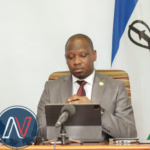
The recent appointment of Mr Thabo Ntoi as the Director of the Loan Bursary Fund, previously known as the National Manpower Development Secretariat (NMDS), comes at a critical moment when many Basotho families are grappling with challenging questions about access to higher education. This appointment should signal not only a change in leadership but also the start of essential policy reform. For many young people in Lesotho, the challenge is no longer merely gaining admission to a university; the more pressing issue is that after acceptance, Higher learning institutions deny them a scholarship in the guise of a ‘quota’ from NMDS, and in that way, many have been left outside. But why? Isn’t education a fundamental right???
A few weeks ago, the Minister of Finance and Development Planning addressed Parliament regarding the difficulties faced by students at the National University of Lesotho (NUL). These students were admitted to the university but did not receive government scholarships. While the explanation made institutional sense, NUL admits students based on capacity, while scholarships are allocated according to government quotas through the Loan Bursary Fund, and this reveals a troubling disconnect between admission and affordability. A young person can achieve academic qualifications, celebrate their acceptance with family, and then face the harsh reality of lacking sponsorship. For low-income households, this situation is not just disappointing; it is devastating.
Many believe that the current system has strayed too far from the original social mission of the NMDS. In the past, scholarship applications were processed through District Administrators’ offices, where parents and guardians would line up with their children. There was a clear vetting process before university admission was finalised, allowing students to know early whether they qualified for government support. They would sign the necessary loan bursary documents before starting classes. While that system was not perfect, it upheld an important principle: it aimed to identify students who genuinely needed financial assistance, providing poor families with certainty, dignity, and a real opportunity.
Today, this social screening function seems to have diminished. By allowing higher education institutions to fill government quotas primarily based on academic performance, the state has effectively relinquished a crucial responsibility. Universities are designed to assess academic merit and institutional capacity, not to serve as social welfare agencies. They do not primarily determine who is poor, vulnerable, or dependent on bursary stipends, not only for tuition but also for day-to-day survival. When scholarship allocation becomes merely an extension of admission lists, socio-economic factors can easily be overlooked, and that’s a serious worry for me as a young revolutionist.
This is the core injustice of the current model. It does not just exclude certain students; it risks sidelining those for whom public financing was originally intended. A child from a low-income family may qualify academically and gain admission, but still be unable to pursue higher education due to a selection system that is insufficiently grounded in socio-economic need.
Meanwhile, families with greater financial resources may continue to benefit from a process that fails to adequately differentiate between those who can afford to pay and those who cannot. This approach is not only an inefficient public policy; it betrays the equalising role that government sponsorship is meant to fulfil.
Education should be viewed as a national investment, not a privilege reserved for those who can afford the gap between admission and sponsorship. Every Mosotho child who qualifies for higher education deserves a fair chance to continue their studies. This does not mean that the government should abandon discipline, accountability, or budgeting; rather, it necessitates a redesign of policy based on a more equitable principle: no eligible student should be denied access to higher education scholarship simply because their family is poor. When resources are limited, the state’s primary duty must be to protect the most vulnerable. That is the essence of public financing.
Even though Mr Ntoi is not new to the system, I know he has acted in that position for some time; his substantive appointment presents an opportunity to restore purpose and credibility to the Loan Bursary Fund. The country needs a policy that integrates merit with social justice. Students should not only be evaluated based on examination results but also assessed through a transparent national framework that considers financial need, household vulnerability, and ability to pay. The government must return to a system where students know whether they have sponsorship before accepting admission. This change would reduce uncertainty, mitigate emotional and financial distress, and refocus the bursary loan scheme on the same Basotho children from places like Ha Khohlopo rather than on institutional convenience.
Lesotho cannot build a strong future while denying capable young people from pursuing their studies when they are capable and willing to do so. For low-income families, the opportunity to succeed is solely based on the hope that their child receives such a scholarship. For emphasis’s sake, I want to reiterate the fact that for many households, a bursary is more than just academic support; it represents hope, food security, relief for siblings, and the potential for generational change. If the government is serious about youth development, reducing unemployment, and promoting national progress, then access to higher education must be expanded, not limited by administrative hurdles.
The time has come to transform this policy. The Loan Bursary Fund must once again serve as a true instrument of social mobility. Basotho children who are eligible for higher education must be prioritised, protected, and given a genuine opportunity to thrive. This is not charity; it is justice. The Future is NOW!
Summary
- The recent appointment of Mr Thabo Ntoi as the Director of the Loan Bursary Fund, previously known as the National Manpower Development Secretariat (NMDS), comes at a critical moment when many Basotho families are grappling with challenging questions about access to higher education.
- The more pressing issue is that after acceptance, Higher learning institutions deny them a scholarship in the guise of a ‘quota’ from NMDS, and in that way, many have been left outside.
- A child from a low-income family may qualify academically and gain admission, but still be unable to pursue higher education due to a selection system that is insufficiently grounded in socio-economic need.
Welcome to Newsday Media – Your Trusted Source for News and Insights in Lesotho!
At Newsday Media, we are passionate about delivering accurate, timely, and engaging news and multimedia content to our diverse audience. Founded with the vision of revolutionizing the media landscape in Lesotho, we have grown into a leading hybrid media company that blends traditional journalism with innovative digital platforms.
Our mission is simple: to inform, inspire, and empower our readers by providing comprehensive coverage of local and global events, current affairs, and cultural happenings. Whether you’re looking for breaking news, in-depth analysis, or captivating storytelling, Newsday Media is your go-to destination for all things news-related.
With a dedicated team of journalists, editors, and multimedia experts, we are committed to upholding the highest standards of journalistic integrity and professionalism. We pride ourselves on delivering content that not only informs but also sparks conversation, fosters understanding, and drives positive change in our society.
From our flagship newspaper to our dynamic digital platforms, we offer a wide range of multimedia content to cater to the diverse interests and preferences of our audience. Whether you prefer to stay informed through print, online articles, videos, or podcasts, Newsday Media has something for everyone.
We believe in the power of storytelling to connect people, bridge divides, and inspire action. That’s why we’re dedicated to providing a platform for voices from all walks of life, championing diversity, inclusion, and authenticity in everything we do.
Thank you for visiting Newsday Media. We invite you to explore our website, engage with our content, and join us on our journey to inform, inspire, and empower our community. Together, let’s shape the future of media in Lesotho.