
… Basotho still waiting years in the queue
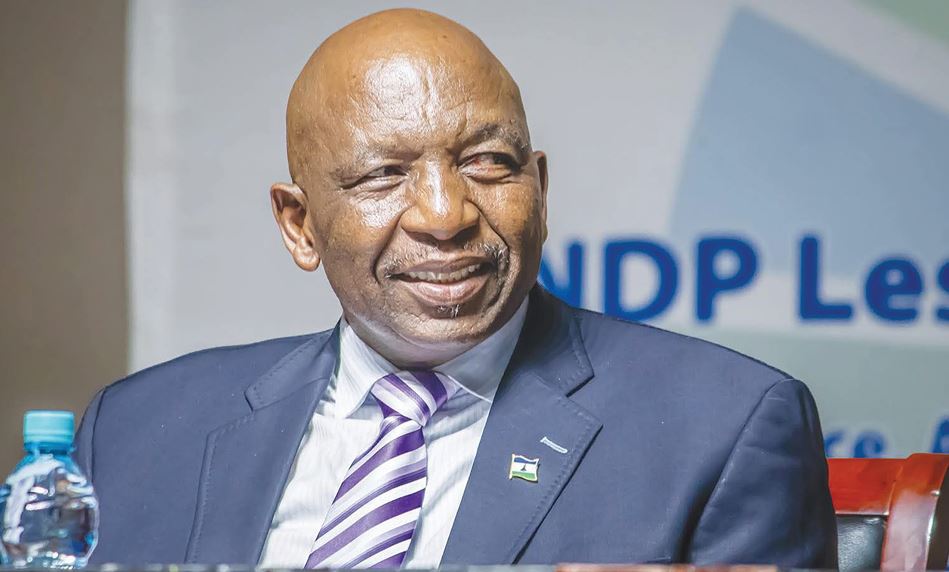
Prime Minister Samuel Ntsokoane Matekane has called for passports to be processed online within six hours, questioning why Lesotho cannot match the efficiency of other countries.
“Other countries are doing it, why can’t we do it?” Matekane asked on Monday during the opening of the 64th Commonwealth Telecommunications Organisation (CTO) Council Meeting and the Commonwealth Digital Roadshow in Maseru.
His remarks were met with applause from participants. The event marked the first time an African country has hosted the CTO Council Meeting.
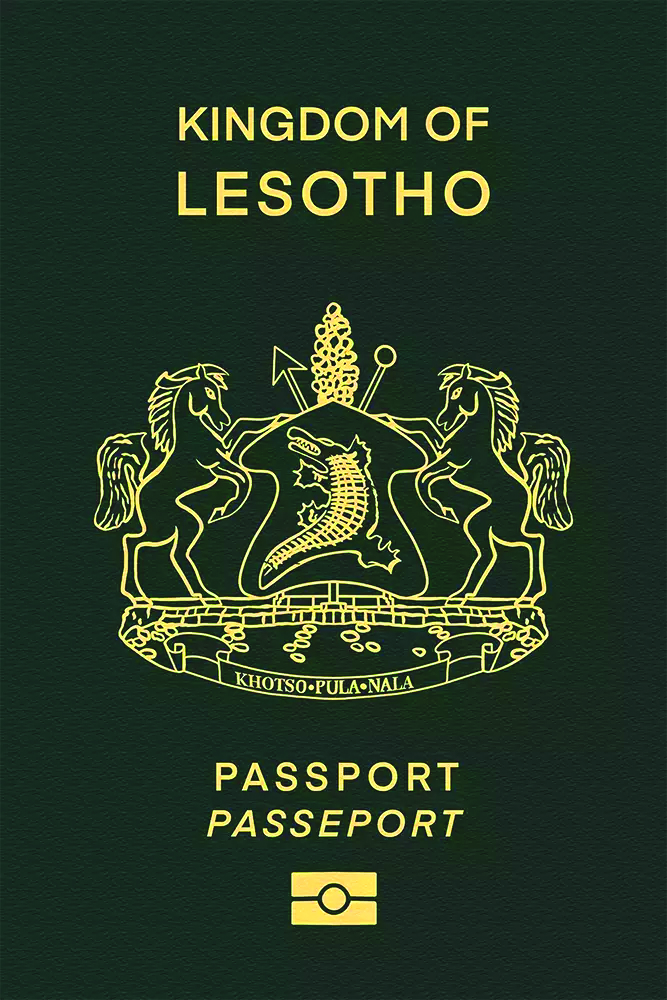
For many Basotho, obtaining or renewing a passport remains a frustrating ordeal. As of April 2026, the Ministry of Home Affairs was grappling with a backlog of over 51,000 unprocessed applications.
Some citizens have waited up to two years for their documents, while others report delays stretching from several months to over a year.
Long queues form daily outside the passport office in Maseru and other districts, with desperate applicants, including migrant workers who risk losing jobs in South Africa, spending hours or even days trying to submit or collect documents.
The ministry has occasionally suspended new applications to clear the backlog, yet crowds persist. Reports of outdated equipment, technical glitches, supply chain issues for passport materials, and allegations of bribery allowing some to jump the queue have compounded public frustration.
These delays severely impact livelihoods, family visits, business opportunities, and cross-border movement, turning what should be a basic service into a major barrier for ordinary citizens, especially those in remote highland areas.
“We live in a digital era, and Lesotho cannot afford to fall behind. Digital transformation is both urgent and indispensable to accelerating growth, inclusion, and effective participation in the global economy.”
Matekane also recounted challenges he faced communicating with communities in the highlands, including Matsaile, Tlaling, Leseling, and Hloahloeng. He directed the Minister of Information, Communications, Science, Technology and Innovation, Nthati Moorosi, and her team to fast-track connectivity projects in these areas.
He stressed that Basotho deserve quality services at reasonable costs.
“Since assuming office, my government has demonstrated strong commitment to the Commonwealth Telecommunications Organisation,” Matekane said.
This commitment, he noted, is evidenced by Minister Moorosi’s participation in CTO engagements in 2023, the first ministerial-level involvement from Lesotho in recent years.
“We also applaud the fact that Lesotho is the first country in Africa to host the CTO’s Roadshow. We thank you for bringing it home, Madam Secretary General,” he added, addressing CTO Secretary-General Bernadette Lewis.
The Prime Minister expressed gratitude for the CTO’s ongoing support in building the capacity of Lesotho’s institutions and personnel in the ICT sector. He said this assistance has been crucial in strengthening the country’s digital infrastructure and policy framework.
“As we accelerate our digital transformation agenda, we seek deeper collaboration and support from the CTO, particularly in cybersecurity and Artificial Intelligence. Targeted capacity-building programmes in these domains would greatly enhance our ability to protect our digital ecosystem and harness emerging technologies for national development,” Matekane said.
He added that technological advancement would serve as a pillar for youth employment, efficient service delivery, business development, and navigating geopolitical challenges that sometimes hinder international transactions.
Despite these aspirations, analogue practices continue in Lesotho’s public sector. Job seekers must still travel to government offices in Maseru to collect and hand-deliver application forms. Some ministries require newspapers to attach the physical page of a job or tender advertisement to their invoice before processing payment.
These examples highlight persistent analogue mindsets in a digital age, practices that frustrate citizens, burden taxpayers, and undermine the government’s stated transformation goals.
Talk of e-government has persisted for years, promising to revolutionise public services and improve convenience for citizens. However, a significant gap remains between policy intentions and on-the-ground reality.
Lesotho adopted its first e-government framework following the 2005 ICT Policy, while Vision 2020 also aspired to position the country as a technology-driven nation.
This week’s CTO events placed e-governance under sharp focus. Delegates from Africa, the Caribbean, Asia, the Pacific, and Europe attended the gathering.
CTO Secretary-General Bernadette Lewis commended Lesotho for hosting the historic event, noting that the Commonwealth Digital Roadshow and Council Meeting were designed to align with the country’s national priorities.
Minister Moorosi reaffirmed Lesotho’s commitment to strengthening partnerships with CTO member states to accelerate digital development across the Commonwealth. She emphasised that digital transformation must remain inclusive and impactful.
During the tabling of the 2026/2027 national budget, Minister of Finance and Development Planning Dr Retšelisitsoe Matlanyane declared: “We live in a digital era, and Lesotho cannot afford to fall behind. Digital transformation is both urgent and indispensable to accelerating growth, inclusion, and effective participation in the global economy.”
Dr Matlanyane promised accelerated investments in digitisation and the development of a digital economy across all sectors. These would focus on expanding ICT access and connectivity, improving reliability, and bridging the digital divide.
“Within government, digital systems will be modernised, cybersecurity strengthened, and electronic platforms expanded to improve service delivery, transparency, and information sharing,” she said. “Investments in digital skills for public servants will ensure that systems are secure, accessible, and responsive to the needs of citizens.”
The Minister announced an allocation of M386.4 million for ICT infrastructure to advance digital transformation and expand access to modern technological services.
Minister Moorosi added that the government is preparing to launch e-government services, including online passport renewal, driving licence renewal, identity document renewal, and residence permits. Applicants will be able to apply and pay online, then book an appointment to collect documents at their nearest centre.
She instructed technicians to incorporate a Sesotho voice guide to ensure the platform is accessible to all citizens.
Summary
- Long queues form daily outside the passport office in Maseru and other districts, with desperate applicants, including migrant workers who risk losing jobs in South Africa, spending hours or even days trying to submit or collect documents.
- This commitment, he noted, is evidenced by Minister Moorosi’s participation in CTO engagements in 2023, the first ministerial-level involvement from Lesotho in recent years.
- The Prime Minister expressed gratitude for the CTO’s ongoing support in building the capacity of Lesotho’s institutions and personnel in the ICT sector.
Thoboloko Ntšonyane is a dedicated journalist who has contributed to various publications. He reports on accountability, human rights, exposes corruption and wrong doing by those in power. He reports have exposed corruption, abuse of power, fraud, misconduct and negligence. He subscribes to evidence-based reporting. He reports on governance, parliament, courts, climate change, human rights, sexual and reproductive health rights (SRHR), health, business and agriculture. He gives a voice to the marginalised while also demanding accountability. His work inspires change, triggers dialogue and also promote transparency in a society.