


Theko Tlebere
At Ha Khohlopo, my uncle does not experience an economic crisis through graphs, speeches, or meetings in Washington at the UN House. He experiences it when the price of diesel rises, when transport becomes expensive, when shop prices shift upward, and when the cost of preparing fields begins to look like a gamble rather than a plan. At Ha Rankakala, my friend who hopes to go into crop farming this coming season is not asking for miracles. He is asking for one simple thing: that the government should not wait until it is too late to secure fertilisers in time for the coming cropping season.
As Lesotho faces such a dilemma of an economic crisis caused by the situation in the Middle East, we need to understand how the typical Mosotho will be affected by the situation and what the government of Lesotho should do. The current war in the Middle East is no longer a distant geopolitical event. It has entered the kitchen, the taxi rank, the field, and the village cooperative society. The IMF has warned that the war is testing an already fragile global economy, while the World Bank says the conflict is raising new risks for food security by disrupting energy and fertiliser flows. Recent World Bank estimates show fertiliser prices jumped sharply between February and March 2026, with urea prices rising by nearly 46 percent in a single month. International institutions also warn that millions more people could be pushed into food insecurity if these shocks continue.
That is why this is not merely a fuel story. It is a farming story. It is a food security story. It is a dignity story. The government of Lesotho has already acknowledged the seriousness of the fuel shock. Last week, it announced temporary subsidies on petrol, diesel, and paraffin, while also removing the fuel levy for three months and expanding zero-rated essential goods. That was the correct first move. It showed that the government understands this is not business as usual. But fuel is only the beginning. If fertiliser prices are allowed to rise sharply, then the subsidy on fuel, though welcome, will not be enough. We would simply be cushioning one side of the problem while neglecting the very input that determines whether Basotho can produce food for themselves in the coming season.
This is where the national interest should be larger than routine administration. Lesotho has already used input subsidies to support farmers in the past, and that is commendable. A government that understands its role should be considering now, to review the policy direction of 80 percent of fertiliser costs and 70 percent of seed and herbicide costs. Actually, this policy direction of subsidy should stay the same or be expanded before the planting season. Due to the high fuel prices, Basotho do not want to be stressed by fuel prices and expensive fertilisers. This should be the thinking line of our government as the situation becomes more and more unpredictable.
Let me explain why this issue is so important that it should be considered as early as now; His Majesty King Letsie III is not merely a ceremonial figure in this discussion, His continental role is both real and current. The African Union (AU) extended his mandate as AU Champion for Nutrition through 2026, and the whole world continues to describe him as a leading advocate for nutrition and food security. That honour should not sit in Addis Ababa while hunger grows in the villages and farming inputs become unreachable in Ha Rantuba, Matsieng, Siloe, Qomo-qomong, or Ha Mmatjotjo. The dignity of the King is upheld not by praise songs alone, but by a country that acts consistently with the cause he champions.
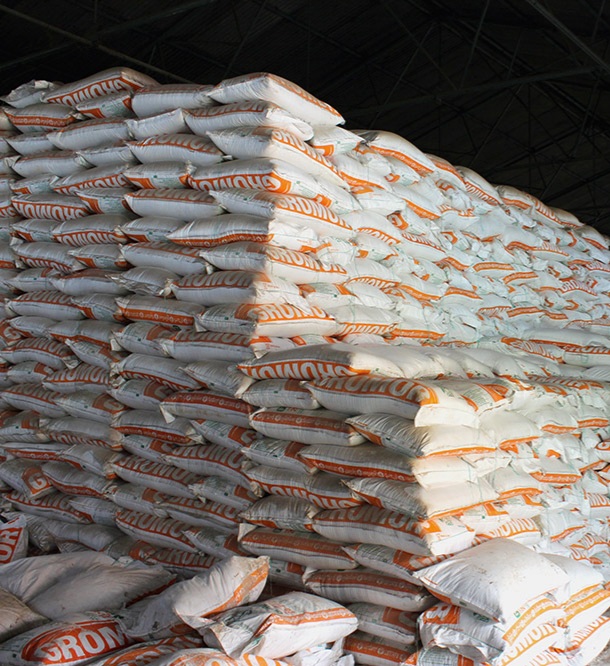
A nutrition Champion must preside over a nation that treats food production as a matter of urgency. If Lesotho truly wishes to honour that leadership, then fertiliser availability and low prices must now be treated as strategic. Fertiliser is not a luxury item. It is national insurance against hunger. It is the line between a field that yields and a field that disappoints. It is the difference between a household remaining upright and one slipping deeper below the poverty line.
This is why I argue that the government should immediately take four decisive steps. First, it must ring-fence fertiliser affordability. The existing subsidy should be increased or temporarily deepened so that the retail price to farmers does not rise with the fuel shock. If the government can cushion fuel because it knows transport affects everyone, then it must also cushion fertiliser because food affects everyone even more.
Second, the subsidy must reach farmers early, not after the rains have begun. There is wisdom in the Sesotho idiom saying “re seke ra emela e marotholi a liphara” which literally warns against waiting for the storm before fixing the roof. We cannot wait for the first heavy rains and then scramble for fertiliser tenders, transport arrangements, and district distribution. By then, the season will already be slipping away.
Third, distribution must be predictable and decentralised. Farmers in the districts should not have to spend scarce money chasing subsidised inputs through confusion, delays, and long queues. A subsidy on paper that arrives late is no subsidy at all.
Fourth, the government must lead by example in austerity. At a time like this, suspending non-essential international travel by public officials would send the right signal. The country cannot preach restraint to villagers and farmers while practising comfort in Maseru.
In times of external shock, political leadership must show that every loti is being protected for essentials: food production, transport stabilisation, and household survival.
While I already know that some people will argue that this strategy that I am proposing is too costly. I would argue the opposite. The cost of acting now is lower than the cost of hunger later. The cost of protecting fertiliser today is lower than the cost of food imports tomorrow. The cost of supporting a farmer in Ha Khobotle this month is lower than the cost of supporting a hungry household next year. And this is not simply an agricultural argument. It is an economic argument. When fuel rises, transport rises. When transport rises, food rises. When fertiliser rises, production falls. When production falls, rural incomes fall and market dependence rises. That chain is well known. A country serious about resilience breaks the chain at the input stage.
My uncle in Ha Khohlopo should not hear lofty speeches about nutrition while the means to grow food are priced beyond reach. My cousin in Tsikoane should not be told to venture into crop farming while the cost structure punishes the initiative before a seed even enters the soil. If we want young Basotho to farm, then we must stop making farming the riskiest livelihood choice in the country.
The honour carried by King Letsie III as AU Champion for Nutrition places a moral burden on the rest of the state. The King stands at the center as a symbol of Africa’s fight against hunger. The government, standing to the left of that mission, must now act decisively. It must not drift, delay, or behave as though this shock will pass without consequence. It must prepare now.
A nation that can feed itself protects its farmers before the season begins. A nation that respects its King gives practical meaning to the cause he champions. A nation serious about dignity does not wait for hunger to become visible before it responds. The time to protect fertiliser prices is now. The time to shield Basotho farmers is now. The time to prove that nutrition leadership starts at home is now. Yes, the future is NOW!
Summary
- He experiences it when the price of diesel rises, when transport becomes expensive, when shop prices shift upward, and when the cost of preparing fields begins to look like a gamble rather than a plan.
- As Lesotho faces such a dilemma of an economic crisis caused by the situation in the Middle East, we need to understand how the typical Mosotho will be affected by the situation and what the government of Lesotho should do.
- The IMF has warned that the war is testing an already fragile global economy, while the World Bank says the conflict is raising new risks for food security by disrupting energy and fertiliser flows.

Welcome to Newsday Media – Your Trusted Source for News and Insights in Lesotho!
At Newsday Media, we are passionate about delivering accurate, timely, and engaging news and multimedia content to our diverse audience. Founded with the vision of revolutionizing the media landscape in Lesotho, we have grown into a leading hybrid media company that blends traditional journalism with innovative digital platforms.
Our mission is simple: to inform, inspire, and empower our readers by providing comprehensive coverage of local and global events, current affairs, and cultural happenings. Whether you’re looking for breaking news, in-depth analysis, or captivating storytelling, Newsday Media is your go-to destination for all things news-related.
With a dedicated team of journalists, editors, and multimedia experts, we are committed to upholding the highest standards of journalistic integrity and professionalism. We pride ourselves on delivering content that not only informs but also sparks conversation, fosters understanding, and drives positive change in our society.
From our flagship newspaper to our dynamic digital platforms, we offer a wide range of multimedia content to cater to the diverse interests and preferences of our audience. Whether you prefer to stay informed through print, online articles, videos, or podcasts, Newsday Media has something for everyone.
We believe in the power of storytelling to connect people, bridge divides, and inspire action. That’s why we’re dedicated to providing a platform for voices from all walks of life, championing diversity, inclusion, and authenticity in everything we do.
Thank you for visiting Newsday Media. We invite you to explore our website, engage with our content, and join us on our journey to inform, inspire, and empower our community. Together, let’s shape the future of media in Lesotho.