

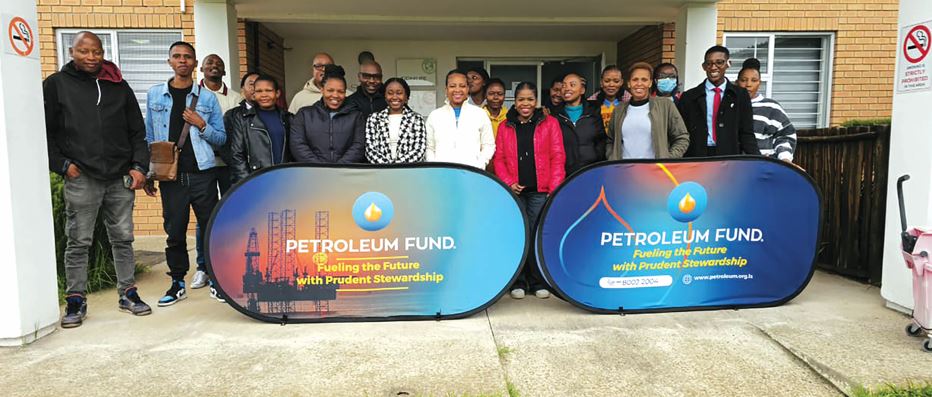
The Petroleum Fund has taken has clarified how fuel prices are determined in Lesotho, shedding light on the complex mix of global and domestic factors that ultimately influence what motorists pay at the pump.
This initiative was highlighted during a media symposium held in Maseru last week, where journalists were guided through the country’s fuel pricing framework from international procurement to final retail pricing.
The engagement aimed to improve the quality of petroleum reporting, enhance transparency, and build public confidence in the systems used to regulate fuel prices.
‘Makananelo Kome, the Fund’s Chief Executive Officer explained that fuel pricing is influenced by a combination of international and domestic variables, underscoring the need for clear and responsible communication.
“Petroleum pricing and supply systems are not always easy to interpret. They are influenced by several factors, including global oil prices, exchange rates, transport and logistics costs, as well as taxes and levies,” she said.
“It is important to emphasise that pricing is based on structured mechanisms, not arbitrary decisions,” Kome added.

She also highlighted the complexity of the petroleum supply chain, noting that fuel undergoes several stages before reaching consumers, including importation, transportation, storage, and distribution.
“Each stage presents its own challenges, which are important for accurate reporting,” she said.
Further deliberations emphasised that fuel prices in Lesotho are guided by the Basic Fuel Price (BFP) model, which captures the cost of importing fuel, including international oil prices, shipping, insurance, and exchange rate movements.
Given Lesotho’s complete reliance on imported petroleum products, fluctuations in global crude oil prices and the performance of the Loti/Rand against the US dollar have a direct and immediate impact on domestic fuel costs.
Beyond these international influences, local logistical considerations also play a critical role. Fuel must be transported from regional depots to service stations across the country, with costs shaped by distance, terrain, and infrastructure conditions.
These factors, combined with storage and distribution expenses, contribute significantly to the final pump price.
In addition, the pricing structure incorporates regulated industry margins to sustain oil companies and service stations, alongside statutory taxes and levies such as the road maintenance levy, oil levy, and value-added tax (VAT).
According to the Fund, these components are essential for ensuring cost recovery, financing infrastructure, and generating government revenue.
Kome also recognized the critical role played by the media in disseminating informative information on petroleum fuel isses.
“We deeply appreciate the critical and central role the media plays in informing the nation and shaping public understanding. This engagement is intended to be a platform for collaboration, learning, and open dialogue.”
She noted that fuel pricing remains a sensitive and far-reaching issue, affecting transport costs, the cost of living, and overall economic stability.
“The petroleum sector remains central to Lesotho’s economy and daily life. It directly affects transport, the cost of living, and overall economic stability. Simply put, petroleum issues affect every Mosotho, whether directly or indirectly,” she said.
Kome concluded by calling for responsible journalism, warning that misinformation particularly on economic matters such as fuel pricing, could have serious consequences for public confidence and national stability.
“Reporting on petroleum and economic matters requires fairness, accuracy, and responsibility, as misinformation can have serious consequences on public confidence and national stability,” she said.
Summary
- The Petroleum Fund has taken has clarified how fuel prices are determined in Lesotho, shedding light on the complex mix of global and domestic factors that ultimately influence what motorists pay at the pump.
- ‘Makananelo Kome, the Fund’s Chief Executive Officer explained that fuel pricing is influenced by a combination of international and domestic variables, underscoring the need for clear and responsible communication.
- Given Lesotho’s complete reliance on imported petroleum products, fluctuations in global crude oil prices and the performance of the Loti/Rand against the US dollar have a direct and immediate impact on domestic fuel costs.

Senior journalist and communications professional with extensive experience in general news reporting, specializing in business and sports journalism. Skilled in public speaking, media relations, and strategic communication, with a proven ability to deliver accurate, engaging, and impactful stories.
A strong team player who thrives in collaborative environments and adapts effectively to diverse working conditions. Passionate about continuous learning, professional growth, and enhancing communication practices to meet evolving industry demands.