
Thousands of Basotho workers and school children who rely on public transport are expected to feel the financial strain next week as new transport fares officially come into effect.
The increase is expected to further worsen the cost of living at a time when households are already struggling with rising food and fuel prices.
The Road Transport Board (RTB) yesterday confirmed that local transport fares will increase by as much as 31%, with the new prices becoming effective from May 11, 2026.
The fare hikes are likely to hit factory workers, retail employees, domestic workers and school-going children the hardest, as many depend on taxis and minibuses every day to travel to work and school.
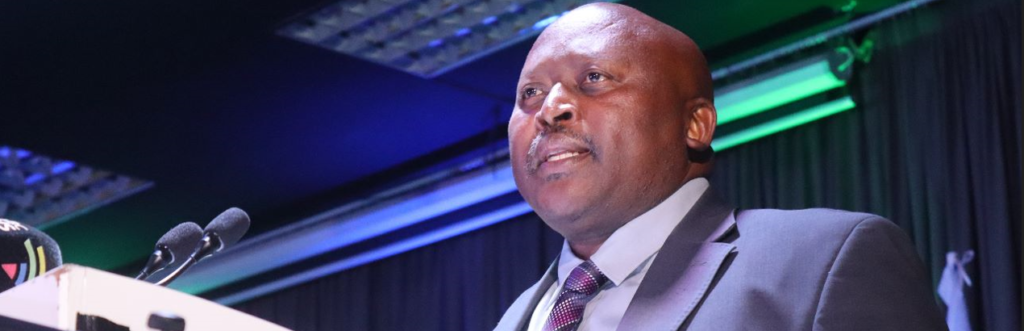
RTB Chairperson Mothabeng Lechalaba announced the revised fares yesterday.
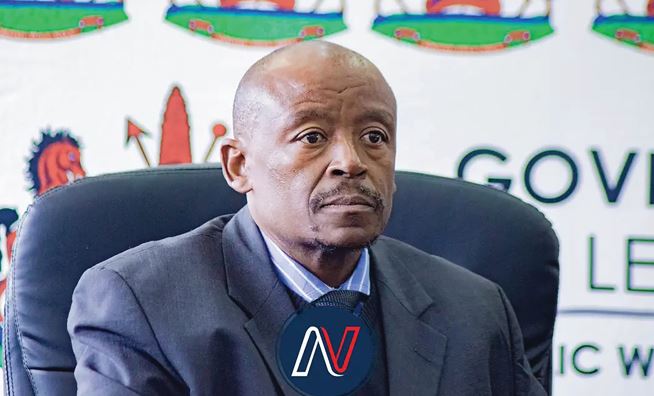
RTB Chairperson Mothabeng Lechalaba announcing the newly public transport fares now effective 11th May 2026.| Photo: Khosi Matheka.
He said local fares for 4+1 taxis will increase from M13.00 to M17.00. Minibuses will now charge M15.00, up from M12.00, while buses and sprinters will charge M10.00.
The increases come amid growing fears that transport costs will trigger further increases in the prices of goods and services as transport operators pass the costs onto consumers.
For many workers already earning low wages, the higher fares will take a significant portion of their salaries.
Many factory and retail workers rely entirely on public transport to travel daily between home and work.
With the recently gazetted minimum wages, a textile general worker now earns M2,833.96 per month. If such a worker spends M680.00 on transport over 20 working days, they will be left with only M2,153.96 for rent, food, electricity, school fees and other household expenses.
A retail employee earning M2,917.64 monthly who spends the same amount on transport would remain with M2,237.64.
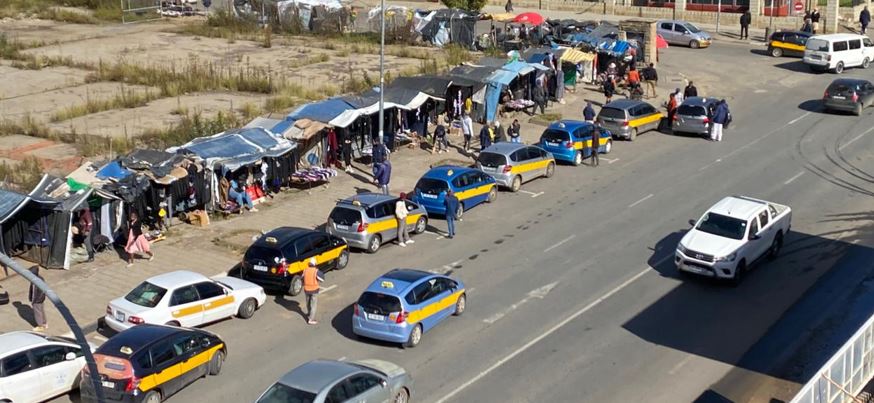
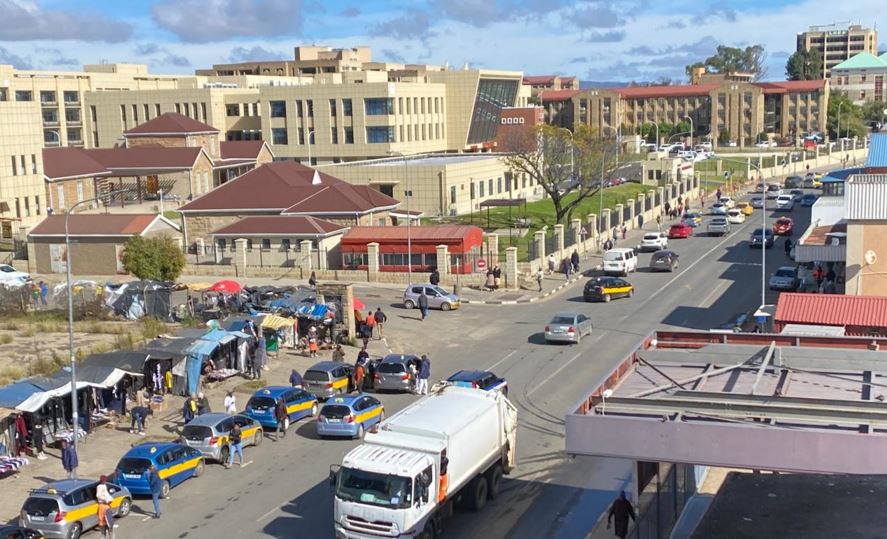
A taxi drives along Kingsway Road in Maseru
The impact is also expected to extend to school children, as parents will now have to spend more money on daily transport for learners travelling to and from school.
Families with several children using public transport are likely to experience even greater financial pressure.
The fare hikes come at a difficult time for consumers as Lesotho continues to experience a sharp rise in the cost of living driven largely by global fuel price increases.
The latest fuel hikes announced this week are expected to worsen the situation further.
On Wednesday, the Petroleum Fund published revised fuel prices showing steep increases across all fuel products.
Petrol 93 increased by M2.90 and now costs M25.40 per litre, while Petrol 95 rose by M2.60 to M25.90.
Diesel 50 recorded the sharpest jump, increasing by M4.25 to M34.75 per litre. Paraffin also increased by M1.20 and now costs M22.50 per litre.
The fuel price increases have largely been linked to the ongoing conflict in the Middle East involving Iran, Israel and the United States.
There are growing fears globally that tensions around the strategically important Strait of Hormuz could further disrupt oil supply routes and push fuel prices even higher.
The Strait of Hormuz is one of the world’s busiest oil shipping routes and plays a critical role in global energy supply chains.
The rising fuel costs are already having a ripple effect on transport operators, food prices and other commodities.
In April, the government announced austerity measures aimed at cushioning consumers from the rising cost of living.
The measures included zero-rating bread, sunflower oil, fresh vegetables and fresh fruit.
Government also announced the temporary removal of the fuel levy for three months in an attempt to ease pressure on motorists and commuters.
However, concerns remain over the implementation of these measures because the gazette notices needed to formalise them have not yet been published.
Meanwhile, transport operators have argued that fare increases were unavoidable due to rising operational costs.
The RTB said the latest fare adjustments were informed by recommendations from a consultant as well as inflation figures from the Bureau of Statistics (BOS).
The Ministry of Public Works and Transport’s Public Relations Manager, Ntumeleng Ntšekhe Moloinyane, explained that while fare reviews were previously based mainly on inflation, authorities are now using a new pricing model proposed by consultants.
The Consumer Price Index (CPI), which tracks the average cost of goods and services purchased by households, also informed the adjustments.
Before the RTB announcement, the Maseru Regional Transport Operators had already expressed frustration over delays in announcing the new fares.
At a press conference earlier this month, the association proposed even steeper increases.
MRTO announced that local fares should rise from M13.00 to M23.00, while long-distance fares should increase by M9.00 for every 10 kilometres travelled.
Transport operators argued that increasing fuel prices, annual operational costs and new vehicle registration fees had made business unsustainable under the old fare structure.
According to the RTB, long-distance fares are still being finalised and will be announced later.
The board said the fare adjustments are necessary to help transport operators cope with rising costs of fuel, maintenance and vehicle operations.
RTB was established under the Road Transport Act of 1981 and is responsible for regulating public transport fares and operations in the country.
The board includes representatives from the transport sector, technical advisers and government officials.
Public transport fares were last reviewed during the 2022/2023 financial year.
Meanwhile, there is growing public concern that the increases will deepen financial hardship for ordinary Basotho.
Many commuters fear that transport costs will now consume a larger share of already strained household incomes.
Others worry that the increases will eventually push up prices of food and other basic commodities as businesses adjust transport and delivery costs.
Some commuters have also questioned whether salary increases in both the public and private sectors are keeping pace with the rapidly rising cost of living.
Commuters have since been advised to check updated fare charts displayed inside public transport vehicles before travelling next week.
Summary
- The increase is expected to further worsen the cost of living at a time when households are already struggling with rising food and fuel prices.
- The fare hikes are likely to hit factory workers, retail employees, domestic workers and school-going children the hardest, as many depend on taxis and minibuses every day to travel to work and school.
- The fare hikes come at a difficult time for consumers as Lesotho continues to experience a sharp rise in the cost of living driven largely by global fuel price increases.

Thoboloko Ntšonyane is a dedicated journalist who has contributed to various publications. He reports on accountability, human rights, exposes corruption and wrong doing by those in power. He reports have exposed corruption, abuse of power, fraud, misconduct and negligence. He subscribes to evidence-based reporting. He reports on governance, parliament, courts, climate change, human rights, sexual and reproductive health rights (SRHR), health, business and agriculture. He gives a voice to the marginalised while also demanding accountability. His work inspires change, triggers dialogue and also promote transparency in a society.