Maseru District Hospital under scrutiny as MPs uncover overflowing medical waste, contaminated water risks, and security gaps during an inspection led by Social Cluster Portfolio Committee Chairperson Mokhothu Makhalanyane.
Ntsoaki Motaung is an award-winning health journalist from Lesotho, specializing in community health stories with a focus on sexual and reproductive health and rights, as well as HIV. She has contributed to platforms like "Be in the KNOW," highlighting issues such as the exclusion of people with disabilities from HIV prevention efforts in Lesotho.
In addition to her journalism, Ntsoaki serves as the Country Coordinator for the Regional Media Action Plan Support Network (REMAPSEN). She is also a 2023 CPHIA Journalism Fellow.
Overflowing medical waste, rusted water tanks, and weak security systems for medicines have been uncovered at Maseru District Hospital during a parliamentary inspection, deepening fears that systemic failures previously exposed by Newsday are now evolving into a dangerous public health threat.
The alarming findings were uncovered during an oversight visit by Parliament’s Social Cluster Portfolio Committee, led by Chairperson MokhothuMakhalanyane, to assess service delivery at the country’s largest district hospital.
Instead, MPs encountered what they described as deeply concerning sanitation, infrastructure and security failures with direct implications for patient safety.
The discoveries revive concerns first raised in October 2025, when a Newsday investigation exposed a growing crisis at the hospital, including operational breakdowns, strained services, management challenges, staff frustrations and mounting concerns over patient care standards.
That investigation painted a picture of a facility under severe pressure, where systemic weaknesses were steadily eroding the hospital’s ability to function effectively as a public health institution.
The latest parliamentary findings suggest those failures are now visible in the hospital’s physical environment.
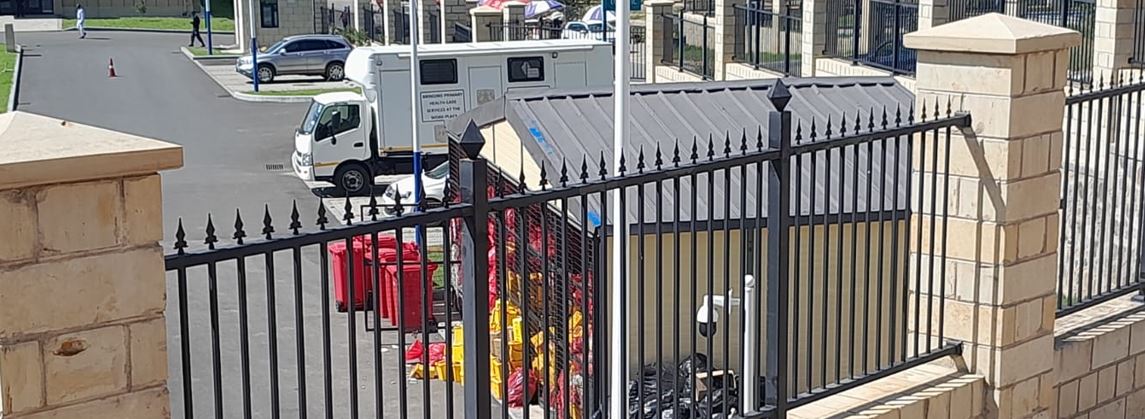
Among the most disturbing discoveries was the condition of the medical waste disposal area, where hazardous waste, including used needles, contaminated bandages and biological material, was found overflowing from storage areas.
Overflowing medical waste, rusted water tanks, and weak security systems have raised alarm at Maseru District Hospital after a high-level inspection by Parliament’s Social Cluster Portfolio Committee. Chairperson Mokhothu Makhalanyane warned that the deteriorating conditions could trigger disease outbreaks and compromise patient safety, calling for urgent intervention from the Ministry of Health.
“The area where medical waste is kept is very full, and some of it is spilling out of the storage,” Makhalanyane reported.
“There is a foul smell, and I foresee that if action is not taken, we will have rats. There are already insects, and soon there will be worms.”
Makhalanyane warned that poor handling of hazardous waste creates conditions for potential disease outbreaks within the hospital environment, exposing already vulnerable patients to further health risks.
The committee also raised an alarm about the hospital’s water storage infrastructure after observing visible rust on some tanks supplying water to the facility.
Makhalanyane cautioned that neglected water systems can encourage the growth of mould and larvae, conditions associated with water contamination and diseases such as cholera and typhoid.
He stressed that hospitals carry a responsibility to routinely test both water and food supplied to patients to ensure minimum health standards are maintained.
Security failures within the pharmacy department also came under scrutiny following previous reports of medication theft.
“There is a foul smell, and I foresee that if action is not taken, we will have rats. There are already insects, and soon there will be worms.”
Although hospital surveillance systems had reportedly helped identify and suspend at least one suspect in the past, MPs found the current camera coverage inadequate.
“We found that the cameras do not cover all the spots,” Makhalanyane noted.
He urged hospital management to urgently address surveillance blind spots to prevent further losses of essential medicines, many of which are already difficult to access in the public health sector.
The committee further questioned whether patients could freely express concerns about hospital conditions without fear of retaliation.
While some patients interviewed during the visit expressed satisfaction with services, Makhalanyane suggested that the responses may not fully reflect the realities within the facility.
“Maybe it is because they are afraid of telling the truth with the fear of being victimised afterwards,” he said.
The committee said there is a need for safer and more transparent systems that allow patients to report grievances without fear that their treatment may later be compromised.
The Social Cluster Portfolio Committee has since called for immediate intervention to address the deteriorating conditions, warning that continued neglect could place both patients and healthcare workers at serious risk.
Pressure is now mounting on the Ministry of Health to respond decisively to what is increasingly emerging as a broader institutional crisis at Maseru District Hospital.
Taken together with the issues previously uncovered by Newsday, the parliamentary findings point to a public health facility facing not only operational strain but also deepening structural and safety failures at the heart of patient care.
Attempts to get comments from both the Ministry of Health and the hospital’s public relations office were not successful at the time of publication, as calls and text messages were not responded to.
Summary
Overflowing medical waste, rusted water tanks, and weak security systems for medicines have been uncovered at Maseru District Hospital during a parliamentary inspection, deepening fears that systemic failures previously exposed by Newsday are now evolving into a dangerous public health threat.
The discoveries revive concerns first raised in October 2025, when a Newsday investigation exposed a growing crisis at the hospital, including operational breakdowns, strained services, management challenges, staff frustrations and mounting concerns over patient care standards.
That investigation painted a picture of a facility under severe pressure, where systemic weaknesses were steadily eroding the hospital’s ability to function effectively as a public health institution.
Ntsoaki Motaung is an award-winning health journalist from Lesotho, specializing in community health stories with a focus on sexual and reproductive health and rights, as well as HIV. She has contributed to platforms like “Be in the KNOW,” highlighting issues such as the exclusion of people with disabilities from HIV prevention efforts in Lesotho.
In addition to her journalism, Ntsoaki serves as the Country Coordinator for the Regional Media Action Plan Support Network (REMAPSEN). She is also a 2023 CPHIA Journalism Fellow.
To ensure optimal experiences, we utilize technologies such as cookies to store and/or access information from your device. Granting consent to these technologies enables us to process data, including browsing habits or unique identifiers on this website. Conversely, not consenting or revoking consent may negatively impact specific features and functionalities.
Functional
Always active
The technical storage or access is strictly necessary for the legitimate purpose of enabling the use of a specific service explicitly requested by the subscriber or user, or for the sole purpose of carrying out the transmission of a communication over an electronic communications network.
Preferences
The technical storage or access is necessary for the legitimate purpose of storing preferences that are not requested by the subscriber or user.
Statistics
The technical storage or access that is used exclusively for statistical purposes.The technical storage or access that is used exclusively for anonymous statistical purposes. Without a subpoena, voluntary compliance on the part of your Internet Service Provider, or additional records from a third party, information stored or retrieved for this purpose alone cannot usually be used to identify you.
Marketing
The technical storage or access is required to create user profiles to send advertising, or to track the user on a website or across several websites for similar marketing purposes.