

Opposition parties in parliament have sharply criticised the government’s attempted austerity measures, saying they are too weak to shield Basotho from rising fuel and commodity prices triggered by growing tensions in the Middle East.
The opposition this week said the government should have fully absorbed the increases instead of introducing what it describes as limited and delayed relief measures.
The criticism comes as Lesotho, like many countries around the world, faces mounting pressure from global fuel price instability caused by the ongoing conflict involving Iran, Israel and the United States.
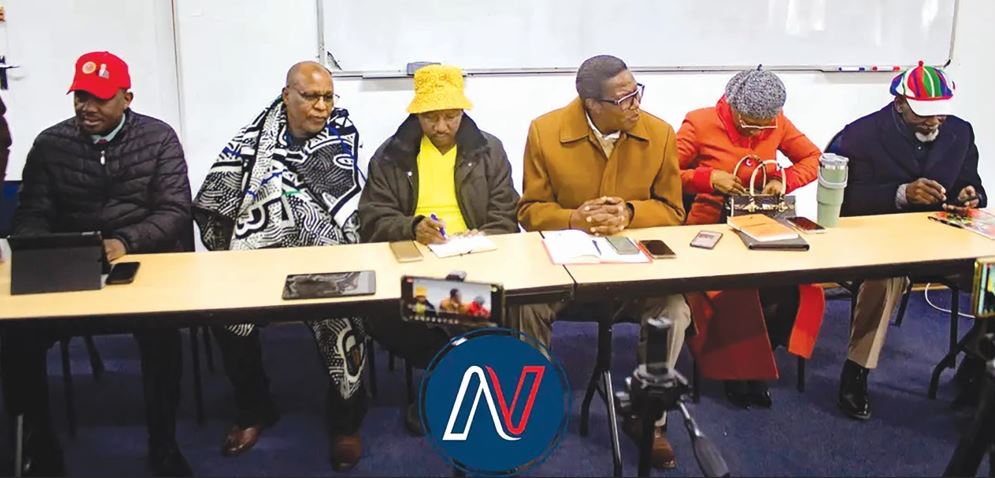
The opposition bloc, made up of the Democratic Congress, All Basotho Convention, Popular Front for Democracy, Basotho Action Party, Basotho National Party and African Transformation, accused Prime Minister Ntsokoane Matekane of poor leadership and failing to respond decisively to the worsening economic pressure facing ordinary citizens.
Leader of the Opposition in Parliament, Mathibeli Mokhothu, said the current administration has failed to govern effectively.
Mokhothu, who previously served as deputy prime minister, argued that the current government’s response to the economic crisis is weaker than measures introduced during the height of the COVID-19 pandemic under former Prime Minister Moeketsi Majoro.
“Politics has caught up with these guys,” said Mokhothu.
He argued that the government should have introduced full subsidies to cushion citizens from soaring prices instead of partial interventions.
The criticism follows government announcements made in April aimed at easing the burden on consumers.
These included the zero-rating of bread, sunflower oil, fresh vegetables and fresh fruit, as well as the temporary removal of the fuel levy for three months.
Government said the measures were intended to reduce pressure on households as fuel prices continue to rise globally.
However, the opposition says the interventions are inadequate and have not yet taken practical effect because the gazettes needed to formalise them have still not been published.
The latest economic fears stem largely from instability in the Middle East, particularly around the strategically important Strait of Hormuz.
Iran has reportedly threatened to shut down the strait, one of the world’s busiest oil shipping routes, amid escalating conflict involving Israel and the United States.
The passage is critical for the transportation of oil, liquefied natural gas and fertilisers. The United Nations Conference on Trade and Development has already warned that continued instability in the region could drive up prices of fuel, food and other essential commodities.
“Higher energy, fertilizer and transport costs including freight rates, bunker fuel prices and insurance premiums may increase food costs and intensify cost-of-living pressures, particularly for the most vulnerable.”
The opposition said Basotho are already struggling with unemployment, poverty and rising living costs, making stronger government intervention necessary.
Besides attacking the austerity measures, opposition parties also criticised Prime Minister Matekane’s recent cabinet reshuffle, saying it contradicts the government’s earlier promises of a lean administration.
The reshuffle introduced several new appointments, including ‘Mamokete Ntšekhe as Minister of Health, Voeswa Tsheka as minister in the newly created Ministry of Home Affairs and Police, ‘Makatleho Motsoasele as minister in the Prime Minister’s Office and Nkhethoa Seetsa in the newly established Ministry of Local Government and Chieftainship.
Mokhothu mocked the government for previously boasting that it had reduced the number of ministers to 15, only for the cabinet to now grow to 22 ministers with just 18 months remaining before the end of the 11th Parliament.
He said while some of the newly appointed ministers may represent “fresh blood”, they have been assigned demanding portfolios that require experienced leadership.
He stressed that ministerial appointments should not only be based on political considerations but also on qualifications and competence.
The opposition also turned its attention to allegations of corruption and conflicts of interest within government. BAP leader Nqosa Mahao accused ministers and members of parliament from the ruling party of doing business with the government while holding public office.
Mahao said such practices create serious conflicts of interest and undermine public confidence in government.
His comments were echoed by former Revolution for Prosperity member and current leader of the African Transformation, Mahali Phamotse.
Dr Phamotse alleged that some members of the ruling party entered politics primarily to enrich themselves.
She claimed that party loyalists are rewarded with government tenders while those who oppose the leadership are sidelined.
Dr Phamotse further alleged that some individuals are attempting to “recover” money spent during election campaigns through government contracts.
Meanwhile, Mokhethi Shelile declined to directly respond to questions sent by this publication. Instead, he said the ruling party would address the issues during a planned press conference.
“We are going to call for a press conference tommorow [Friday] Sir. [The] media will be advised on the time and venue early tommorow or this evening [Thursday] (sic).”
The opposition parties said they have since formed a task team to investigate allegations involving ministers and MPs accused of trading with government.
They say the task team will also pursue legal action where necessary. According to the opposition, such conduct violates both ethical standards and constitutional provisions governing public office.
Mokhothu cited Section 59 of the Constitution, which provides for the disqualification of members of parliament under certain circumstances.
“Corruption has worsened, as the Corruption Perceptions Index shows, and this is due to conflicts of interest,” said Prof. Mahao.
In the 2025 Corruption Perceptions Index by Transparency International, Lesotho scored 37 out of 100 and ranked 99th out of 182 countries.
The opposition said it would not publicly reveal the identities of members of the task force because they could become targets.
The allegations come against the backdrop of a recent Constitutional Court ruling involving efforts to tighten rules on conflicts of interest among politicians.
The court ruled that the National Assembly acted unconstitutionally when it rejected a private member’s bill sponsored by Advocates Lekhetho Rakuoane and Teboho Mojapela.
The bill sought to prohibit ministers and members of parliament from holding government contracts while serving in public office.
The opposition now argues that unless strong measures are taken against corruption and conflicts of interest, public trust in government will continue to decline while ordinary Basotho bear the growing burden of rising living costs.
Summary
- The opposition bloc, made up of the Democratic Congress, All Basotho Convention, Popular Front for Democracy, Basotho Action Party, Basotho National Party and African Transformation, accused Prime Minister Ntsokoane Matekane of poor leadership and failing to respond decisively to the worsening economic pressure facing ordinary citizens.
- The reshuffle introduced several new appointments, including ‘Mamokete Ntšekhe as Minister of Health, Voeswa Tsheka as minister in the newly created Ministry of Home Affairs and Police, ‘Makatleho Motsoasele as minister in the Prime Minister’s Office and Nkhethoa Seetsa in the newly established Ministry of Local Government and Chieftainship.
- Mokhothu mocked the government for previously boasting that it had reduced the number of ministers to 15, only for the cabinet to now grow to 22 ministers with just 18 months remaining before the end of the 11th Parliament.
Thoboloko Ntšonyane is a dedicated journalist who has contributed to various publications. He reports on accountability, human rights, exposes corruption and wrong doing by those in power. He reports have exposed corruption, abuse of power, fraud, misconduct and negligence. He subscribes to evidence-based reporting. He reports on governance, parliament, courts, climate change, human rights, sexual and reproductive health rights (SRHR), health, business and agriculture. He gives a voice to the marginalised while also demanding accountability. His work inspires change, triggers dialogue and also promote transparency in a society.