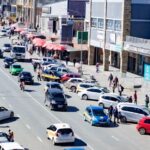

A consumer advocacy group has sharply condemned a more than 30 percent increase in local transport fares, calling the hike “economically punitive” and accusing the government of imposing it with only four days’ notice, leaving ordinary Basotho households no time to adjust.
The Consumers Protection Association announced on Wednesday this week that it was “categorically objecting” to the increase, which raised the cost of a single trip to M17 from M13. The new fares were published on May 7, 2026, and took effect on May 11, a window the association described as a violation of consumer rights.
“This represents a staggering 31 percent increase in the cost of commuting, a burden imposed without any meaningful notice, consultation, or opportunity for ordinary Basotho households to plan and adjust their budgets,” the association said in a statement.
The group drew a sharp contrast between the fare increase and the government’s recent wage adjustment for public servants. The government awarded civil servants a salary increase of only 2 percent, which the association said already fell “woefully short” of inflation and the rising cost of living.
“The arithmetic of injustice,” the association said. “A 31 percent fare hike against a 2 percent salary increase.”
Citing the example of a civil servant earning M3,000 (about 160 USD) per month, the association calculated that daily commuting under the new fare structure would consume nearly 23 percent of that worker′s monthly income, upwards of M680 (about 36 USD), “simply to get to and from work.”
“Transport is not a luxury, it is a necessity that underpins access to employment, healthcare, and education for the people of Lesotho,” the statement read.
The association reserved particular criticism for the speed with which the increase was implemented. Four days, the group said, gave households “no opportunity whatsoever” to adjust their budgets or seek alternatives.
“Good governance demands adequate notice before changes of this magnitude take effect,” the association said. “The approach taken here, announcement and immediate implementation, is not governance; it is imposition.”
The group also questioned the role of a fuel subsidy that was ostensibly designed to protect both transport operators and consumers from volatile global fuel prices. The association demanded a public accounting of the subsidy, asking whether it remained active, whether operators had demonstrated that it was insufficient, and who audited its use.
“Public subsidies are funded by taxpayers,” the association said. “Consumers have a right to know whether those subsidies are being properly deployed to protect them from precisely this kind of fare shock.”
The warning came against a bleak economic backdrop. The association noted that a series of factory closures, particularly in the textile and manufacturing sectors, had resulted in thousands of job losses, shrinking household incomes and swelling the ranks of the economically vulnerable.
“In this context, increasing transport fares does not occur in a vacuum,” the association said. “It is the latest in a series of cost pressures, alongside food inflation, utility tariff increases, and the erosion of purchasing power, that is systematically impoverishing working Basotho.”
The group warned that such policies “accelerate poverty and deepen inequality” and risk driving more families below the subsistence threshold.
The association made six demands, including the immediate suspension of the fare increase, a transparent public consultation process with a minimum of 30 days’ notice before any future revision, the establishment of a Transport Costs Review Committee with consumer representatives, and a mechanism for downward readjustment when fuel prices fall.
“The prices are adjusted citing high fuel prices,” the association said, “but when the fuel falls in price, the benefits are not transmitted to the commuters, rather, it is only the motorist that reaps all the benefits.”
The association called on members of Parliament, civil society organizations, trade unions, and the media to join in demanding a reversal of the decision.
“The Consumers Protection Association exists to give voice to the millions of ordinary Basotho who rely on public transport every day to earn a living and sustain their families,” the statement said. “We will not stand silent as policies that benefit a narrow set of interests are imposed on those least able to bear them.”
The association issued the statement on May 15, four days after the new fares took effect. It was released publicly on May 20. The government and the Land Transport Authority have not yet responded to the association’s demands.
Summary
- “This represents a staggering 31 percent increase in the cost of commuting, a burden imposed without any meaningful notice, consultation, or opportunity for ordinary Basotho households to plan and adjust their budgets,” the association said in a statement.
- The association made six demands, including the immediate suspension of the fare increase, a transparent public consultation process with a minimum of 30 days’ notice before any future revision, the establishment of a Transport Costs Review Committee with consumer representatives, and a mechanism for downward readjustment when fuel prices fall.
- “The prices are adjusted citing high fuel prices,” the association said, “but when the fuel falls in price, the benefits are not transmitted to the commuters, rather, it is only the motorist that reaps all the benefits.

Thoboloko Ntšonyane is a dedicated journalist who has contributed to various publications. He reports on accountability, human rights, exposes corruption and wrong doing by those in power. He reports have exposed corruption, abuse of power, fraud, misconduct and negligence. He subscribes to evidence-based reporting. He reports on governance, parliament, courts, climate change, human rights, sexual and reproductive health rights (SRHR), health, business and agriculture. He gives a voice to the marginalised while also demanding accountability. His work inspires change, triggers dialogue and also promote transparency in a society.