

- Minister Moteane admits some transport board members profit from fares they set
- He dismisses High Court ruling as ‘grave error of law’
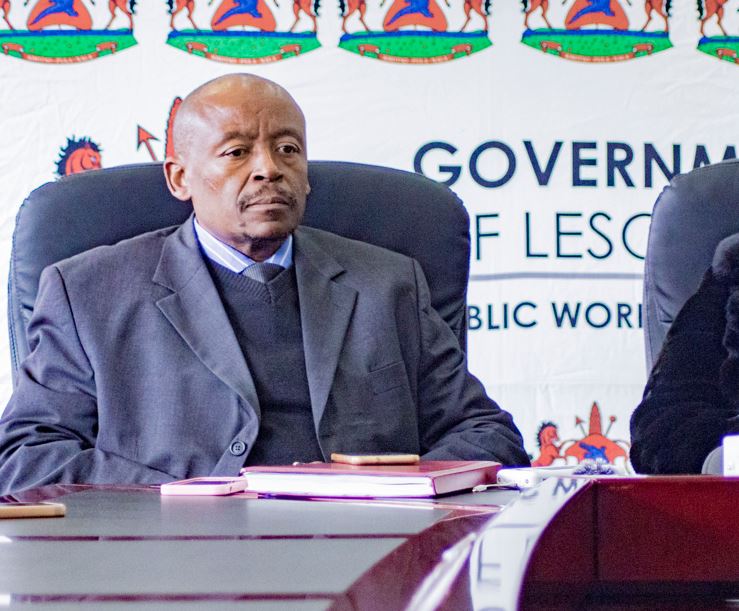
In a striking admission that has raised fresh questions about the legitimacy of a recent over 30 percent transport fare increase, Minister of Public Works and Transport has acknowledged that some members of the board responsible for setting the new fares have “vested financial interest in public motor transport operations.”
The minister, Matjato Moteane, made the acknowledgment in a letter responding to a legal advocacy group, SECTION 2, The Advocates for the Supremacy of the Constitution. The group had demanded clarification on whether the Road Transport Board was lawfully constituted when it made a decision announced on May 7, 2026, that local fares would rise to M17 from M13, effective May 11.
The exchange has exposed a deeper legal fault line. At the heart of the dispute is a 2011 High Court judgment that, according to some interpretations, stripped the Road Transport Board of the authority to unilaterally set fares, a ruling the minister now argues was nonbinding and legally flawed.
Moteane, has defended the fare hike, asserting that the Road Transport Board acted within its powers under regulation 11 of the Road Transport Regulations of 2004. But the 2011 judgment, which has never been overturned, says the opposite, in language that is direct, unambiguous, and critical of the board’s longstanding practice.
“I do not understand it to be the applicant’s case that the permits of their members have the condition I have described above,” wrote the late Justice T. Nomngcongo of the High Court in Maseru Region Transport Operators v. Traffic Commissioner and Others (CIV/APN/384/2011), delivered on August 6, 2011.
“They assume simply, with the concurrence of the respondents that the latter have power to regulate fares. I have not been shown, nor am I aware where that power comes from.”

The case arose after transport operators challenged the board’s authority to impose fares without consultation. While the court dismissed the specific application before it, the judge went further, ruling that the board had been acting illegally for years.
‘The regulation of fares is not one of them’
Justice Nomngcongo systematically dismantled the legal basis for the board’s fare-setting powers. He examined section 7 of the Road Transport Act of 1981, which defines the duties and functions of the board, and found that fare regulation was not listed.
“It is not under one of the functions of the Board that section to determine fares,” the judge wrote. “I do not know why it is assumed that such is their function.”
He pointed instead to section 18(2)(c) of the act, which allows the board to attach a condition to individual permits requiring that “fares and charges to be used in connection with the carriage of passengers or goods are to be approved by the Board.”
The distinction is legally critical. Under the judge’s reading, the board cannot unilaterally set fares for the entire industry. Instead, it can only approve fares submitted by permit holders themselves, and only where that specific condition has been attached to a permit.
“It follows that someone else other than the Board would have calculated the fares and then submitted them to the Board for approval,” Justice Nomngcongo wrote.
He concluded that the board’s practice of regulating fares was “ultra vires,” beyond its legal powers. “The regulation of fares is not one of them,” he said, “unless it is for the purpose of approving them when such is a condition attaching to permits.”
A minister’s defiance
In his response to SECTION 2, Moteane acknowledged the existence of the 2011 judgment but dismissed its core finding on fare-setting as “obiter,” a comment made in passing that is not binding.
“The judge in this regard committed a grave error of law in opining that the law gave liberty to the industry to self-regulate fares,” the minister wrote. He insisted that “the regulation of fares is the sole responsibility of the Road Transport Board in accordance with regulation 11 of the Road Transport Regulations, 2004.”
An ‘unavoidable’ conflict of interest
Perhaps more damaging to the government’s position was the minister’s candour about the board’s composition. SECTION 2 had asked whether any board member had a financial interest in public transport operations, and whether the minister had taken steps to ensure such interests did not compromise the board’s independence.
Moteane’s answer was direct.
“I appreciate the provisions of section 4(1)(c) of the Road Transport Act, 1981, and I acknowledge that some of the members of the Road Transport Board have vested financial interest in public motor transport operations,” he wrote.
He described the conflict as “unavoidable,” explaining that the law itself requires that some board members be “representatives of passenger and freight operators who are nominated amongst the operators.”
Under section 4(1)(c), such members are disqualified only if, “in the Minister’s opinion, such interest may interfere with the impartial discharge of their duties.” Moteane wrote that he had “applied my mind and formed an opinion that the existing financial interest … is not interfering with the impartial discharge of their duties.”
Critics argue that a board composed of industry representatives with a direct financial stake in higher fares cannot be expected to act impartially, precisely the kind of conflict that the law was designed to prevent.
A fare hike imposed on a fragile economy
The 31 percent fare increase comes at a moment of acute economic distress for Lesotho. Factory closures, particularly in the textile and manufacturing sectors, have cost thousands of jobs. Public servants received a salary increase of just 2 percent this year, a figure that falls below inflation.
For a worker earning M3,000 maloti per month, the new transport fares consume nearly 23 percent of monthly income, upwards of M680 per month, simply to get to and from work.
The Consumers Protection Association, which has also condemned the fare hike, noted that the increase was imposed with only four days’ notice, giving households “no opportunity whatsoever” to adjust their budgets.
“The approach taken here, announcement and immediate implementation, is not governance; it is imposition,” the association said in a statement (read full story on page 4).
What remains of the 2011 judgment?
The legal status of Justice Nomngcongo’s ruling is now at the center of the dispute. The minister is correct that the judge did not issue a final, binding order striking down the board’s fare-setting powers. Instead, he ordered the parties to meet, discuss the way forward, and report back to court within 14 days.
But the judge also made clear that he was not leaving a vacuum. He ruled that the existing fares would remain in force and that the board’s practice of regulating fares was illegal. And no higher court has ever overturned his legal reasoning.
“It would be likewise irresponsible to let what has clearly emerged as illegal for being ultra vires the powers of the Road Transport Board the practice of the Board to regulate fares,” Justice Nomngcongo wrote.
For now, the 2026 fare increase remains in effect. Thousands of Basotho commuters, workers, students, and patients traveling to hospitals, continue to pay M17 per trip.
SECTION 2 has not yet indicated whether it will pursue legal action to challenge the board’s authority or the minister’s interpretation of the law.
Summary
- In a striking admission that has raised fresh questions about the legitimacy of a recent over 30 percent transport fare increase, Minister of Public Works and Transport has acknowledged that some members of the board responsible for setting the new fares have “vested financial interest in public motor transport operations.
- At the heart of the dispute is a 2011 High Court judgment that, according to some interpretations, stripped the Road Transport Board of the authority to unilaterally set fares, a ruling the minister now argues was nonbinding and legally flawed.
- He pointed instead to section 18(2)(c) of the act, which allows the board to attach a condition to individual permits requiring that “fares and charges to be used in connection with the carriage of passengers or goods are to be approved by the Board.
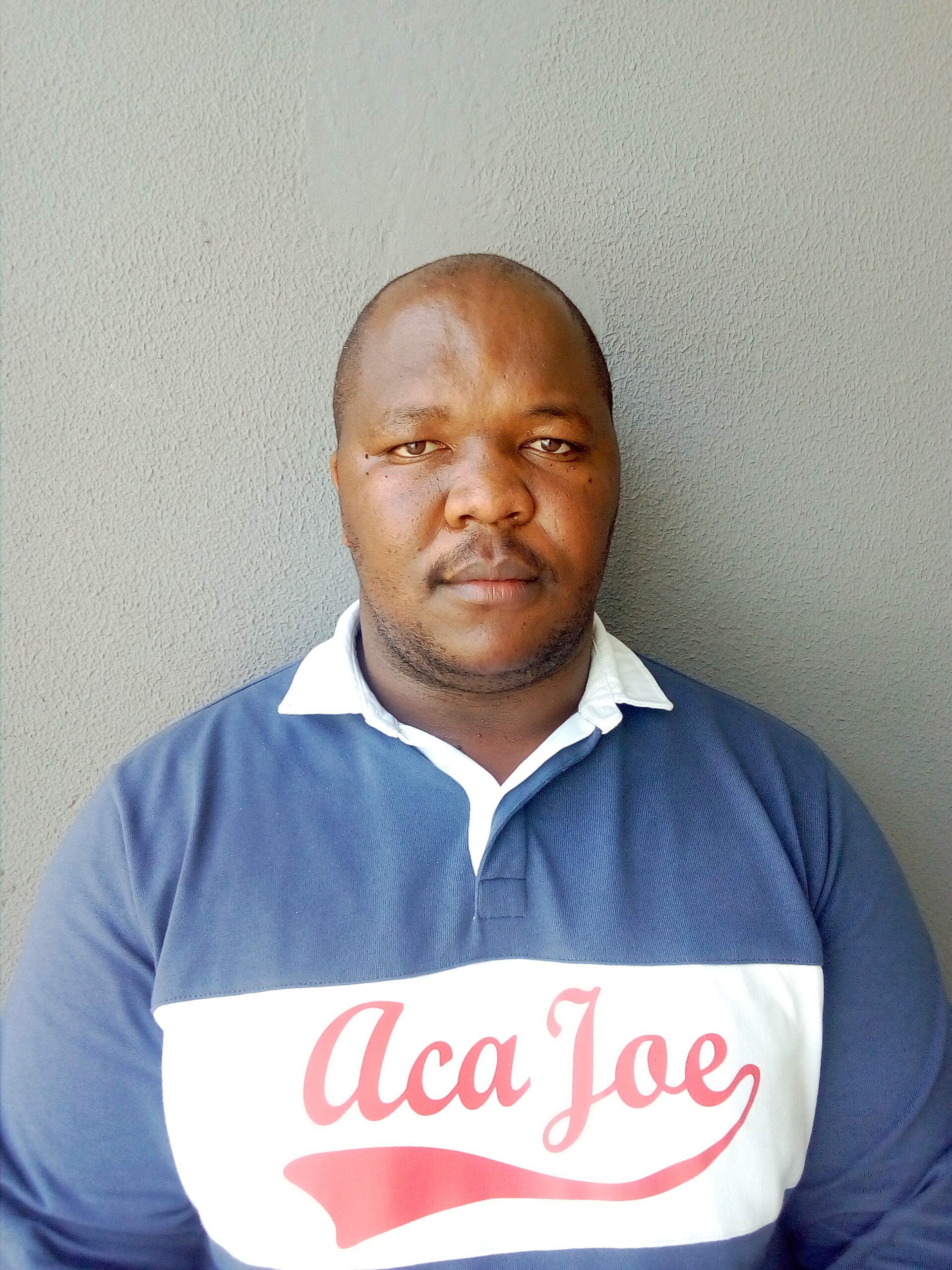
Thoboloko Ntšonyane is a dedicated journalist who has contributed to various publications. He reports on accountability, human rights, exposes corruption and wrong doing by those in power. He reports have exposed corruption, abuse of power, fraud, misconduct and negligence. He subscribes to evidence-based reporting. He reports on governance, parliament, courts, climate change, human rights, sexual and reproductive health rights (SRHR), health, business and agriculture. He gives a voice to the marginalised while also demanding accountability. His work inspires change, triggers dialogue and also promote transparency in a society.